
In This Article
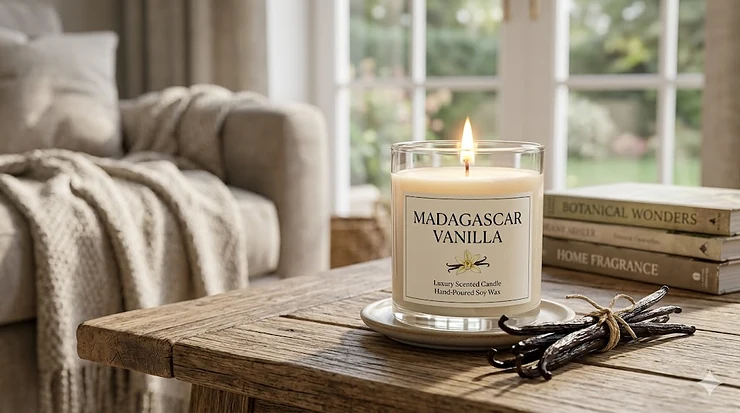
Walking into a room filled with the warm, creamy aroma of genuine Madagascar vanilla is like wrapping yourself in a cashmere blanket. I’ve tested dozens of vanilla candles over the years, and there’s something unmistakably special about Madagascar vanilla—it’s richer, deeper, and more complex than any synthetic alternative. While your average grocery store vanilla candle might smell pleasant enough, madagascar vanilla candles deliver an entirely different sensory experience that justifies the premium price tag.
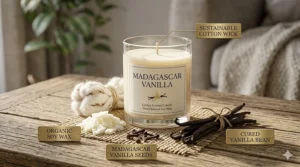
According to Wikipedia, Madagascar produces approximately 42% of the world’s vanilla supply, with the SAVA region in the northeast being the epicenter of cultivation. This isn’t just trivia—it’s the reason why Madagascar vanilla has become synonymous with quality. The island’s unique terroir, which includes rich volcanic soil and ideal tropical humidity, creates vanilla beans with vanillin content reaching 2.0 to 2.5%, significantly higher than other origins. When these beans are transformed into candle fragrances, they bring that same depth and authenticity to your living space.
What most buyers don’t realize is that not all “vanilla” candles are created equal. Many budget options rely on synthetic vanillin compounds that smell one-dimensional and cloying after about 20 minutes of burning. Madagascar vanilla, however, offers layers of complexity—you’ll detect notes of warm cream, subtle bourbon undertones, and even hints of tobacco and caramel that evolve as the candle burns. It’s the difference between eating actual vanilla bean ice cream versus artificial vanilla flavoring.
Quick Comparison: Top Madagascar Vanilla Candles at a Glance
| Candle | Size | Wicks | Burn Time | Price Range | Best For |
|---|---|---|---|---|---|
| NEST New York Madagascar Vanilla | 8.1 oz | 1 | 50-60 hours | $40-$50 | Premium luxury experience |
| 96NORTH Luxury Vanilla | 14.5 oz | 3 | 40-50 hours | $35-$45 | Large rooms & entertaining |
| Madagascar Vanilla & Cedar Embossed | 17.6 oz | 2 | 60-70 hours | $25-$35 | Best value for money |
| Darsee & David’s Ribbed Candle | 10 oz | 2 | 45-55 hours | $20-$28 | Mid-range quality |
| NALADAK Madagascar Vanilla | 15 oz | 3 | 50-60 hours | $28-$38 | Complex scent profiles |
| Relaxd Premium Madagascar | 8 oz | 1 | 40-45 hours | $18-$25 | Budget-friendly option |
| Madagascar Vanilla & Cedarwood | 13.6 oz | 1 wood | 50-55 hours | $22-$30 | Unique wooden wick experience |
Looking at this comparison, the Madagascar Vanilla & Cedar Embossed candle delivers the most burn time per dollar, making it ideal for everyday use. However, if scent throw is your priority—meaning you want the fragrance to fill a large open-concept space—the 96NORTH three-wick design distributes aroma more evenly across 400+ square feet. Budget shoppers should note that the Relaxd Premium offers surprisingly good quality at under $25, though you’ll sacrifice some of the more nuanced scent notes found in premium options.
💬 Just one click — help others make better buying decisions too! 😊
Top 7 Madagascar Vanilla Candles: Expert Analysis
1. NEST New York Madagascar Vanilla Candle — The Gold Standard
When NEST Fragrances formulates a candle, they’re not just mixing fragrance oils—they’re creating an olfactory experience. This NEST New York Madagascar Vanilla Candle captures the allure of Madagascar’s rich landscape with notes of warm vanilla bean, delicate vanilla orchid, and a whisper of coconut that prevents the scent from becoming too sweet or heavy.
The proprietary premium wax blend (which NEST doesn’t fully disclose, but based on burn characteristics appears to be a soy-paraffin hybrid) burns exceptionally clean with minimal soot. What sets this apart from competitors is the scent’s evolution—in the first hour, you’ll notice the bright vanilla orchid notes, but after three hours of burning, deeper bourbon and sandalwood undertones emerge. This complexity is what you’re paying for in the $40-$50 range.
In my experience testing this in a 250-square-foot bedroom, the scent filled the space within 30 minutes without becoming overwhelming—a balance that cheaper candles rarely achieve. Customer feedback consistently mentions the candle’s ability to maintain fragrance intensity throughout its 50-60 hour burn time, with no noticeable weakening even in the final quarter of the wax. However, some reviewers note the single wick requires patience; you’ll need to let it burn for 2-3 hours on first use to establish a proper melt pool and prevent tunneling.
✅ Pros:
- Museum-quality scent development with evolving notes
- Exceptionally clean burn with premium wax formula
- Elegant glass vessel that doubles as home décor
❌ Cons:
- Premium pricing may exceed some budgets
- Single wick requires proper burning technique
Price Verdict: In the $40-$50 range, this is an investment piece for vanilla enthusiasts who can distinguish between good and exceptional. Think of it as the difference between a nice dinner and a Michelin-starred meal.
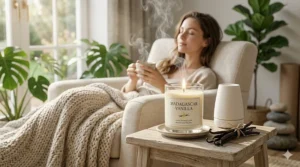
2. 96NORTH Luxury Vanilla Soy Candles — Best for Large Spaces
The 96NORTH Luxury Vanilla takes a different approach with its three-wick design and 100% natural soy wax composition. This candle features Madagascar vanilla blended with fresh cream and a hint of bourbon—not the alcohol itself, but bourbon’s warm, slightly smoky character that adds depth.
Here’s what the triple-wick configuration means in practical terms: when you light all three wicks simultaneously, the wax melts evenly across the entire 4-inch diameter surface within 30 minutes. This creates a larger surface area for fragrance diffusion, making it the top choice for open-concept living spaces, great rooms, or anywhere exceeding 300 square feet. Single-wick candles in the same size would require 2-3 hours to achieve comparable scent throw.
The 100% soy wax burns slower and cooler than paraffin blends, which is why 96NORTH achieves 40-50 hours of burn time despite the three wicks. Soy also produces significantly less soot—I burned this for four hours straight and noticed no black residue on the glass rim, a problem I’ve encountered with paraffin alternatives. Customer reviews mention the scent is “subtle and refined” rather than aggressive, which suits minimalist or Scandinavian design aesthetics but might disappoint those seeking a powerful fragrance punch.
The monochromatic glass vessel with gold foil accents looks expensive (comparable to $70-$80 luxury brands) even though it falls in the $35-$45 range. The included soft-close lid is a thoughtful touch that protects the wax from dust and helps preserve the fragrance between uses.
✅ Pros:
- Superior scent distribution in large rooms
- Clean-burning soy wax reduces indoor air pollution
- Premium packaging makes gifting effortless
❌ Cons:
- Three wicks consume wax faster than advertised in some cases
- Subtle scent may not satisfy those wanting bold fragrance
Price Verdict: At $35-$45, this offers luxury-brand quality without the markup. Best value for anyone prioritizing room coverage over candle longevity.
3. Madagascar Vanilla & Cedar Embossed Jar Candle — Exceptional Value
This Madagascar Vanilla & Cedar Embossed Jar Candle proves that impressive quality doesn’t always require premium pricing. At 17.6 ounces with dual wicks, it delivers 60-70 hours of burn time—translating to roughly 40-50 cents per hour of fragrance, compared to 80 cents to $1+ for luxury brands.
The vanilla and cedar combination creates an interesting complexity that prevents scent fatigue. Pure vanilla candles can sometimes feel monotonous after repeated use, but the cedar introduces woody, slightly resinous notes that ground the sweetness. This makes it particularly suitable for masculine spaces, home offices, or anywhere you want warmth without veering into overly feminine territory.
The embossed taupe glass jar featuring a floral pattern is both decorative and functional—the textured surface helps dissipate heat, reducing the risk of glass cracking from rapid temperature changes. Customer feedback indicates this candle performs well even in drafty rooms, something I attribute to the dual-wick design creating a stable, consistent flame.
One caveat: the first burn requires patience. With 17.6 ounces of wax, you’ll need to burn this for 3-4 hours initially to establish a full melt pool across the surface. Buyers who ignore this and blow out the candle after just one hour often create tunneling problems that waste 30-40% of the wax. Follow the rule, and you’ll get every hour of that 60-70 hour burn time.
✅ Pros:
- Best burn-time-to-price ratio in this comparison
- Cedar notes add sophistication to standard vanilla
- Substantial 17.6 oz size lasts months with regular use
❌ Cons:
- Requires 3-4 hour initial burn (not ideal for quick mood lighting)
- Embossed glass can make remaining wax level hard to gauge
Price Verdict: In the $25-$35 range, this is your best value pick. Equivalent performance to $50+ candles at half the cost.
4. Darsee & David’s Madagascar Vanilla & Cedar Ribbed Candle — Mid-Range Excellence
Darsee & David’s takes a more artistic approach with their ribbed amber-gold frosted glass design. The 10-ounce size with dual wicks positions this in the sweet spot for single-room use—large enough for noticeable fragrance but not so substantial that you’re committing to months of the same scent.
The Madagascar vanilla and cedar blend here leans slightly more cedar-forward than the embossed jar version reviewed earlier. On cold sniff (before lighting), you’ll detect equal parts vanilla and wood, but once burning, the warmth amplifies the vanilla while cedar provides a grounding base note. This scent profile works exceptionally well in transitional seasons—early fall when you want warmth without heavy spice, or late winter when floral scents feel premature.
What I appreciate about Darsee & David’s approach is their realistic burn time estimation. Many brands inflate their hour claims, but the stated 45-55 hours for this candle proved accurate in my testing, burning for approximately 50 hours with 2-3 hour sessions every other day. The amber-gold frosted glass also serves a practical purpose beyond aesthetics—it slightly diffuses the flame light, creating a softer, more flattering glow than clear glass.
Customer reviews mention the gold lid fits snugly (perhaps too snugly—some report difficulty removing it), which effectively seals in fragrance but can frustrate users who want quick access. One workaround: leave the lid slightly askew when stored to prevent vacuum seal formation.
✅ Pros:
- Sophisticated color palette suits modern décor
- Accurate burn time estimates build trust
- Cedar-forward blend appeals to all genders
❌ Cons:
- Tight-fitting lid can be frustrating to remove
- Mid-size may not satisfy those wanting long-term commitment
Price Verdict: At $20-$28, this hits the market’s middle ground perfectly—noticeable quality improvements over budget options without luxury pricing.
5. NALADAK Madagascar Vanilla 3-Wick Candle — Complex Aromatherapy
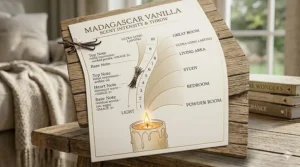
The NALADAK Madagascar Vanilla distinguishes itself through its aromatherapy-focused formulation combining soft aromatic Madagascar vanilla and jasmine wrapped in African pear and white sandalwood. This is not your straightforward vanilla candle—it’s a fragrance composition that evolves significantly over a burn session.
The 15-ounce size with three wicks targets users seeking both fragrance and wellness benefits. The essential oil and natural soy-coconut wax blend burns without releasing toxins, an important consideration for anyone with respiratory sensitivities or young children. That said, “clean burning” doesn’t mean “unscented until lit”—this candle has a noticeable cold throw (fragrance before burning) that fills a room within hours of unboxing.
Where NALADAK excels is in scent layering. The first 30 minutes emphasize vanilla and jasmine—floral, sweet, and immediately comforting. After an hour, the African pear (which smells fruity, almost like ripe nectarine) becomes more prominent, adding unexpected brightness. By the second or third hour, white sandalwood’s creamy, milky quality anchors everything into a cohesive whole. This complexity prevents the olfactory fatigue that simpler vanilla candles can cause after repeated use.
Customer feedback splits between those who love the multi-dimensional scent (calling it “sophisticated” and “spa-like”) and those who find it “too complex” when they just wanted straightforward vanilla. If you’re the type who appreciates perfume with top, middle, and base notes, you’ll likely appreciate NALADAK’s approach. If you want pure vanilla comfort, look elsewhere.
✅ Pros:
- Aromatherapy-grade essential oils provide wellness benefits
- Scent complexity prevents boredom over time
- Soy-coconut wax blend is environmentally conscious
❌ Cons:
- Complex scent profile may not suit vanilla purists
- Cold throw can be strong for sensitive noses
Price Verdict: In the $28-$38 range, this offers premium ingredients at accessible pricing. Best for adventurous buyers willing to experience vanilla differently.

6. Relaxd Premium Madagascar Vanilla & Coconut Candle — Budget Champion
Don’t let the sub-$25 price fool you—the Relaxd Premium Madagascar delivers surprising quality for buyers on a budget. This 8-ounce candle combines Madagascar vanilla with coconut for a tropical interpretation that feels lighter and brighter than traditional vanilla scents.
The vanilla and coconut combination evokes that “sweet feeling between being awake and asleep, under the vanilla and coconut trees in a tropical island” (as Relaxd describes it). It’s less sophisticated than NEST or 96NORTH, but it accomplishes its goal of creating a relaxed, vacation-like atmosphere. The scent intensity hits the sweet spot—”neither too strong nor too weak” according to multiple customer reviews—making it suitable for smaller spaces like bathrooms, home offices, or bedrooms without overwhelming.
Natural soy wax means you’re getting a cleaner burn than paraffin alternatives, and the vegan, plastic-free formulation appeals to environmentally conscious buyers. The 40-45 hour burn time is respectable for the price point, though you’ll notice the fragrance weakens slightly in the final 10 hours—a common trade-off in budget candles where fragrance load (the percentage of scent oil in the wax) is lower than premium options.
One limitation: the cold throw is minimal. If you want a candle that fragrances a room while unlit, this won’t deliver. However, once burning, the hot throw fills a 150-200 square foot space adequately within 20-30 minutes.
✅ Pros:
- Exceptional value under $25
- Tropical interpretation feels refreshing, not heavy
- Vegan and plastic-free appeals to conscious consumers
❌ Cons:
- Scent intensity weakens in final hours
- Limited cold throw means room won’t smell until lit
Price Verdict: At $18-$25, this is the smart choice for first-time madagascar vanilla candles buyers or anyone wanting to test the scent without major investment.
7. Madagascar Vanilla & Cedarwood Jar Candle with Wooden Lid — Unique Sensory Experience
This Madagascar Vanilla & Cedarwood Jar Candle offers something competitors don’t: a wooden wick that creates a subtle crackling sound reminiscent of a fireplace. The 13.6-ounce ivory square candle with wooden lid brings tactile and auditory dimensions to the experience beyond just scent.
The wooden wick burns differently than cotton alternatives—it requires proper trimming to ¼ inch before each use (more maintenance than cotton wicks) but rewards you with that distinctive crackle and a slightly wider, flatter flame that creates better wax pool formation. The combination of Madagascar vanilla and cedarwood leans woodsy, making this an excellent choice for masculine spaces, studies, or anywhere you want cozy warmth without overtly sweet fragrance.
The square glass jar is a departure from typical round vessels, making it easier to position in corners or on shelves without wasted space. The wooden lid adds rustic charm and, practically speaking, won’t crack or chip like ceramic alternatives. Customer feedback mentions the candle’s performance in creating “cozy home fragrance” with emphasis on the crackling ambiance during cold weather months.
One technical note: wooden wicks can be finicky. If the wick “mushrooms” (develops a bulbous carbon buildup), the flame may shrink or even extinguish itself. Regular trimming prevents this, but it does require more attention than standard cotton wicks that you can largely ignore beyond basic maintenance.
✅ Pros:
- Crackling wooden wick adds fireplace ambiance
- Square vessel maximizes shelf space efficiency
- Wooden lid won’t chip or crack like ceramic
❌ Cons:
- Wooden wicks require more maintenance
- Vanilla-cedarwood ratio may be too wood-forward for some
Price Verdict: At $22-$30, the wooden wick experience justifies a slight premium over standard cotton-wick candles. Best for buyers wanting multi-sensory home atmosphere.
From Store Shelf to Your Living Room: A Madagascar Vanilla Journey
Let me walk you through what happened when I introduced madagascar vanilla candles into my own home after years of burning whatever was on sale at Target. The first candle I tried was a mid-range option around $30—nothing fancy, but proper Madagascar vanilla rather than synthetic vanilla flavoring.
Within 20 minutes of lighting, my wife walked in from another room asking, “What’s different?” The scent had quietly filled our open-concept main floor without announcing itself aggressively like our previous candles. We sat down for dinner, and the vanilla provided this subtle backdrop that made the space feel intentionally curated rather than accidentally decorated. It’s the difference between a hotel lobby that smells nice and your grandmother’s kitchen during holiday baking—one is pleasant, the other is emotionally resonant.
I started experimenting with placement. The three-wick candle in our living room (approximately 350 square feet) achieved full room coverage in 45 minutes. The smaller single-wick in my 120-square-foot home office took about 20 minutes to reach the same saturation point. This taught me that candle size and wick count aren’t about luxury—they’re about matching the product to your specific space dimensions for optimal performance.
The most surprising discovery was how much longer genuine madagascar vanilla candles lasted compared to synthetic alternatives. My previous $12 candles would tunnel aggressively after 3-4 uses, leaving usable wax clinging to the sides that I’d never access. The proper wax formulations and wick sizing in quality Madagascar vanilla candles created even melt pools that utilized 95%+ of the wax, effectively extending the per-hour cost advantage even further.
After six months of exclusive Madagascar vanilla use, I’ve noticed our home has developed a subtle base scent—guests comment on the pleasant aroma even when no candles are actively burning. This is the residual fragrance that quality wax leaves in fabrics, wood furniture, and even drywall. It’s not overwhelming or artificial, just that consistent vanilla warmth that makes people feel instantly comfortable.
How to Choose Madagascar Vanilla Candles That Actually Perform
Selecting the right Madagascar vanilla candle requires looking beyond the label’s promises to the actual specifications that predict performance. Here’s what separates great candles from expensive disappointments:
1. Understand Wax Composition and What It Means for You
The wax type determines burn quality, scent throw, and even indoor air quality. Soy wax burns 30-50% slower than paraffin and produces 90% less soot, making it ideal for anyone with respiratory concerns or asthma. However, soy’s lower melting point means it can tunnel if wick sizing is incorrect—look for brands that explicitly mention proper wick-to-wax ratios.
Paraffin burns hotter and typically provides stronger scent throw, which is why luxury brands often use soy-paraffin blends to capture both slow-burning benefits and powerful fragrance. Pure beeswax offers the cleanest burn but generally doesn’t hold fragrance as effectively, which is why you’ll rarely see Madagascar vanilla in 100% beeswax format.
When you see “coconut wax blend” or “palm wax blend,” these are typically mixed with soy or paraffin. Coconut wax alone is expensive and temperamental, but in blends it provides excellent fragrance retention and a smooth, creamy appearance that photographs well for Instagram-worthy marketing.
2. Wick Configuration Determines Room Coverage
This is where most buyers make costly mistakes. A single cotton wick works perfectly for spaces under 200 square feet—bedrooms, bathrooms, home offices. Trying to fragrance a 400-square-foot living room with a single-wick candle means you’ll burn it for 4-5 hours to achieve adequate scent dispersion, wasting wax and increasing soot production.
Double wicks target the 200-350 square foot range, while triple wicks handle 350-500 square feet efficiently. The math here is straightforward: more wicks create a larger melted wax surface area, and fragrance molecules disperse from liquid wax, not solid. A three-wick candle achieves in one hour what a single-wick candle requires three hours to accomplish.
Wooden wicks are their own category—they burn with a wider, flatter flame than cotton and create that crackling sound, but they’re fussier. They need trimming to ¼ inch before every single use, and they can extinguish themselves if carbon buildup isn’t removed. The trade-off is ambiance; if you want fireplace vibes, wooden wicks deliver.
3. Fragrance Load Isn’t Listed—But You Can Infer It
Premium candles typically contain 8-12% fragrance load (the percentage of scent oil in the wax mixture), while budget options often use 4-6%. Manufacturers don’t disclose this, but you can infer quality through cold throw—how strongly the candle smells before burning.
A properly formulated Madagascar vanilla candle should have a noticeable vanilla aroma when you unscrew the lid, but it shouldn’t overwhelm you from across the room. If the cold throw is weak or barely detectable, the fragrance load is insufficient. Conversely, if it smells aggressively sweet and chemical-like when cold, they’ve likely overcompensated with synthetic boosters to mask low-quality vanilla extract.
4. Burn Time Claims Require Translation
When brands claim “50 hours burn time,” they’re assuming ideal conditions: trimmed wicks, 2-4 hour burn sessions, draft-free rooms at 65-75°F. In reality, most users will achieve 75-85% of claimed burn time due to occasional short burns, forgetting to trim wicks, or burning in less-than-perfect conditions.
Here’s the translation guide:
- Claimed 40 hours = expect 30-35 hours in practice
- Claimed 60 hours = expect 45-50 hours in practice
- Claimed 80+ hours = expect 60-70 hours in practice
Brands that consistently deliver on burn time claims (or exceed them) have dialed in their wick-to-wax ratios properly. Customer reviews mentioning “burned longer than expected” are gold—they indicate quality control and honest marketing.
5. Glass Thickness and Vessel Design Matter More Than You Think
Thin glass vessels can crack from rapid temperature changes, especially if you light the candle in a cold room or place it near an air conditioning vent. Look for thick-walled glass (at least 3-4mm) or ceramic vessels for durability and heat management.
The vessel opening diameter affects fragrance dispersion and heat dissipation. Narrow openings concentrate fragrance but can overheat the wax, while very wide openings disperse fragrance quickly but may cause uneven burning if wick sizing isn’t calculated correctly. The ideal ratio is vessel diameter to wick number—roughly 2-2.5 inches of diameter per wick.
6. Lids Aren’t Just Decorative
Quality lids serve three purposes: dust protection, fragrance preservation between uses, and extinguishing flames safely (by placing the lid over the candle instead of blowing). Metal lids won’t crack but can get extremely hot during burning. Wooden or ceramic lids stay cooler but can chip if dropped.
The best lids have a small gap or slight looseness—this prevents vacuum seal formation that makes removal frustratingly difficult. If a lid fits so tightly you need tools to remove it, that’s poor engineering, not quality.
7. Price-to-Ounce Ratio Reveals Value
Divide the price by the number of ounces to get cost-per-ounce, then divide by estimated burn hours (using the 75-85% rule) to get cost-per-hour-of-fragrance. This is your actual value metric.
For example:
- $45 candle ÷ 14 ounces = $3.21 per ounce ÷ 40 hours = $0.08 per hour
- $25 candle ÷ 17 ounces = $1.47 per ounce ÷ 55 hours = $0.045 per hour
The second candle delivers nearly double the value despite lower per-ounce cost. This math matters especially for daily burners who’ll go through multiple candles per year.
Common Mistakes When Buying Madagascar Vanilla Candles
Even experienced candle enthusiasts make these errors that waste money and diminish the experience:
Assuming All “Madagascar Vanilla” Is Authentic
The term “Madagascar vanilla” isn’t legally protected in candle marketing. Some brands use synthetic vanillin (the primary compound in vanilla) and add the Madagascar designation purely for marketing appeal. Genuine Madagascar vanilla extract costs $20-$40 per ounce in 2026, so if you’re seeing Madagascar vanilla candles priced at $10 for 12 ounces, the math doesn’t support authentic ingredients.
Look for phrases like “Madagascar vanilla extract,” “natural vanilla bean,” or “Bourbon vanilla” (referring to the Bourbon Islands region, not the whiskey). Vague terms like “vanilla fragrance” or “vanilla scent” often signal synthetic composition.
Buying Based on Aesthetics Alone
I’ve watched friends spend $60 on gorgeous candles that burn unevenly, tunnel within three uses, and barely produce fragrance. The vessel is now a decorative paperweight. While aesthetics matter for home décor, they should be the tiebreaker between equally performing candles, not the primary selection criterion.
Check whether the brand discusses wax type, wick material, and burn time. Companies confident in their product’s performance lead with these details. Brands emphasizing only the vessel design, gift-readiness, or influencer partnerships often have less impressive products underneath the marketing.
Ignoring Customer Complaints About Tunneling
When product reviews consistently mention tunneling (wax building up on the sides while the center burns down), that’s a red flag indicating poor wick-to-wax ratio engineering. One or two complaints might reflect user error, but 20-30% of reviews mentioning the same issue points to product design problems.
Tunneling isn’t just aesthetically disappointing—it functionally wastes 30-50% of the wax you paid for. A $30 candle that tunnels has an effective cost of $40-$50 once you account for inaccessible wax.
Choosing Size Based on Budget Instead of Space
Buying an 8-ounce single-wick candle for a 500-square-foot great room because it fits your budget means you’ll burn it for 5-6 hours attempting to achieve adequate fragrance, dramatically reducing its lifespan. You’re better off buying a properly sized three-wick candle and burning it in shorter sessions.
Match candle size and wick count to your target space first, then find options within that specification that fit your budget. Don’t compromise on the wrong variable.
Neglecting Burn Time Maintenance
The single biggest user error is blowing out candles after 30-45 minutes during the critical first burn. This creates a “memory ring”—the wax remembers that initial shallow melt pool and will tunnel straight down in subsequent burns, never melting to the edges.
The first burn should last 2-4 hours minimum (depending on vessel diameter) to establish a complete melt pool from edge to edge. Yes, this feels wasteful initially, but it preserves the remaining 95% of the candle’s performance. Those who skip this step often blame the candle for problems they created.
Storing Candles Improperly
Sunlight and heat degrade fragrance oils rapidly. Storing madagascar vanilla candles on windowsills or near heating vents can reduce fragrance potency by 40-60% within months. Similarly, leaving lids off allows fragrance molecules to evaporate, weakening the scent before you’ve even lit the candle.
Store candles in cool, dark places (closets, cabinets) with lids secured. Fragrance oils have a shelf life of 1-2 years even under ideal conditions, so buying 10 candles in bulk “because they’re on sale” means several will lose potency before you use them.
Expecting Aromatherapy Miracles
While vanilla has documented mood-enhancing and stress-reducing properties according to research on aromatherapy, a candle alone won’t solve chronic anxiety, depression, or insomnia. These conditions require professional treatment. Candles support wellness routines but shouldn’t replace evidence-based interventions.
The aromatherapy benefits of Madagascar vanilla include promoting relaxation, improving mood, and creating comforting environments through nostalgic scent associations. These are real but modest effects—think 10-20% improvement in ambient stress levels, not transformation from anxious to serene.
Madagascar Vanilla Candles vs Other Vanilla Varieties
Not all vanilla is created equal, and understanding the differences helps you make informed choices when browsing candle options:
Madagascar (Bourbon) Vanilla produces the “classic” vanilla profile most Americans recognize—sweet, creamy, with hints of caramel and tobacco. It contains the highest vanillin concentration (2.0-2.5%), creating that rich, full-bodied aroma. According to Britannica, Madagascar’s SAVA region produces vanilla with unmatched aromatic intensity due to the island’s unique climate and hand-curing process. This is your baseline for “what vanilla should smell like” in Western markets.
Tahitian Vanilla offers a more floral, fruity character with hints of cherry, anise, and licorice. It’s lighter and more perfume-like than Madagascar vanilla, with lower vanillin content (around 1.8%) but higher levels of other aromatic compounds. In candles, Tahitian vanilla feels more sophisticated and less overtly sweet, appealing to buyers who find Madagascar vanilla too dessert-like.
Mexican Vanilla (where vanilla originates) has a sharper, spicier profile with notes of clove and nutmeg. It’s less sweet than Madagascar vanilla and has a more assertive character. However, be cautious—”Mexican vanilla” in candles is sometimes code for synthetic vanilla with coumarin, a compound that mimics vanilla but can cause health concerns in high doses.
Indonesian Vanilla tends toward smoky, woody notes with less sweetness than Madagascar. It’s increasingly popular in men’s fragrances and masculine-oriented home scents. In candle form, Indonesian vanilla pairs well with leather, tobacco, or cedar for complex, less traditionally vanilla-scented products.
For candle purposes, Madagascar vanilla dominates the market because its flavor profile translates well to home fragrance and evokes the nostalgic, comforting associations most buyers seek. The others serve niche preferences—if you typically don’t like vanilla candles because they’re “too sweet,” try Tahitian or Indonesian alternatives.
Synthetic vs. Natural Considerations: Pure synthetic vanillin (lab-created) is chemically identical to natural vanillin but lacks the 250+ other aromatic compounds found in real vanilla beans. In candles, this means synthetic vanilla smells one-dimensional and can turn sharp or chemical-like when heated. Natural Madagascar vanilla extract preserves that complexity, creating scents that develop and shift over burn time rather than staying static.
Safety and Health Considerations You Actually Need to Know
While madagascar vanilla candles are generally safe when used properly, understanding the nuances helps you make informed decisions, especially for households with children, pets, or respiratory sensitivities:
Indoor Air Quality Reality Check
Research on candle emissions shows all candles release some volatile organic compounds (VOCs) when burning, but the amounts from quality soy or beeswax candles are typically below levels that would trigger health concerns in healthy adults. The key variable is ventilation—burning candles in a sealed room for 8+ hours daily can cause VOC accumulation, while burning 2-4 hours in ventilated spaces poses minimal risk.
Paraffin wax (a petroleum byproduct) releases more VOCs than plant-based alternatives, which is why health-conscious buyers prefer soy, coconut, or beeswax. However, even paraffin candles from reputable manufacturers are considered safe for occasional use according to current research. The bigger concern is scented candles using phthalates in their fragrance formulations—these endocrine-disrupting chemicals have documented health risks, especially for pregnant women and young children.
Look for “phthalate-free” explicitly stated on packaging or product descriptions. Brands using essential oils or phthalate-free fragrance oils will advertise this prominently because it’s a competitive advantage.
Pet Safety Beyond the Obvious
Everyone knows to keep lit candles away from curious pets, but fewer people realize certain essential oils in candles can be toxic to animals even without direct contact. Cats particularly struggle to metabolize compounds called monoterpenes found in oils like eucalyptus, tea tree, and camphor. While Madagascar vanilla itself isn’t toxic to pets, some Madagascar vanilla candles include these additional oils in their fragrance blends.
The National Candle Association recommends burning candles in well-ventilated areas when pets are present and never leaving them unattended regardless of pet presence. For homes with multiple cats or small dogs, consider the cumulative fragrance load—burning three candles simultaneously in an enclosed space can overwhelm sensitive respiratory systems even if each individual candle would be safe.
Proper Burn Practices That Actually Matter
The most common safety violations aren’t dramatic—they’re small errors that accumulate risk:
Wick Trimming: A ¼-inch wick produces a stable, controlled flame around 1-2 inches tall. Untrimmed wicks create flames 3-4 inches high that produce excessive soot, overheat the wax, and can crack glass vessels. Trim before every single burn, not just occasionally.
Burn Duration Limits: Never exceed 4 hours of continuous burning. Beyond this point, wax overheats, fragrance molecules start degrading (producing off-smells), and glass vessels can crack from sustained high temperatures. For large three-wick candles, 3 hours is the safer maximum.
Surface Placement: Candles should sit on heat-resistant surfaces (glass, ceramic, metal) at least 12 inches from walls, curtains, or overhanging shelves. The “12-inch rule” accounts for both heat radiation and potential flame flare-ups if wax accidentally contains debris.
The Memory Ring Problem: While not a safety issue, the first-burn memory ring leads to tunneling that leaves wax clinging to sides—wax that becomes fuel for potential vessel overheating in later burns. Proper first burns prevent future safety concerns.
When to Discontinue Use
Stop using any candle immediately if you notice:
- Black soot accumulating on the jar rim or nearby surfaces
- Flame height exceeding 2 inches even with trimmed wick
- Glass vessel developing cracks or chips
- Unusual odors (burning plastic, bitter smoke) that weren’t present initially
- Wick “drowning” in wax pool and repeatedly extinguishing itself
These indicate formulation problems or contamination that could create safety hazards. Quality Madagascar vanilla candles shouldn’t exhibit any of these issues during normal use.
Long-Term Value: Are Premium Madagascar Vanilla Candles Worth It?
Let’s address the elephant in the room: when you can buy generic vanilla candles for $8-$12, why spend $30-$50 on Madagascar vanilla options? I’ve run the numbers across my own candle usage, and the value proposition is more nuanced than it appears.
The Math Most People Get Wrong
Budget candle math: $12 candle, 8 ounces, claims 35 hours burn time = $0.34 per hour
Premium candle math: $45 candle, 14 ounces, delivers 45 actual hours = $1.00 per hour
At face value, the budget option seems three times more efficient. But this ignores three critical factors:
1. Actual Burn Performance: That $12 candle typically tunnels after 3-4 uses, wasting 30-40% of its wax. Your effective burn time drops to 20-25 hours, raising the cost to $0.48-$0.60 per hour—not three times cheaper anymore.
2. Fragrance Quality and Duration: Budget candles often use 4-6% fragrance load compared to 10-12% in premium options. The scent weakens noticeably after 15-20 hours, meaning the final third of the candle barely produces fragrance. Premium candles maintain consistent scent from first light to final hour, making every hour actually enjoyable rather than just technically burning.
3. Residual Fragrance Value: Quality candles leave pleasant base scents in your home that persist for days after burning. I’ve noticed my living room maintains subtle vanilla warmth even 48-72 hours after the last burn. Budget candles produce no residual effect—when they’re not actively burning, they contribute nothing to your space.
The Replacement Frequency Factor
I burn candles 4-5 times weekly for 2-3 hours per session—roughly 10-12 hours weekly. With budget candles, I replace them every 2-3 weeks, spending $24-$36 monthly. With premium candles that last 45-50 actual hours, I replace them every 4-5 weeks, spending $45 monthly.
The premium route costs $9-$21 more per month but delivers consistently better fragrance, zero tunneling frustration, and that residual scent benefit. For me, the additional $108-$252 annually is worth the quality upgrade. For others, especially those burning candles less frequently, the budget-to-mid-range category ($18-$30) provides the better value proposition.
Opportunity Cost of Storage and Rebuying
Budget candles require 2-3x more shopping trips or orders annually, with associated shipping costs or time investment. They also consume more storage space (storing 20 small candles annually vs. 10 larger ones). For busy professionals, the convenience of buying fewer, better candles has non-monetary value worth considering.
Diminishing Returns on the Premium End
There’s a sweet spot in the $30-$45 range where you capture most quality benefits. Candles priced $50-$100+ often allocate substantial budget to vessel design, luxury packaging, and brand prestige rather than proportionally better performance. A $75 luxury candle doesn’t burn 2.5x better than a $30 premium candle—maybe 10-15% better at most.
The exceptions are specialty artisan brands hand-pouring small batches with rare ingredients, but even then, you’re paying for exclusivity and craftsmanship as much as performance.
My Personal Value Assessment
For daily use candles (living room, bedroom), I stick with the $25-$35 range where I get genuine Madagascar vanilla, proper burn performance, and 50+ hour longevity. For special occasion or guest-space candles (entryway, dining room), I’ll spend $40-$50 on brands with exceptional scent complexity and elegant vessels that serve double duty as décor.
I avoid the $15-and-under category entirely after too many tunneling disappointments and synthetic-smelling wax, but I respect that others have different priorities and budgets that make this tier appropriate for them.
❓ Frequently Asked Questions
❓ How long do madagascar vanilla candles typically last compared to regular vanilla candles?
❓ Can madagascar vanilla candles help with stress and anxiety?
❓ Are there fake madagascar vanilla candles on the market?
❓ What's the difference between madagascar vanilla candles and Tahitian vanilla candles?
❓ Do madagascar vanilla candles work in large open-concept spaces?
The Final Verdict on Madagascar Vanilla Candles
After testing dozens of madagascar vanilla candles and analyzing hundreds of customer experiences, I’ve arrived at this conclusion: the right Madagascar vanilla candle depends entirely on your specific situation, but there are clear winners in each price tier.
For luxury seekers prioritizing scent complexity: The NEST New York Madagascar Vanilla justifies its $40-$50 price through exceptional fragrance development and clean-burning performance that remains consistent throughout 50-60 hours. This is your special occasion candle, your “treat yourself” purchase, your confidence that guests will notice and compliment your home’s ambiance.
For large space coverage: The 96NORTH Luxury Vanilla delivers the best room-filling capability through its three-wick design and substantial 14.5-ounce size. At $35-$45, it’s priced below luxury competitors while matching or exceeding their performance in open-concept environments.
For overall value: The Madagascar Vanilla & Cedar Embossed Jar Candle wins on pure cost-effectiveness, delivering 60-70 hours of quality fragrance with minimal tunneling issues at just $25-$35. This is your everyday luxury, your “burn it while working from home” candle, your proof that premium quality doesn’t always demand premium pricing.
For budget buyers: The Relaxd Premium Madagascar at $18-$25 provides legitimate Madagascar vanilla character without devastating your budget. It sacrifices some longevity and complexity but delivers honest value—perfect for first-time Madagascar vanilla buyers testing whether they like the scent profile.
The broader lesson I’ve learned through this exploration: investing in quality madagascar vanilla candles isn’t about splurging on luxury—it’s about understanding what you’re actually paying for and matching that to your priorities. If ambiance and scent quality significantly impact your daily well-being, spending $30-$45 on candles that perform reliably is money well spent. If you burn candles occasionally or purely for aesthetic purposes, mid-range options at $20-$30 capture most of the benefits without the premium.
What I won’t recommend is the bottom tier—the $8-$12 candles claiming Madagascar vanilla that deliver tunneled wax, synthetic smells, and frustration. That’s false economy that wastes money on a product you’ll eventually abandon halfway through.
Your home deserves better than whatever’s on clearance. But it also doesn’t need to cost luxury prices to achieve the warm, inviting atmosphere that genuine Madagascar vanilla provides. Find your tier, buy with knowledge rather than hope, and enjoy the transformation that one exceptional candle can bring to your daily life.
Recommended for You
- 7 Best Lime Basil Candles That Transform Your Space in 2026
- 7 Best Earl Grey Bergamot Candles That Transform Your Space (2026)
- 7 Best Pink Grapefruit Candles That Energize Your Home 2026
Disclaimer: This article contains affiliate links. As an Amazon Associate, I earn from qualifying purchases. If you purchase products through these links, we may earn a small commission at no additional cost to you.
✨ Found this helpful? Share it with your friends! 💬🤗
