
In This Article
Picture this: you’re unwinding after a long day, and you reach for that calming lavender oil. But wait—are you using it safely? With essential oil sales skyrocketing in 2026, more people are discovering these powerful plant extracts. Yet understanding how to use essential oils safely isn’t just helpful—it’s absolutely essential.
I learned this the hard way when a friend ended up with second-degree burns after applying undiluted bergamot oil before heading to a tanning salon. That incident opened my eyes to something crucial: these natural wonders pack serious potency. Essential oils are 50 to 70 times more concentrated than the plants they come from, which means a single drop can be incredibly therapeutic—or potentially harmful if misused.
What is how to use essential oils safely? It’s the practice of properly diluting, storing, and applying essential oils to maximize benefits while minimizing risks like skin irritation, allergic reactions, or toxicity. Think of it like this: you wouldn’t chug pure vanilla extract in your morning coffee, right? The same principle applies here.
Whether you’re exploring essential oil dilution chart for beginners or worried about essential oils toxic to pets, this comprehensive guide will walk you through everything. From carrier oil ratios for essential oils to understanding photosensitive essential oils list, you’ll discover practical, science-backed safety protocols that actually work in real life.
Quick Comparison Table: Essential Oil Safety Methods
| Safety Method | Best For | Dilution Rate | Application Time | Risk Level |
|---|---|---|---|---|
| Carrier Oil Dilution | Topical use | 1-5% | Immediate | Low |
| Diffuser Aromatherapy | Inhalation | N/A | 30-60 min sessions | Very Low |
| Patch Testing | Sensitivity check | 2% | 24-48 hours | Minimal |
| Steam Distillation Use | Respiratory support | 2-3 drops | 10-15 minutes | Low |
| Photosensitive Precaution | Sun exposure | 0.4-2% max | Wait 12-18 hours | Moderate without care |
💬 Just one click – help others make better buying decisions too! 😊
Top 7 Essential Oil Safety Products: Expert Analysis
1. Garden of Life Essential Oils Starter Pack
When you’re just beginning your aromatherapy journey, the Garden of Life Essential Oils Starter Pack offers an ideal introduction to safe essential oil use. This thoughtfully curated set includes four therapeutic-grade oils: Lavender, Peppermint, Lemon, and Tea Tree in 0.5 fl oz bottles.
Key Specifications:
- 100% USDA Organic certified
- Third-party tested by GC/MS for purity
- Non-GMO Project Verified and MK Pareve Kosher
Price Range: $20-$25 for the complete set
This starter kit excels because every batch undergoes rigorous third-party testing to ensure no heavy metals, contaminants, or synthetic materials sneak in. The amber glass bottles protect the oils from UV light exposure and oxidation—a critical safety feature many cheaper brands overlook. Customers consistently praise the authenticity and potency, noting these oils perform comparably to MLM brands at a fraction of the cost.
✅ Pros:
- USDA Organic certification ensures quality
- Includes essential oil safety data on each bottle
- Versatile oils suitable for multiple applications
❌ Cons:
- Smaller 0.5 oz bottles (though perfect for beginners)
- Limited oil variety in starter pack
2. Vitruvi Essentials Kit
The Vitruvi Essentials Kit brings together four popular essential oils in a beautifully designed package that makes safety stylish. Including Lavender, Eucalyptus, Grapefruit, and Spruce in 10ml bottles, this collection represents a step up in both quality and presentation.
Key Specifications:
- 100% pure essential oils
- Vegan and cruelty-free formulation
- Packaging is 100% recyclable with plant-based ink
Price Range: $38-$45
What sets Vitruvi apart is their commitment to transparency. They source essential oils from more than 20 countries, selecting regions that produce the highest-quality products. Each oil comes with detailed safety information and blending suggestions. Customers appreciate that these oils blend beautifully together while also diffusing perfectly alone—making them versatile for both newcomers and experienced users.
✅ Pros:
- Sustainable and eco-friendly packaging
- Excellent for both solo and blended use
- High-quality sourcing from global producers
❌ Cons:
- Higher price point than basic kits
- Eucalyptus requires caution around children under 10
3. Handcraft Blends Fractionated Coconut Oil
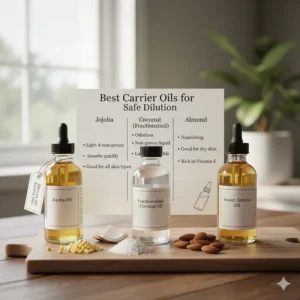
Every essential oil user needs a reliable carrier oil, and Handcraft Blends Fractionated Coconut Oil has become my go-to recommendation. This 16 fl oz bottle provides pure, hexane-free oil that’s essential for safe topical application.
Key Specifications:
- 100% pure and natural fractionated coconut oil
- Fragrance-free, hexane-free, preservative-free
- Stays liquid at room temperature
Price Range: $13-$18 for 16 oz
Fractionated coconut oil is the gold standard for diluting essential oils because it absorbs quickly into skin without leaving a greasy residue. Unlike regular coconut oil that solidifies below 75°F, this version remains liquid indefinitely. With an exceptional shelf life of 3-5 years, it outlasts sweet almond oil, jojoba oil, and virtually every other carrier oil. Customers love how it extends their essential oil bottles while maintaining therapeutic benefits.
✅ Pros:
- Exceptional shelf life (3-5 years)
- Lightweight, non-greasy absorption
- Perfect for roller bottle recipes
❌ Cons:
- More processed than cold-pressed carriers
- Not ideal for cooking applications
4. Viva Naturals Organic Fractionated Coconut Oil
For those seeking USDA Organic certification in their carrier oils, Viva Naturals Organic Fractionated Coconut Oil delivers premium quality in a 16 fl oz bottle. This organic option provides peace of mind for anyone concerned about pesticide exposure.
Key Specifications:
- USDA Certified Organic
- Cold-pressed and unrefined processing
- Multipurpose for skin, hair, and essential oil dilution
Price Range: $15-$20 for 16 oz
This organic fractionated coconut oil stands out in customer reviews for its silky texture and rapid skin absorption. People with sensitive skin particularly appreciate that it doesn’t clog pores or cause breakouts. The USDA Organic certification means you’re avoiding potentially harmful chemicals while diluting your essential oils—a double win for safety-conscious users.
✅ Pros:
- USDA Organic certification
- Non-comedogenic (won’t clog pores)
- Excellent for sensitive skin types
❌ Cons:
- Slightly higher price than non-organic versions
- May have subtle coconut scent (though minimal)
5. Top 10 Carrier Oil Variety Set
Why limit yourself to one carrier oil when different oils offer unique benefits? The Top 10 Carrier Oil Variety Set provides 2 oz bottles of Sweet Almond, Apricot Kernel, Argan, Avocado, Castor, Fractionated Coconut, Grapeseed, Jojoba, Olive, and Sunflower oils.
Key Specifications:
- Ten different 2 oz cold-pressed carrier oils
- 100% pure and natural formulation
- Includes both light and heavier carrier options
Price Range: $28-$35 for the complete set
This variety pack is perfect for experimenting with different carrier oil ratios for essential oils. Each oil brings distinct properties: jojoba closely mimics skin’s natural sebum, sweet almond oil is rich in vitamin E, and grapeseed oil works beautifully for oily skin types. Customers love having options to customize blends for specific needs, from facial serums to massage oils.
✅ Pros:
- Comprehensive variety for different applications
- Cost-effective way to try multiple carriers
- Perfect for creating customized blends
❌ Cons:
- Smaller 2 oz bottles (great for testing, less for regular use)
- Different shelf lives require tracking
6. Essential Oil Roller Bottles (10ml Amber Glass Set)
Roller bottles transform how you use essential oils safely, and a quality set of 10ml amber glass bottles makes DIY blending incredibly convenient. These bottles typically come in packs of 12-24 with stainless steel roller balls.
Key Specifications:
- 10ml amber glass for UV protection
- Stainless steel roller balls (not plastic)
- Leak-proof caps and design
Price Range: $10-$18 for a 12-pack
The amber glass protects your diluted blends from light degradation, while stainless steel rollers glide more smoothly than plastic alternatives. Based on the essential oil dilution chart for beginners, a 10ml bottle requires just 2-10 drops of essential oil depending on your intended use (1-5% dilution). Customers appreciate how these bottles make it easy to create pre-diluted blends for travel, gifting, or daily use.
✅ Pros:
- Perfect size for essential oil safety guidelines
- Reusable and easy to clean
- Ideal for pre-diluted applications
❌ Cons:
- Requires proper cleaning between uses
- Labels may need replacing over time
7. The Beginner’s Guide to Essential Oils by Christina Anthis
Knowledge is your best safety tool, and The Beginner’s Guide to Essential Oils by Christina Anthis provides evidence-based information you can trust. This comprehensive book covers essential oil safety guidelines, dilution ratios, and 100 practical recipes.
Key Specifications:
- 30 detailed essential oil profiles
- Safety guidelines for pregnancy and children
- 100 tested recipes for health and home
Price Range: $12-$18
Unlike many essential oil books that promote unsafe practices, Anthis approaches the topic from a certified aromatherapist perspective. She emphasizes proper dilution, discusses essential oil contraindications, and provides age-appropriate usage guidelines. Customers particularly value the scientific backing and practical safety precautions woven throughout every chapter.
✅ Pros:
- Written by certified aromatherapist
- Evidence-based safety information
- Includes pediatric and pregnancy guidelines
❌ Cons:
- Not specific to any one brand
- May require supplemental resources for advanced users
Understanding Essential Oil Dilution Chart for Beginners
Let me be blunt: using undiluted essential oils directly on skin is one of the fastest ways to develop sensitization or chemical burns. I’ve seen it happen, and it’s not pretty. Proper dilution isn’t optional—it’s the cornerstone of safe essential oil use.
The Science Behind Dilution
Essential oils are lipophilic, meaning they dissolve in fats and oils but not water. This property explains why washing off undiluted essential oils with water doesn’t work—you need a fatty carrier oil or full-fat milk to remove them safely.
According to research published by the National Institutes of Health, essential oils contain complex mixtures of 100-250 components, with some oils containing up to 500 different compounds. This chemical complexity increases both therapeutic potential and risk of adverse reactions.
Standard Dilution Ratios Explained
Here’s your quick reference guide for carrier oil ratios for essential oils:
1% Dilution (Safest)
- Best for: Daily use, children over 2, elderly, sensitive skin
- Ratio: 6 drops per 1 oz (30ml) carrier oil
- 10ml roller bottle: 2 drops essential oil
2% Dilution (General Use)
- Best for: Adult daily skincare, regular application
- Ratio: 12 drops per 1 oz (30ml) carrier oil
- 10ml roller bottle: 4 drops essential oil
3-5% Dilution (Short-term Use)
- Best for: Acute situations, muscle pain, spot treatment
- Ratio: 18-30 drops per 1 oz (30ml) carrier oil
- 10ml roller bottle: 6-10 drops essential oil
10% Dilution (Maximum)
- Best for: Very short-term, specific ailments only
- Ratio: 60 drops per 1 oz (30ml) carrier oil
- 10ml roller bottle: 20 drops essential oil
Why Dilution Percentages Matter
Think of dilution like cooking with spices. A pinch of cayenne adds warmth; a tablespoon creates inedible fire. Essential oils work similarly. At proper dilution, they provide therapeutic benefits. Over-concentrated, they trigger contact dermatitis, photosensitivity, or worse.
The International Fragrance Association (IFRA) sets maximum use levels for many essential oils based on dermal toxicity essential oils research. For example, bergamot oil should never exceed 0.4% dilution due to severe photosensitivity risk, while grapefruit oil is safe up to 4%.
Special Population Considerations
Infants (0-6 months):
- Generally avoid essential oils entirely
- Consult pediatrician before any use
- Hydrosols are safer alternatives
Children (6 months – 2 years):
- Maximum 0.25% dilution
- Limited oil selection only
- Never use peppermint or eucalyptus
Children (2-6 years):
- Maximum 1% dilution
- Avoid hot oils (oregano, cinnamon, clove)
- Peppermint only after age 6
Pregnancy:
- Avoid first trimester use
- Maximum 1% dilution second/third trimester
- Consult healthcare provider
Essential Oil Safety Guidelines: Your Complete Checklist
Safety extends beyond dilution. Following comprehensive essential oil safety guidelines protects you from the most common hazards while maximizing therapeutic benefits.
Storage Safety Protocols
Proper storage prevents degradation and dangerous accidents. Here’s what you need to know:
🔒 Child Safety:
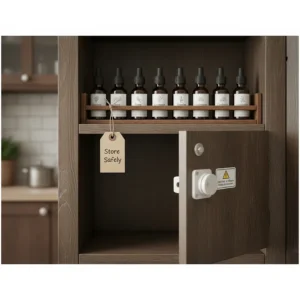
- Store all essential oils in lockable cabinets or high shelves with child locks
- Even “safe” oils can cause serious harm if ingested
- Never leave bottles unattended during use
- Treat essential oils like medications—they are that powerful
🌡️ Optimal Storage Conditions:
- Cool, dark location (60-75°F ideal)
- Away from direct sunlight and heat sources
- Amber or cobalt blue glass bottles only
- Tightly sealed caps to prevent oxidation
⏰ Shelf Life Tracking:
- Citrus oils: 1-2 years
- Most single oils: 2-3 years
- Carrier oils: 6 months to 3 years (varies by type)
- Mark opening dates on bottles
Patch Testing Protocol
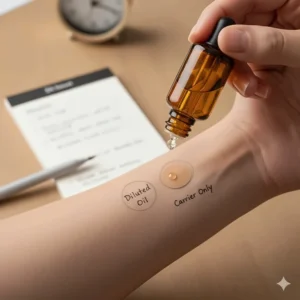
Before applying any new essential oil blend, conduct a 24-hour patch test:
- Dilute the oil to 2% in carrier oil
- Apply small amount to inside of elbow
- Cover with bandage
- Check for redness, itching, or burning after 24 hours
- If reaction occurs, wash immediately with carrier oil
According to safety research from the National Association for Holistic Aromatherapy, patch testing identifies potential irritants before they cause widespread dermatitis.
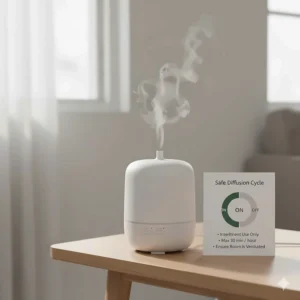
Diffuser Safety Best Practices
Diffusing essential oils seems safe, but following proper protocols prevents respiratory irritation and pet toxicity:
✅ Do:
- Diffuse in well-ventilated spaces
- Limit sessions to 30-60 minutes on, 30-60 minutes off
- Use 3-5 drops per 100ml water (not more)
- Ensure pets can leave the room
- Clean diffuser weekly to prevent mold
❌ Don’t:
- Diffuse continuously for hours
- Use in closed, small spaces
- Diffuse around birds (extremely sensitive)
- Use with respiratory conditions without medical clearance
- Exceed recommended drop counts
Application Method Safety
Different application methods carry varying risk levels:
Topical Application:
- Always dilute in carrier oils
- Avoid mucous membranes, eyes, inner ears
- Wash hands after application
- Never apply to broken skin without guidance
Inhalation:
- Steam inhalation: 1-2 drops per bowl of hot water
- Direct inhalation: Hold bottle 4-6 inches from nose
- Avoid prolonged direct inhalation (>3-5 minutes)
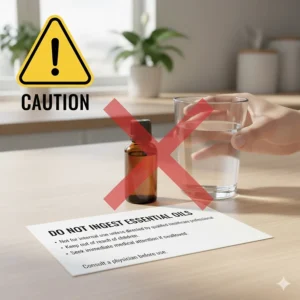
Internal Use:
- Generally NOT recommended without professional guidance
- Carries highest risk of toxicity
- Never with children, pregnant women, or pets
- Only therapeutic-grade oils if supervised by medical professional
Carrier Oil Ratios for Essential Oils: Choosing Your Base
Not all carrier oils are created equal. Understanding which carrier works best for your needs optimizes both safety and effectiveness.
Popular Carrier Oils Comparison
| Carrier Oil | Absorption Rate | Best For | Shelf Life | Comedogenic Rating |
|---|---|---|---|---|
| Fractionated Coconut | Fast | All skin types, massage | 3-5 years | 0 (won’t clog) |
| Jojoba | Medium | Oily skin, hair | 2-3 years | 2 (low clog) |
| Sweet Almond | Medium | Dry skin, massage | 12-18 months | 2 (low clog) |
| Grapeseed | Fast | Oily skin, aromatherapy | 6 months | 1 (minimal clog) |
| Avocado | Slow | Dry/mature skin | 12-18 months | 3 (moderate) |
Matching Carriers to Applications
Facial Serums: Jojoba, rosehip seed, or argan oil
- Lighter texture absorbs well
- Non-comedogenic properties
- Provides additional skin benefits
Massage Oils: Fractionated coconut, sweet almond, or grapeseed
- Glide easily across skin
- Slow oxidation for reapplication
- Pleasant, neutral scents
Hair Treatments: Argan, coconut (regular), or jojoba
- Penetrates hair shaft
- Adds shine without greasiness
- Conditions while delivering essential oils
Roller Bottle Blends: Fractionated coconut or jojoba
- Stays liquid at all temperatures
- Long shelf life
- Doesn’t stain clothing
Creating Custom Carrier Blends
Mixing carrier oils combines benefits and creates unique textures. Try these ratios:
Light Facial Blend:
- 50% jojoba oil
- 30% grapeseed oil
- 20% rosehip seed oil
Rich Body Moisturizer:
- 60% sweet almond oil
- 30% avocado oil
- 10% vitamin E oil (as antioxidant)
Athletic Massage Oil:
- 70% fractionated coconut oil
- 20% arnica-infused oil
- 10% grapeseed oil
Essential Oils Toxic to Pets: Protecting Your Furry Friends
This section might save your pet’s life, so please pay close attention. According to the ASPCA Animal Poison Control Center, essential oil toxicity cases in pets have increased dramatically with the rise in home aromatherapy use.
Why Pets Are More Vulnerable
Cats lack a critical liver enzyme (glucuronyl transferase) needed to metabolize many essential oil compounds. This deficiency makes even small exposures potentially fatal. Dogs have this enzyme but remain vulnerable due to:
- Higher olfactory sensitivity (100,000x more sensitive than humans)
- Smaller body size increases concentration effect
- Self-grooming behavior increases oral exposure
- Curiosity leads to direct contact
Most Dangerous Essential Oils for Pets
Highly Toxic to Cats AND Dogs:
- Tea tree oil (melaleuca) – As little as 7-8 drops can be toxic
- Pennyroyal oil – Can cause liver failure
- Wintergreen oil – Contains methyl salicylate
- Pine oil – Respiratory and liver toxicity
- Cinnamon oil – Severe mucous membrane irritation
- Citrus oils (concentrated) – Contains limonene
- Clove oil – Can cause liver damage
- Ylang ylang – Causes depression and weakness
- Sweet birch – Similar to wintergreen
- Eucalyptus – Contains eucalyptol
Additional Concern for Cats:
- Peppermint oil
- Thyme oil
- Oregano oil
- Lavender oil (in concentration)
According to veterinary toxicology research, cats are especially vulnerable because they lack the enzyme to process many essential oil compounds, causing accumulation in their system.
Signs of Essential Oil Poisoning in Pets
Dermal Exposure Symptoms:
- Excessive drooling
- Vomiting
- Muscle tremors or weakness
- Difficulty walking (ataxia)
- Redness or burns on skin
- Depression or lethargy
Respiratory Exposure:
- Difficulty breathing
- Coughing or wheezing
- Watery eyes or nose
- Pawing at face
Severe Cases:
- Collapse
- Seizures
- Liver failure symptoms (jaundice)
- Hypothermia
⚠️ Emergency Response: If your pet shows any symptoms after essential oil exposure:
- Remove pet from the area immediately
- Do NOT induce vomiting
- If on fur/skin, wash with dish soap
- Call ASPCA Poison Control (888-426-4435)
- Seek emergency veterinary care
Pet-Safe Essential Oil Practices
Diffuser Safety:
- Use only in rooms pets can exit freely
- Limit to 30-60 minute sessions
- Ensure excellent ventilation
- Never use around birds (fatal respiratory sensitivity)
- Keep diffuser physically out of reach
Pet-Safer Alternatives:
- Frankincense (limited use)
- Cedarwood (diluted, not on pets)
- Chamomile (Roman, heavily diluted)
Best Practice: When in doubt, don’t use it. Your pet’s safety outweighs any aromatic benefits.
Dermal Toxicity Essential Oils: Protecting Your Skin
Understanding dermal toxicity means recognizing that natural doesn’t automatically mean safe. Some essential oils can cause immediate irritation, while others trigger delayed hypersensitivity reactions.
Types of Skin Reactions
Contact Dermatitis (Immediate): Certain oils contain compounds that irritate skin on contact. Phenols and aldehydes are common culprits, found in:
- Oregano (carvacrol, thymol)
- Cinnamon bark (cinnamaldehyde)
- Clove (eugenol)
- Thyme (thymol)
- Lemongrass (citral)
Research from the National Center for Biotechnology Information shows these oils should never exceed specific dilution percentages to avoid chemical burns.
Allergic Contact Dermatitis (Delayed): This type IV hypersensitivity reaction develops 24-48 hours after exposure. Common sensitizers include:
- Lavender oil (linalool, linalyl acetate)
- Tea tree oil (terpinen-4-ol)
- Ylang ylang (benzyl benzoate)
- Peru balsam (cinnamic acid derivatives)
Once sensitized, you’ll react to even minute amounts forever—there’s no cure, only avoidance.
Maximum Safe Dermal Dilutions
Based on Essential Oil Safety research by Tisserand and Young, here are critical maximum use levels:
Hot Oils (Maximum 0.5-1%):
- Cinnamon bark: 0.05%
- Oregano: 1.1%
- Thyme: 1.3%
- Clove bud: 0.5%
Moderately Irritating (Maximum 2-5%):
- Lemongrass: 0.7%
- Tea tree: 10% (but start lower)
- Peppermint: 5.4%
Recognizing and Treating Dermal Reactions
Mild Irritation:
- Redness
- Slight itching
- Warmth to touch
- Treatment: Wash with carrier oil, then soap and water
Moderate Reaction:
- Intense redness
- Burning sensation
- Small blisters or hives
- Treatment: Carrier oil wash, cool compress, antihistamine cream
Severe Reaction:
- Large blisters
- Severe pain
- Spreading inflammation
- Treatment: Seek immediate medical attention
🚨 Never use water alone to wash off essential oils—it can spread the oil and worsen reactions.
Photosensitive Essential Oils List: Understanding Sun Sensitivity
Here’s a scenario: You make a lovely citrus body butter, slather it on, then hit the beach. Hours later, your skin erupts in painful blisters and burns. Welcome to phototoxicity—one of the most underestimated essential oil hazards.
What Causes Photosensitivity?
Furocoumarins are compounds found primarily in cold-pressed citrus oils. When these compounds sit on your skin and then encounter UV light, they create reactive oxygen species that literally burn your skin at a cellular level. The damage can be severe and permanent.
Complete Photosensitive Essential Oils List
High Risk (Avoid sun 12-18 hours):
- Bergamot (cold-pressed) – Maximum 0.4% dilution
- Bitter orange (cold-pressed) – Maximum 1.25%
- Lemon (cold-pressed) – Maximum 2%
- Lime (cold-pressed) – Maximum 2%
- Grapefruit (cold-pressed) – Maximum 4%
- Angelica root – Maximum 0.8%
- Cumin – Maximum 0.4%
Moderate Risk:
- Fig leaf absolute
- Rue
NOT Phototoxic (Despite Being Citrus):
- Bergamot (steam distilled or FCF/BF labeled)
- Lemon (steam distilled)
- Lime (steam distilled)
- Sweet orange (cold-pressed OR steam distilled)
- Mandarin/tangerine
- Blood orange
According to research from the American College of Healthcare Sciences, the key difference lies in extraction method. Steam distillation leaves heavy furocoumarins behind because they don’t volatilize easily.
Safe Use Guidelines for Photosensitive Oils
✅ Do:
- Wait minimum 12 hours before sun exposure
- Use only steam-distilled citrus for daytime products
- Cover treated skin if going outside early
- Use in evening skincare routines
❌ Don’t:
- Apply before tanning beds (ever)
- Use in sunscreens or day lotions
- Exceed maximum use levels even at night
- Assume “natural tan” makes you safe
Emergency Phototoxic Burn Treatment
If you develop a phototoxic reaction:
- Get out of sunlight immediately
- Wash area with carrier oil then mild soap
- Apply cool (not cold) compress
- Use topical aloe vera gel
- Take oral antihistamine for inflammation
- Seek medical care for severe blistering
The Tisserand Institute notes that phototoxic reactions can lead to long-term hyperpigmentation lasting months or even years.
Essential Oil Contraindications: When NOT to Use
Contraindications are circumstances where essential oil use could cause serious harm. Ignoring these warnings invites real medical emergencies.
Medical Condition Contraindications
Epilepsy: Avoid stimulating oils that may trigger seizures:
- Rosemary
- Sage
- Eucalyptus
- Fennel
- Hyssop
- Camphor
According to pediatric neurologists, even diffused concentrations can trigger seizures in susceptible individuals.
High Blood Pressure: Avoid hypertensive oils:
- Rosemary
- Sage
- Thyme
- Hyssop
Blood Clotting Disorders: Oils high in coumarins thin blood:
- Birch
- Wintergreen
- Cassia
- Cinnamon
Asthma/Respiratory Conditions: Avoid mucous membrane irritants:
- Eucalyptus
- Peppermint (diffused)
- Rosemary
Pregnancy Contraindications
First trimester (avoid completely):
- Clary sage (uterine stimulant)
- Jasmine (potential abortifacient)
- Juniper berry
- Myrrh
- Pennyroyal (toxic)
- Sage
- Tansy
The International Federation of Professional Aromatherapists recommends avoiding all essential oils during first trimester as a precautionary measure.
Medication Interactions
Essential oils can interact with pharmaceuticals:
Blood Thinners (Warfarin, aspirin):
- Avoid wintergreen, birch (high methyl salicylate)
- Cautious with clove, cinnamon
Diabetes Medications:
- Cinnamon and geranium may enhance hypoglycemic effects
Sedatives:
- Lavender, chamomile, valerian may increase sedation
Always disclose essential oil use to healthcare providers before surgery, as many oils affect blood clotting and anesthesia.
Age-Specific Contraindications
Infants (0-3 months):
- No essential oils topically
- Extremely limited diffusion
- Hydrosols safer alternative
Infants (3-24 months):
- Never use: peppermint, eucalyptus, rosemary
- Risk of respiratory distress or seizures
- Maximum 0.25% dilution for safe oils
Children (2-6 years):
- Avoid peppermint until age 6
- Avoid eucalyptus until age 10
- Maximum 1% dilution
✨ Don’t Miss These Exclusive Deals!
🔍 Take your aromatherapy practice to the next level with these carefully selected products. Click on any highlighted item above to check current pricing and availability. These tools will help you create authentic wellness experiences your family will love!
How to Choose Essential Oil Products: A Buyer’s Guide
With thousands of essential oil products flooding the market, how do you separate quality from marketing hype? Here’s your systematic approach.
Testing and Purity Certifications
GC/MS Testing (Gold Standard): Gas Chromatography-Mass Spectrometry testing identifies every compound in an oil. Reputable companies:
- Provide batch-specific GC/MS reports
- Test every single batch
- Make reports accessible to customers
Certifications That Matter:
- USDA Organic (pesticide-free sourcing)
- Non-GMO Project Verified
- International Fragrance Association (IFRA) compliance
- Leaping Bunny (cruelty-free)
Red Flags:
- “Therapeutic grade” (meaningless marketing term)
- No batch testing available
- Vague “pure” or “natural” claims without verification
- MLM companies with exaggerated health claims
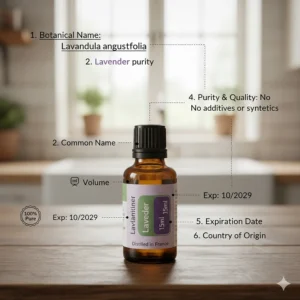
Reading Labels Correctly
Essential oil labels should include:
- Latin botanical name (e.g., Lavandula angustifolia)
- Country of origin
- Extraction method
- Part of plant used
- Batch number
- Expiration or distillation date
Missing information suggests lower quality or adulteration.
Pricing Reality Check
Genuine essential oils vary dramatically in price based on:
- Yield (rose takes 10,000 pounds of petals per pound of oil)
- Rarity of plant
- Geographic sourcing
- Organic certification
Price Guidelines:
- Lavender: $8-15 per 10ml
- Peppermint: $6-12 per 10ml
- Rose: $80-300 per 5ml
- Frankincense: $15-40 per 10ml
If prices seem too good to be true, oils are likely synthetic or heavily diluted.
Sustainable and Ethical Sourcing
Responsible companies:
- Support fair trade practices
- Use renewable harvesting methods
- Avoid endangered species (sandalwood, rosewood)
- Provide transparent supply chain information
FAQ: Your Essential Oil Safety Questions Answered
❓ How long do essential oils last once opened?
❓ Can I use essential oils while breastfeeding?
❓ What should I do if essential oil gets in my eyes?
❓ Are essential oils safe for elderly people?
❓ How much essential oil should I add to my bath?
Conclusion: Your Safe Aromatherapy Journey Starts Here
Understanding how to use essential oils safely transforms these powerful plant extracts from potential hazards into genuine wellness allies. You’ve now got the essential oil dilution chart for beginners, knowledge about essential oils toxic to pets, the complete photosensitive essential oils list, and comprehensive essential oil safety guidelines to guide every application.
The truth is simple: these aren’t just pleasant-smelling liquids—they’re highly concentrated therapeutic compounds that demand respect. Whether you’re creating your first roller bottle blend, setting up a new diffuser, or expanding your collection, safety protocols aren’t optional extras. They’re the foundation that allows you to enjoy aromatherapy’s benefits without the risks.
Remember my friend’s bergamot burn story from the introduction? That painful lesson taught both of us that carrier oil ratios for essential oils and photosensitivity awareness aren’t just theoretical—they’re practical safeguards against real harm. One moment of carelessness can lead to weeks of recovery and permanent skin damage.
Your next steps are straightforward:
- Start with a quality starter kit and carrier oil
- Invest in proper dilution tools (roller bottles, pipettes)
- Reference the dilution charts before every blend
- Conduct patch tests for new oils
- Keep pets safe by following species-specific guidelines
- Store everything securely and track shelf lives
The beauty of essential oils lies in their versatility and potency. Used wisely with proper essential oil contraindications awareness and dermal toxicity essential oils knowledge, these aromatic compounds can genuinely enhance your wellness routine. Used carelessly, they create problems you never anticipated.
Which safety practice will you implement first? Whether it’s finally creating that dilution chart, pet-proofing your diffuser setup, or upgrading to quality carrier oils, every step toward safer use counts. Your aromatherapy journey should smell amazing AND keep everyone in your household healthy.
Recommended for You
- doTERRA vs Young Living vs Plant Therapy: 7 Best Alternatives 2026
- 7 Best Essential Oil Starter Kit Best Value – Top Picks 2026
- 7 Best Muscle Relief Essential Oil Blends for Athletes (2026)
Disclaimer: This article contains affiliate links. If you purchase products through these links, we may earn a small commission at no additional cost to you.
✨ Found this helpful? Share it with your friends! 💬🤗
