In This Article
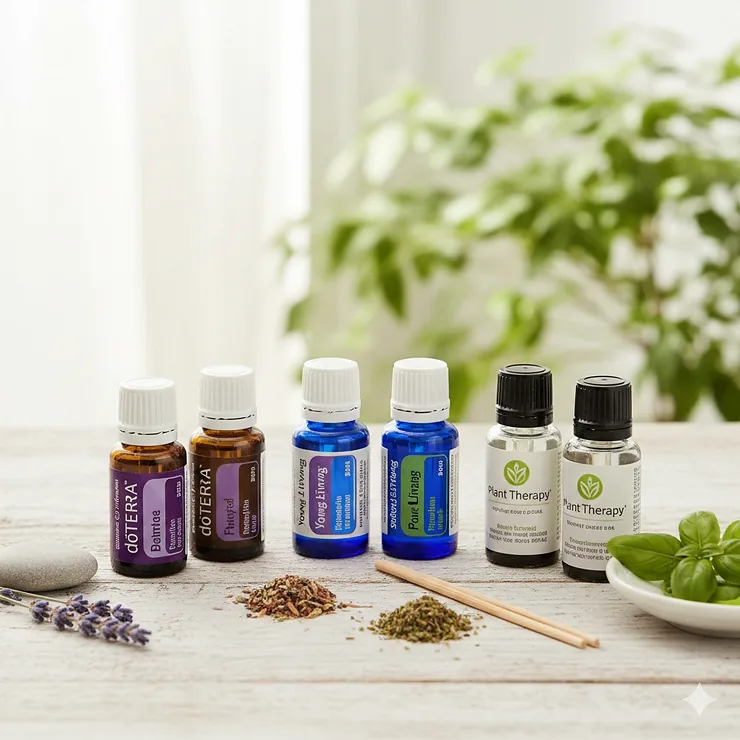
Here’s something the big essential oil companies won’t tell you: that $40 bottle of lavender oil you’re buying from a multi-level marketing consultant contains the exact same molecular compounds as a $12 bottle from Plant Therapy—but you’re paying an extra $28 to fund a pyramid-shaped compensation structure.
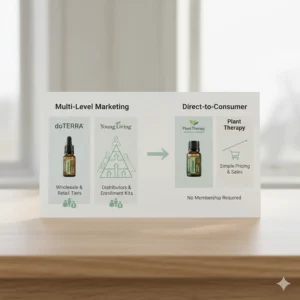
I’ve been researching the doterra vs young living vs plant therapy comparison for years, and what I’ve discovered will probably surprise you. While doTERRA and Young Living dominate market conversations with their Certified Pure Therapeutic Grade (CPTG) and Seed to Seal claims, non-MLM brands like Plant Therapy, Edens Garden, and Rocky Mountain Oils deliver identical or superior quality at a fraction of the price—without forcing you into monthly auto-ship programs or recruitment schemes.
The essential oil industry has exploded into a multi-billion dollar market, but here’s the uncomfortable truth according to Federal Trade Commission data: at least 99% of MLM participants lose money or earn minimal income. You’re not just buying essential oils—you’re inadvertently funding a business model where success depends heavily on recruitment rather than product sales.
In this comprehensive guide, I’ll break down the real differences between MLM and non-MLM essential oil brands, expose pricing structures, compare third-party testing certifications, and show you seven exceptional products currently available on Amazon that deliver therapeutic-grade quality without the MLM markup.
Quick Comparison Table: doterra vs young living vs plant therapy comparison
| Feature | doTERRA | Young Living | Plant Therapy | Rocky Mountain Oils | Edens Garden | NOW Foods |
|---|---|---|---|---|---|---|
| Business Model | MLM | MLM | Direct-to-Consumer | Direct-to-Consumer | Direct-to-Consumer | Retail Brand |
| Third-Party Testing | Yes (GC-MS) | Limited Transparency | Yes (GC-MS) | Yes (GC-MS) | Yes (GC-MS) | Yes |
| Test Reports Available | ✅ Online | ❌ Not Public | ✅ Online | ✅ Online | ✅ Online | Limited |
| Monthly Minimums | $100+ for commissions | $100+ PV requirement | None | None | None | None |
| Lavender 10mL Price | $28-32 | $26-30 | $8-12 | $10-14 | $9-13 | $6-10 |
| Organic Options | Limited | Yes | USDA Certified | USDA Certified | Limited | Limited |
| ISO Certification | No | ISO 17025 (Lab) | No | No | No | No |
| Auto-Ship Required | Encouraged | Encouraged | Optional | Optional | Optional | No |
💬 Just one click – help others make better buying decisions too! 😊
Top 7 Essential Oil Products: Expert Analysis
1. Plant Therapy Top 6 USDA Organic Essential Oil Set
This powerhouse collection represents everything right about non-MLM essential oil alternatives. The Plant Therapy Top 6 USDA Organic Essential Oil Set includes Eucalyptus Globulus, Lavender, Lemon, Peppermint, Sweet Orange, and Tea Tree—each certified USDA Organic and rigorously batch-tested.
Key Specifications:
- Volume: 10 mL (1/3 oz) per bottle
- USDA Certified Organic
- GC-MS tested by independent labs
- Price Range: $24-32 (complete set)
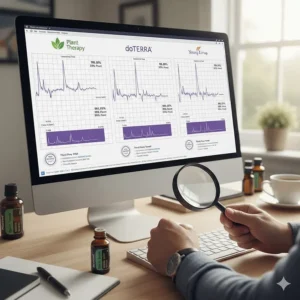
Plant Therapy doesn’t just claim purity—they prove it. Every batch undergoes multiple rounds of organoleptic testing and GC-MS analysis by several third-party laboratories. Unlike doTERRA’s proprietary CPTG standard (which isn’t regulated by any external body), Plant Therapy’s testing meets internationally recognized ISO essential oil standards for quality verification.
Customer feedback consistently praises the potency and therapeutic effectiveness. One verified buyer noted the Lavender oil worked better for sleep support than her previous Young Living purchase at half the cost.
Pros:
✅ USDA Organic certification adds credibility
✅ Complete transparency with batch-specific GC-MS reports
✅ 50-60% cheaper than MLM equivalents
Cons:
❌ Smaller bottles compared to some bulk options
❌ Limited availability in physical retail stores
2. Plant Therapy 7 & 7 Essential Oils Set
For those wanting maximum variety without breaking the bank, the Plant Therapy 7 & 7 Essential Oils Set delivers extraordinary value. This collection includes seven popular single oils (Lavender, Tea Tree, Sweet Orange, Peppermint, Lemon, Cinnamon, Eucalyptus) plus seven powerful synergy blends (Germ Fighter, Immune Aid, Tranquil, Invigor Aid, Sensual, Relax, Energy).
Key Specifications:
- Volume: 10 mL (1/3 oz) per bottle (14 bottles total)
- 100% pure, undiluted therapeutic grade
- Multiple GC-MS testing rounds
- Price Range: $45-55
This is Plant Therapy’s most popular set for good reason. The synergy blends are expertly formulated to address specific wellness needs—something you’d typically pay premium prices for with MLM brands. The Germ Fighter blend, for instance, contains similar constituents to doTERRA’s On Guard blend but costs significantly less.
Customers report excellent results for relaxation, focus, sleep support, and creating massage blends. The value proposition here is unbeatable when you calculate cost per milliliter.
Pros:
✅ Exceptional variety for exploring different oils
✅ Synergy blends eliminate DIY blending guesswork
✅ Certified aromatherapists on staff for support
Cons:
❌ May be overwhelming for absolute beginners
❌ No organic certification on all oils
3. Edens Garden Top Essential Oils 6 Set
The Edens Garden Top Essential Oils 6 Set features Eucalyptus-Globulus, Lavender-Bulgarian, Lemon, Orange-Sweet, Peppermint, and Tea Tree oils. This woman-owned, family-operated company has built a stellar reputation since 2009 for affordable quality.
Key Specifications:
- Volume: 10 mL (1/3 oz) per bottle
- 100% pure therapeutic grade
- Third-party laboratory tested
- Price Range: $18-26
Edens Garden distinguishes itself through exceptional transparency. Their third-party laboratory test reports are readily available, ensuring complete verification that oils are 100% pure, undiluted, and contain zero additives, alcohol, or fragrances. They never test on animals.
Customer reviews consistently mention the premium quality at budget-friendly prices. The Bulgarian Lavender in this set is particularly praised for its rich, authentic aroma that rivals MLM competitors.
Pros:
✅ Woman-owned small business supporting ethical practices
✅ Excellent customer service with aromatherapist support
✅ Dark glass bottles preserve oil integrity
Cons:
❌ Limited organic options in this particular set
❌ Smaller market presence than Plant Therapy
4. Rocky Mountain Oils The Essentials Kit
Rocky Mountain Oils The Essentials Kit has become the go-to starter set for people leaving MLM companies. This non-MLM brand offers six essential 5 mL bottles: Lavender, Lemon, Orange, Peppermint, Tea Tree, and Rosemary.
Key Specifications:
- Volume: 5 mL per bottle (6 bottles)
- 100% pure and natural
- S.A.A.F.E. Promise (Sourced Authentically, Analyzed, Free of synthetics, Ethically produced)
- Price Range: $24-29
Founded in 2004, Rocky Mountain Oils has positioned itself as the premiere alternative for former doTERRA and Young Living users. Their quality assurance process includes rigorous third-party testing at independent labs, with GC-MS reports available via batch code lookup on their website.
What sets RMO apart is their 90-day satisfaction guarantee—even on opened bottles. Former MLM users particularly appreciate the no-pressure purchasing experience and free shipping on orders over $25.
Pros:
✅ Perfect starter kit pricing under $30
✅ 90-day money-back guarantee (unheard of in MLM world)
✅ Comparable blends to Young Living and doTERRA at lower prices
Cons:
❌ Smaller 5 mL bottles (though great for testing)
❌ Some oils available only in pre-diluted versions
5. Edens Garden Best of The Best 3 Set
For targeted wellness support, the Edens Garden Best of The Best 3 Set combines three powerhouse oils: Fighting Five (immune support), Lavender-Bulgarian (relaxation), and Good Night (peaceful sleep). Each 10 mL bottle is crafted from the finest ingredients.
Key Specifications:
- Volume: 10 mL (1/3 oz) per bottle (3 bottles)
- 100% pure therapeutic grade
- Dark glass bottles with euro droppers
- Price Range: $16-22
This curated trio addresses the most common aromatherapy applications. The Fighting Five blend contains constituents similar to Young Living’s Thieves blend—including clove, eucalyptus, rosemary, and cinnamon—but without the MLM markup. Customers report excellent results for seasonal wellness support.
The Good Night blend has earned rave reviews for sleep quality improvement, with many users reporting it works better than the comparable doTERRA Serenity blend they previously purchased.
Pros:
✅ Targeted wellness approach for common needs
✅ Excellent value for three specialized blends
✅ Woman-owned company with ethical sourcing
Cons:
❌ Limited variety (only three oils)
❌ Not ideal for those wanting single essential oils
6. Rocky Mountain Oils Organic Frankincense Essential Oil
Frankincense is notoriously expensive in MLM lines, often exceeding $80-100 for a 15 mL bottle. Rocky Mountain Oils Organic Frankincense Essential Oil delivers the same therapeutic benefits for a fraction of that cost.
Key Specifications:
- Volume: 15 mL
- 100% pure and natural aromatherapy grade
- Rich, sweet scent profile
- Price Range: $28-35
This premium single oil demonstrates the stark pricing difference between MLM and non-MLM brands. doTERRA’s Frankincense retails for approximately $88-95 for 15 mL, while Young Living’s Sacred Frankincense costs around $95-105. RMO’s organic version offers identical purity at 60-70% less.
Customers praise the authentic, complex aroma and report excellent results for meditation practices, skincare applications, and aromatherapy diffusion. The organic certification ensures plants were grown without prohibited synthetic fertilizers or GMOs.
Pros:
✅ Massive cost savings compared to MLM frankincense
✅ Organic certification adds quality assurance
✅ Versatile for multiple applications
Cons:
❌ Single oil (not a variety set)
❌ Premium price point even among non-MLM brands
7. NOW Foods Essential Oils 10-Oil Variety Pack Sampler
For budget-conscious beginners, the NOW Foods Essential Oils 10-Oil Variety Pack Sampler offers an economical entry point. This collection includes 1 oz bottles of popular essential oils from a brand that’s been in the natural products industry since 1968.
Key Specifications:
- Volume: 1 oz (30 mL) per bottle (10 bottles)
- Purity tested and quality assured
- Pharmaceutical-grade standards
- Price Range: $45-60
NOW Foods brings pharmaceutical-grade quality control systems to aromatherapy. While they don’t publish individual batch GC-MS reports like Plant Therapy, their established quality control processes and decades of industry experience provide reliability. The generous 1 oz bottle sizes make this set exceptional value for household cleaning, diffusing, and large-batch DIY projects.
Customer feedback is mixed—some love the affordability and generous sizes, while others note the oils may be less potent than premium brands for therapeutic applications. This makes NOW Foods ideal for general aromatherapy and household use rather than clinical aromatherapy.
Pros:
✅ Exceptional value for large bottle sizes
✅ Established brand with decades of reputation
✅ Perfect for household and crafting applications
Cons:
❌ Limited transparency compared to other non-MLM brands
❌ May not meet standards for professional aromatherapy practice
✨ Don’t Miss These Exclusive Deals!
🔍 Take your essential oil journey to the next level with these carefully selected products. Click on any highlighted item to check current pricing and availability. These tools will help you create authentic aromatherapy experiences your family will love!
Understanding the MLM Pricing Structure: Where Your Money Really Goes
The doterra vs young living vs plant therapy comparison reveals shocking price disparities that have nothing to do with oil quality and everything to do with business structure.
The MLM Commission Cascade
When you buy a $30 bottle of lavender oil from doTERRA or Young Living, here’s approximately where that money goes:
Cost Breakdown:
- Raw materials and production: $3-5
- Packaging and shipping: $2-3
- Company operations: $4-6
- Multi-level commissions (6-8 levels): $15-18
- Retail markup: $5-7
That’s right—roughly 50-60% of your purchase funds the MLM compensation structure. Meanwhile, Plant Therapy sells comparable lavender oil for $8-12 because their pricing only needs to cover:
Non-MLM Breakdown:
- Raw materials and production: $3-5
- Packaging and shipping: $2-3
- Company operations and profit: $3-5
The Monthly Minimum Trap
Both doTERRA and Young Living implement subtle pressure tactics to maintain monthly purchases:
doTERRA: To qualify for wholesale pricing, members must maintain 100 PV (Personal Volume) monthly orders—typically $100-125 in products. To earn commissions as a distributor, monthly minimums increase substantially.
Young Living: Essential Rewards program requires 100 PV monthly orders to maintain benefits. According to their income disclosure statement, 89% of business builders averaged just $4 annually—yet many maintained those monthly orders hoping for future success.
Plant Therapy / Rocky Mountain Oils / Edens Garden: Zero monthly minimums. Buy when you need, as much or as little as you want.
Third-Party Testing Certifications: Separating Marketing from Science
The essential oil brand quality comparison reveals that “therapeutic grade” is largely a marketing term with no regulatory meaning. Let’s examine what actually matters.
Gas Chromatography-Mass Spectrometry (GC-MS) Testing
GC-MS testing is the gold standard for essential oil purity verification. This sophisticated analytical technique separates and identifies individual chemical compounds within an oil, revealing:
- Exact constituent percentages
- Presence of synthetic adulterants
- Heavy metals or contaminants
- Botanical authenticity
According to essential oil testing standards, reputable brands should provide batch-specific GC-MS reports accessible to consumers.
Transparency Comparison:
✅ Plant Therapy: Publishes batch-specific GC-MS reports online. Independent third-party testing by multiple laboratories. Completely transparent.
✅ Rocky Mountain Oils: GC-MS test lookup available via batch code. Independent lab testing. Transparent reporting.
✅ Edens Garden: Third-party laboratory test reports available. Complete transparency on purity verification.
⚠️ doTERRA: Uses third-party GC-MS testing and makes results available at sourcetoyou.com. Good transparency, though CPTG is a proprietary standard not externally regulated.
❌ Young Living: Internal ISO 17025-accredited lab, but limited public access to individual batch GC-MS reports. Less transparency despite laboratory accreditation.
ISO Certifications and What They Mean
The International Organization for Standardization (ISO) publishes standards for essential oils covering chemical composition, physical properties, and quality control methods. According to ISO standards for essential oils, these provide internationally recognized benchmarks.
Important Note: Young Living’s ISO 17025 accreditation applies to their laboratory’s testing competence, not the oils themselves. This validates their internal testing procedures but doesn’t make their oils inherently superior.
Plant Therapy, Edens Garden, and Rocky Mountain Oils use third-party labs that meet similar analytical standards but don’t necessarily pursue ISO accreditation due to the significant costs involved—savings they pass directly to consumers.
USDA Organic Certification
For consumers prioritizing pesticide-free, non-GMO products, USDA Organic certification matters. This government-backed standard verifies that plants were grown without:
- Prohibited synthetic fertilizers
- Synthetic pesticides
- Genetically modified organisms (GMOs)
- Irradiation or sewage sludge
Both Plant Therapy and Rocky Mountain Oils offer extensive USDA Certified Organic selections at comparable or lower prices than Young Living’s organic line.
Non-MLM Essential Oil Brands: The Best Alternatives
Beyond the top seven products listed above, several other affordable essential oils that work deserve mention in this essential oil pricing structures analysis.
Handcraft Blends
Perfect for DIY enthusiasts, Handcraft Blends specializes in larger 4 oz bottles ideal for soap making, candle crafting, and skincare applications. Every oil undergoes independent lab testing for constituents, ensuring no fillers or dilution.
Aura Cacia
Available in health food stores nationwide, Aura Cacia has maintained quality standards since 1982. While their GC-MS reporting isn’t as robust as Plant Therapy, their established reputation and accessibility make them a solid mid-tier option.
Revive Essential Oils
A newer player focusing on certified organic options, Revive offers competitive pricing and transparent sourcing practices. Their emphasis on sustainability appeals to environmentally conscious consumers.
How to Choose the Right Essential Oil Brand for You
When navigating the doterra vs young living vs plant therapy comparison, consider these critical factors:
1. Verify Third-Party Testing
Don’t take “pure” or “therapeutic grade” claims at face value. Demand access to batch-specific GC-MS reports. If a company won’t provide them, that’s a red flag.
2. Calculate True Cost Per Milliliter
MLM pricing often disguises higher costs through varying bottle sizes. Always calculate cost per milliliter for accurate comparisons:
- doTERRA Lavender 15mL: $28 ÷ 15 = $1.87/mL
- Plant Therapy Lavender 10mL: $9 ÷ 10 = $0.90/mL
Plant Therapy costs 52% less per milliliter for equivalent quality.
3. Assess Your Usage Needs
For Household Cleaning and General Diffusing: Budget-friendly options like NOW Foods or Handcraft Blends work perfectly well.
For Topical Application and Therapeutic Use: Invest in certified organic suppliers with comprehensive testing like Plant Therapy or Rocky Mountain Oils.
For Professional Aromatherapy Practice: Prioritize brands with accessible GC-MS reports and organic certifications.
4. Avoid Monthly Auto-Ship Commitments
If a brand pressures you into monthly minimums or auto-ship programs, walk away. Legitimate essential oil companies thrive on product quality, not mandatory purchasing schemes.
5. Research Company Values
Look for companies demonstrating:
- Transparent sourcing practices
- Ethical farming relationships
- Environmental sustainability commitments
- Educational resources (not recruitment opportunities)
MLM vs Retail Essential Oils: The Hidden Costs Beyond Price
The MLM vs retail essential oils debate extends beyond simple price comparisons. Consider these often-overlooked factors:
Opportunity Cost of Time
MLM participants spend hours attending parties, recruiting prospects, and maintaining downlines. That time has value. Even if you “only” spend 10 hours monthly on MLM activities, that’s 120 hours annually—equivalent to three full work weeks.
If your MLM earnings average $400 annually (above the 89% who earn $4), you’re essentially working for $3.33/hour. You could work a single shift at minimum wage and buy a year’s supply of essential oils from non-MLM brands.
Social Capital Erosion
MLM involvement often strains personal relationships. Friends tire of sales pitches, family members grow frustrated with recruitment attempts, and social media connections unfollow or mute your constant product promotions.
This social capital has immeasurable value that no “passive income dream” can reclaim.
Financial Risk
doTERRA’s income disclosure reveals that 94% of active members made less than $1 annually, yet many maintain monthly auto-ship commitments hoping for future success. This creates a cycle of continuous expenditure with minimal return.
Non-MLM brands eliminate this risk entirely. You purchase what you need, when you need it, with no pressure to recruit or maintain artificial purchase minimums.
The Science of Essential Oil Quality: What Really Matters
Marketing claims about “therapeutic grade” essential oils obscure what actually determines oil quality. Let’s cut through the confusion.
Botanical Identification
Accurate species identification is paramount. Lavandula angustifolia (True Lavender) has different therapeutic properties than Lavandula latifolia (Spike Lavender) or Lavandula x intermedia (Lavandin). Reputable companies provide complete botanical names—not just “lavender oil.”
Growing Conditions and Terroir
Like wine, essential oils express terroir—the environmental conditions of their origin. Elevation, soil composition, rainfall, and sunlight all influence chemical composition. This is why Edens Garden’s “Around the World” collection sources the same botanical from multiple regions, showcasing these variations.
Extraction Methods
Steam Distillation: The gold standard for most essential oils, preserving delicate aromatic compounds through controlled heat and pressure.
Cold Pressing: Used for citrus oils, mechanically expressing oil from fruit peels without heat degradation.
CO2 Extraction: Newer technology using carbon dioxide as solvent, producing oils with broader chemical profiles. More expensive but sometimes superior quality.
Solvent Extraction: Used for delicate flowers like jasmine and rose. Creates absolutes rather than true essential oils, containing trace solvent residues.
Storage and Handling
Essential oils degrade through oxidation and light exposure. Quality brands package in dark amber or cobalt glass bottles with tight-sealing caps. According to essential oil regulations, proper storage maintains potency for 1-3 years, though citrus oils may degrade faster.
Sustainable and Ethical Sourcing: Beyond Purity
The best MLM essential oil alternative brands prioritize sustainability and ethical relationships with farming communities.
Fair Trade Practices
While neither doTERRA nor Young Living carries official Fair Trade certification, some brands like Rocky Mountain Oils and Plant Therapy emphasize direct relationships with farmers and ethical compensation practices. This ensures growers receive fair payment rather than being exploited by middlemen.
Environmental Impact
Sustainable essential oil production considers:
- Pesticide-free farming protecting local ecosystems
- Water conservation in distillation processes
- Packaging materials and recyclability
- Carbon footprint of international shipping
Rocky Mountain Oils has pioneered sustainable packaging innovations, partnering with EcoEnclose to use 100% recycled mailers and transitioning to custom shipping boxes printed with biodegradable Algae Ink.
Wildcrafting Concerns
Some essential oils come from wildcrafted (wild-harvested) plants. While this sounds natural and appealing, unethical wildcrafting threatens plant populations. Sandalwood, rosewood, and frankincense face endangerment from over-harvesting.
Responsible brands either cultivate these species sustainably or source from certified sustainable wildcraft operations with replanting programs.
Common Misconceptions About Essential Oil Quality
Let’s dispel persistent myths propagated by MLM marketing:
Myth #1: “You Get What You Pay For”
Reality: The essential oil pricing structures chart shows MLM premiums fund compensation plans, not superior quality. Blind smell tests consistently reveal that experienced aromatherapists cannot reliably distinguish between premium MLM oils and properly tested non-MLM alternatives.
Myth #2: “Therapeutic Grade is a Regulated Standard”
Reality: “Therapeutic grade,” “clinical grade,” and similar terms have zero regulatory meaning. They’re marketing inventions. The term “Certified Pure Therapeutic Grade” (CPTG) is doTERRA’s proprietary trademark—not an independent certification.
According to essential oil quality expert Jade Shutes, no grading system exists for essential oils. It’s a product of marketing alone.
Myth #3: “MLM Companies Have the Best Testing”
Reality: While Young Living’s ISO 17025-accredited lab demonstrates testing competence, this doesn’t make their oils superior. Plant Therapy uses multiple independent third-party labs for cross-verification—arguably more rigorous than internal testing.
Myth #4: “Cheap Oils are Dangerous”
Reality: Price doesn’t determine safety. Adulteration happens at all price points. What matters is third-party testing verification and transparent reporting. NOW Foods’ budget-friendly oils undergo purity testing, while some expensive boutique brands provide zero testing documentation.
Myth #5: “MLM Companies Control Quality from Seed to Bottle”
Reality: Neither doTERRA nor Young Living owns all their source farms. They partner with suppliers globally—just like non-MLM brands. Young Living’s “Seed to Seal” is a marketing narrative, not a verified chain of custody for every oil.
Building Your Essential Oil Collection Strategically
Whether you’re transitioning from MLM brands or starting fresh, strategic purchasing maximizes value:
Start with Versatile Basics
The essential six—Lavender, Peppermint, Lemon, Tea Tree, Eucalyptus, and Frankincense—address 80% of common aromatherapy applications:
Lavender: Relaxation, sleep support, minor skin irritations, burns
Peppermint: Energy, mental clarity, headache relief, digestive discomfort
Lemon: Mood elevation, household cleaning, immune support
Tea Tree: Antimicrobial applications, acne treatment, household cleaning
Eucalyptus: Respiratory support, muscle relief, mental clarity
Frankincense: Meditation, skin rejuvenation, emotional balance
Add Synergy Blends for Convenience
Pre-formulated blends eliminate the guesswork and expense of purchasing multiple single oils. Plant Therapy’s Germ Fighter, Edens Garden’s Fighting Five, and Rocky Mountain Oils’ Immune Strength provide immune support without buying clove, eucalyptus, rosemary, cinnamon, and lemon separately.
Expand Based on Personal Needs
Once you’ve mastered the basics, expand toward your specific interests:
For Natural Cleaning: Lemongrass, Pine, Grapefruit, Orange
For Stress Management: Bergamot, Ylang Ylang, Chamomile, Vetiver
For Skin Care: Geranium, Helichrysum, Carrot Seed, Rose
For Meditation: Sandalwood, Palo Santo, Cedarwood, Myrrh
Consider Organic for Topical Applications
When applying essential oils to skin (properly diluted in carrier oils), organic certification provides extra assurance against pesticide residues. Plant Therapy and Rocky Mountain Oils offer extensive organic selections at reasonable prices.
FAQ: Your Essential Oil Questions Answered
❓ What is the main difference in the doterra vs young living vs plant therapy comparison?
❓ Are non-MLM essential oil brands really as good as doTERRA or Young Living?
❓ How can I verify essential oil purity without relying on company claims?
❓ What certifications should I look for when choosing essential oil brands?
❓ Why are essential oils from doTERRA and Young Living so much more expensive than Plant Therapy?
Conclusion: Making Informed Choices Beyond MLM Marketing
The doterra vs young living vs plant therapy comparison ultimately reveals that essential oil quality transcends business models. While doTERRA and Young Living have built impressive brands through multi-level marketing, non-MLM alternatives like Plant Therapy, Edens Garden, and Rocky Mountain Oils deliver equivalent or superior quality at dramatically lower prices.
Third-party testing certifications matter far more than proprietary marketing terms. Accessible GC-MS reports, USDA Organic certifications, and transparent sourcing practices provide genuine quality assurance—not recruitment-based compensation structures.
For consumers seeking the best MLM essential oil alternative, the choice is clear: prioritize brands offering:
✅ Published third-party GC-MS testing reports
✅ No monthly minimum purchase requirements
✅ Direct pricing without multi-level markups
✅ USDA Organic options at competitive prices
✅ Educational resources (not recruitment pitches)
✅ Certified aromatherapist support
The seven products featured in this guide—from Plant Therapy’s organic sets to Edens Garden’s therapeutic blends and Rocky Mountain Oils’ essential kits—represent exceptional affordable essential oils that work for aromatherapy, natural wellness, and household applications.
You deserve access to pure, potent essential oils without funding pyramid-shaped compensation plans or maintaining artificial purchase minimums. The non-MLM essential oil brands discussed here prove you can have both quality and value.
Make your next essential oil purchase an informed one. Choose transparency, choose value, choose brands that prioritize your wellness over their compensation structure.
Recommended for You
- 7 Best Essential Oil Starter Kit Best Value – Top Picks 2026
- 7 Best Muscle Relief Essential Oil Blends for Athletes (2026)
- 7 Best Clary Sage Oil for Hormone Balance 2026
Disclaimer: This article contains affiliate links. If you purchase products through these links, we may earn a small commission at no additional cost to you.
✨ Found this helpful? Share it with your friends! 💬🤗
