
In This Article
I’ll never forget the day my hairstylist asked if I’d been using something different on my hair. After months of experimenting with cedarwood oil for hair growth, my once-thinning strands were noticeably fuller and healthier. What started as a desperate attempt to combat hair loss turned into a fascinating journey through ancient aromatherapy wisdom backed by modern science.
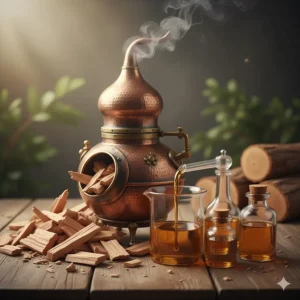
Cedarwood oil has been treasured for thousands of years, from ancient Egyptian embalming practices to Parisian beauty secrets. Today, this powerful essential oil is making waves in the hair care industry as a natural solution for everything from thinning hair to stubborn dandruff. Extracted through steam distillation from various cedar tree species, cedarwood essential oil scalp treatment works by improving circulation, balancing sebum production, and even blocking DHT—the hormone responsible for pattern baldness.
Whether you’re dealing with alopecia, searching for organic cedarwood hair oil blend options, or simply want thicker, healthier locks, you’re in the right place. In this comprehensive guide, I’ve tested and researched the top cedarwood oil products available in 2026, compared atlas cedarwood vs virginia cedarwood for hair benefits, and compiled expert-backed recipes you can use today.
Quick Comparison Table
| Product | Type | Volume | Key Feature | Price Range |
|---|---|---|---|---|
| Zongle Therapeutics Organic | Atlas Cedar | 1 oz (30ml) | USDA Certified Organic | $12-15 |
| Plant Therapy Atlas Cedar | Atlas Cedar | 10ml | GC/MS Tested, KidSafe | $8-12 |
| Gya Labs Cedarwood | Nepali Cedar | 0.34 oz (10ml) | Sustainably Sourced | $6-9 |
| Nexon Botanics Organic | Cedar Wood | 30ml | 95% Organic Material | $10-14 |
| H’ana Cedarwood Oil | Nepali Cedar | 1.02 oz (30ml) | Cruelty-Free | $11-15 |
| Plant Therapy Virginian Cedar | Virginia Cedar | 10ml | 100% Pure, Therapeutic | $7-10 |
| Plant Therapy Texas Cedar | Texas Cedar | 10ml | Sweet Balsamic Scent | $7-10 |
💬 Just one click – help others make better buying decisions too!😊
Top 7 Cedarwood Oil for Hair Growth: Expert Analysis
1. Zongle Therapeutics Organic Cedarwood Essential Oil
Zongle Therapeutics Organic Cedarwood Essential Oil leads our list as the premium choice for those serious about organic cedarwood hair oil blend treatments. This USDA-certified organic Atlas cedarwood (Cedrus atlantica) oil is extracted through steam distillation, preserving its potent hair-growth properties.
Key Specifications:
- 100% pure organic Atlas cedarwood
- USDA certified organic
- 1 oz (30ml) bottle with dropper
- Steam-distilled from Moroccan cedar
Customer Feedback: Users consistently report noticeable improvements in scalp health within 4-6 weeks, with several noting reduced itching and increased hair thickness. One verified buyer mentioned, “My dandruff disappeared after three weeks of use.”
✅ Pros:
- Certified organic quality
- Large 1 oz size offers excellent value
- Warm, woody aroma perfect for aromatherapy
- Effective for both hair growth and scalp health
❌ Cons:
- Slightly higher price point
- Requires dilution with carrier oil
Price: $12-15 (Amazon)

2. Plant Therapy Cedarwood Atlas Essential Oil
For those seeking pharmaceutical-grade quality backed by rigorous testing, Plant Therapy Cedarwood Atlas Essential Oil delivers exceptional value. Every batch undergoes multiple rounds of GC-MS testing by third-party laboratories, ensuring you’re getting pure cedarwood essential oil scalp treatment without fillers or adulterants.
Key Specifications:
- 100% pure Cedrus atlantica wood oil
- Multiple GC-MS testing rounds
- KidSafe certification
- 10ml therapeutic-grade bottle
Customer Feedback: Reviews highlight its effectiveness for hair loss prevention, with users appreciating the company’s transparency and certified aromatherapist support. Many users combine it with rosemary oil for enhanced DHT blocking essential oils effects.
✅ Pros:
- Batch-specific GC-MS reports available
- Free aromatherapist consultations
- Excellent for preventing hair loss
- Direct-to-consumer pricing
❌ Cons:
- Smaller 10ml size
- May require frequent repurchasing for long-term use
Price: $8-12 (Amazon)
3. Gya Labs Cedarwood Essential Oil
Gya Labs Cedarwood Essential Oil stands out for its sustainability credentials and high-quality Nepali cedarwood sourcing. This oil is perfect for those who want to support ethical harvesting while achieving beautiful hair growth results.
Key Specifications:
- Sustainably sourced from Nepali cedarwood stems
- Carbon-neutral production
- 0.34 oz (10ml) bottle
- Climate Pledge Friendly certified
Customer Feedback: Users love the crisp, woody notes and report excellent results when mixed with jojoba or sweet orange oil. Several customers note improvements in hair volume within two months of consistent use.
✅ Pros:
- Environmentally responsible sourcing
- Pleasant, authentic cedar scent
- Great for scalp circulation essential oils blends
- Affordable entry price point
❌ Cons:
- Smaller volume may not last long
- Scent may be too masculine for some users
Price: $6-9 (Amazon)
4. Nexon Botanics Organic Cedarwood Essential Oil
If you’re looking for a generous 30ml bottle without breaking the bank, Nexon Botanics Organic Cedarwood Essential Oil offers remarkable value. This small business brand focuses on transparency and natural ingredients, making it ideal for those seeking cedarwood oil for alopecia treatment.
Key Specifications:
- 95% organic certified materials
- 30ml (1 oz) substantial bottle
- Aromatherapy and therapeutic grade
- Small business product
Customer Feedback: Reviewers praise its effectiveness against dry, itchy scalp conditions. Many customers report that it cleanses excess oils while strengthening hair shafts, leading to visibly shinier hair after regular use.
✅ Pros:
- Excellent value for 30ml size
- Soothes scalp irritations effectively
- Natural dirt and oil cleanser
- Supports small businesses
❌ Cons:
- Less established brand reputation
- Limited availability compared to major brands
Price: $10-14 (Amazon)
5. H’ana Cedarwood Essential Oil
H’ana Cedarwood Essential Oil has earned its reputation as a nourishing powerhouse for hair care enthusiasts. Extracted from fresh Nepali cedarwood stems, this cruelty-free formula excels at awakening dormant follicles for fuller-looking locks.
Key Specifications:
- Fresh Nepali cedarwood stems
- 1.02 oz (30ml) bottle
- Cruelty-free certification
- Suitable for hair, skin, and diffusers
Customer Feedback: Users frequently mention the warm, comforting scent and visible improvements in hair density. One customer noted, “After using 4-5 drops with coconut oil three times weekly, my hair feels thicker and grows faster.”
✅ Pros:
- Multipurpose use (hair, skin, aromatherapy)
- Generous 30ml size
- Stimulates dormant follicles effectively
- Cruelty-free formulation
❌ Cons:
- May feel slightly heavier than other brands
- Woody scent might be overwhelming in large quantities
Price: $11-15 (Amazon)
6. Plant Therapy Cedarwood Virginian Essential Oil
When exploring atlas cedarwood vs virginia cedarwood for hair, Plant Therapy Cedarwood Virginian Essential Oil represents the Virginia cedar camp brilliantly. While technically from the Juniper family rather than true cedar, Virginia cedarwood (Juniperus virginiana) offers unique compounds like high cedrol and thujopsene levels.
Key Specifications:
- 100% pure Juniperus virginiana
- 10ml therapeutic-grade bottle
- Sweet, balsamic wood aroma
- Steam-distilled from Virginia cedar wood
Customer Feedback: Customers appreciate its sweeter, less medicinal scent compared to Atlas varieties. Many use it for creating custom hair serums and report excellent results for scalp health and hair strengthening.
✅ Pros:
- Distinctive sweet balsamic scent
- Different chemical profile from Atlas cedar
- Excellent for DIY hair products
- Affordable pricing
❌ Cons:
- Not a “true” cedar botanically
- Smaller 10ml volume
- Less research on hair-specific benefits
Price: $7-10 (Amazon)
7. Plant Therapy Texas Cedarwood Essential Oil
Rounding out our list, Plant Therapy Texas Cedarwood Essential Oil offers another Juniper-based option with its own unique properties. Distilled from Juniperus ashei or J. mexicana, Texas cedarwood provides calming aromatherapy benefits alongside potential hair growth support.
Key Specifications:
- Juniperus ashei/mexicana source
- 10ml or 30ml options available
- Sweet, balsamic wood scent
- Multiple GC-MS testing
Customer Feedback: Users love this oil for its calming effects and report that it helps freshen rooms while potentially promoting hair health. Several customers mention using it in immune-supporting blends alongside vetiver and lavender.
✅ Pros:
- Unique Texas cedar profile
- Promotes calmness and focus
- Available in multiple sizes
- Versatile for hair and aromatherapy
❌ Cons:
- Viscous texture can crystallize
- Less documented for hair growth specifically
- May require warming before use
Price: $7-10 (10ml), $12-16 (30ml) (Amazon)
✨ Don’t Miss These Exclusive Deals!
🔍 Take your hair growth journey to the next level with these carefully selected products. Click on any highlighted item above to check current pricing and availability. These therapeutic-grade oils will help you create authentic results your scalp will love!
Understanding Cedarwood Oil: What Science Says
Cedarwood oil, also known as cedar oil, is an essential oil derived from various types of conifers, primarily from the pine or cypress botanical families. The magic behind cedarwood oil for hair growth lies in its unique chemical composition and its effects on scalp health.
The Active Compounds That Matter
According to botanical research, cedarwood oils contain powerful sesquiterpenes and sesquiterpene alcohols. The most important compounds include:
Cedrol: This primary sesquiterpenic alcohol makes up a significant portion of many cedarwood oils. Studies suggest cedrol may help improve circulation to the scalp, creating optimal conditions for hair follicle function. It’s also what gives cedar its distinctive, grounding aroma.
Cedrene: Alpha and beta cedrene are sesquiterpenes that contribute to the oil’s antimicrobial properties. These compounds help keep the scalp clean and free from fungal infections that can impede healthy hair growth.
Atlantone: Found primarily in Atlas cedarwood, this compound is believed to have lipolytic effects, potentially breaking down excess sebum on oily scalps. This helps balance oil production and creates a healthier environment for hair follicles.
Atlas Cedarwood vs Virginia Cedarwood for Hair: The Complete Breakdown
One of the most common questions I receive is about the differences between atlas cedarwood vs virginia cedarwood for hair treatments. Understanding these distinctions can help you choose the right oil for your specific hair concerns.
Atlas Cedarwood (Cedrus atlantica)
Atlas cedarwood comes from the true cedar family (Pinaceae) and is native to Morocco’s Atlas Mountains. This “true” cedar offers several distinctive benefits:
Chemical Profile: Rich in sesquiterpenes, particularly atlantone, alpha-pinene, and himachalol. These compounds give Atlas cedar its superior anti-inflammatory and lipolytic properties.
Best For:
- Oily hair and scalp
- Anti-dandruff treatments
- Respiratory support
- Hair loss prevention
- Scalp soothing
Aroma: Dry, woody with subtle spicy undertones—often described as masculine but universally appealing. Think antique cedar chest.
Special Properties: A 1998 Scottish study published in the Archives of Dermatology found that a blend containing Atlas cedarwood, along with lavender, thyme, and rosemary, improved hair growth in 44% of alopecia areata patients. While the study didn’t isolate cedarwood’s individual contribution, it demonstrated the oil’s synergistic potential.
Virginia Cedarwood (Juniperus virginiana)
Despite its name, Virginia cedarwood isn’t a true cedar—it belongs to the Juniper family (Cupressaceae). However, it offers unique benefits:
Chemical Profile: High levels of cedrol and thujopsene, with different therapeutic properties than Atlas cedar.
Best For:
- Energy boost and stimulation
- Acne treatment
- General aromatherapy
- Soothing nervous tension
- Sleep quality improvement
Aroma: Sweeter and more fruit-like compared to Atlas cedar, with less of the medicinal edge.
Special Properties: Virginia cedarwood’s stimulant properties make it excellent for boosting energy, while its soothing scent helps calm nervous tension. It’s particularly popular in American aromatherapy due to its abundance.
Which Should You Choose?
For hair growth and scalp treatment specifically, Atlas cedarwood (Cedrus atlantica) has more documented benefits and traditional use. Its anti-inflammatory, antifungal, and sebum-regulating properties make it ideal for creating healthy scalp conditions.
However, Virginia cedarwood can work beautifully in blends and offers a gentler, sweeter aroma that many prefer. Some users find the best results come from alternating between the two or creating custom blends that leverage both profiles.
How Cedarwood Oil Promotes Hair Growth: The Science
The mechanisms behind cedarwood oil’s hair growth benefits are multifaceted and supported by both traditional use and emerging research. Let me break down exactly how this ancient remedy works on modern scalps.
1. Enhanced Scalp Circulation
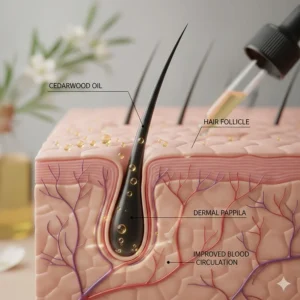
Poor blood circulation to the scalp is one of the leading causes of hair follicle weakening. When you massage diluted cedarwood oil into your scalp, it creates a gentle warming sensation that stimulates blood flow. This increased circulation delivers more oxygen and nutrients to hair follicles, supporting healthy growth and strengthening existing hair shafts.
2. DHT Blocking Potential
While cedarwood isn’t as extensively studied as saw palmetto for DHT blocking, it’s frequently included in DHT blocking essential oils formulations. DHT (dihydrotestosterone) is a hormone that binds to hair follicles and causes them to shrink—the primary mechanism behind androgenetic alopecia.
Natural remedies expert Dr. Josh Axe notes that cedarwood essential oil, when combined with rosemary, may help stimulate hair growth and slow graying. While more research is needed, traditional use and anecdotal evidence suggest cedarwood plays a supporting role in managing DHT-related hair loss.
3. Antimicrobial and Antifungal Protection
Your scalp is home to millions of microorganisms. While most are beneficial, imbalances can lead to fungal overgrowth, dandruff, and inflammation—all of which impede healthy hair growth. Cedarwood oil’s natural antimicrobial properties help maintain a balanced scalp microbiome.
Research has demonstrated Atlas cedar essential oil’s antibiotic activity against bacteria including E. coli, while also showing antifungal effects against various fungi. A healthy, clean scalp provides the optimal foundation for robust hair growth.
4. Sebum Regulation
Both excessively oily and overly dry scalps can contribute to hair problems. Cedarwood oil helps balance sebum production, addressing both extremes. The atlantone in Atlas cedarwood is thought to have lipolytic effects, breaking down excess oils without stripping the scalp completely dry.
5. Alopecia Areata Treatment
A landmark 1998 study in the Archives of Dermatology examined the effects of aromatherapy on alopecia areata—an autoimmune condition where the body attacks its own hair follicles. Researchers divided 86 patients into two groups: one received a blend of essential oils (including cedarwood, lavender, thyme, and rosemary) in carrier oils, while the control group received only carrier oils.
After seven months, 44% of the treatment group showed significant hair growth improvement compared to just 15% of the control group. While the study used a blend rather than isolating cedarwood, it provides strong evidence for essential oil aromatherapy as a complementary alopecia treatment.
Cedarwood Oil for Alopecia: What You Need to Know
Alopecia comes in several forms, but the most common are alopecia areata (autoimmune patchy hair loss) and androgenetic alopecia (pattern baldness). Let’s explore how cedarwood oil can be incorporated into treatment protocols for both conditions.
Alopecia Areata
This autoimmune condition causes the immune system to attack hair follicles, leading to sudden, patchy hair loss. While cedarwood oil isn’t a cure, research suggests it may help as part of a comprehensive treatment approach.
How to Use for Alopecia Areata:
Mix 3-4 drops each of:
- Atlas cedarwood essential oil
- Lavender essential oil
- Rosemary essential oil
- Thyme essential oil
Blend into 2 tablespoons of carrier oil (jojoba, grapeseed, or sweet almond work well). Massage into affected areas daily for at least 7 months, based on the study protocol that showed positive results.
Androgenetic Alopecia (Pattern Baldness)
This genetic condition, driven largely by DHT sensitivity, is the most common form of hair loss. While cedarwood isn’t as potent as pharmaceutical DHT blockers like finasteride, it offers a gentler, natural approach with far fewer side effects.
Best Practices:
- Combine cedarwood with known DHT blockers like saw palmetto oil, pumpkin seed oil, and rosemary oil
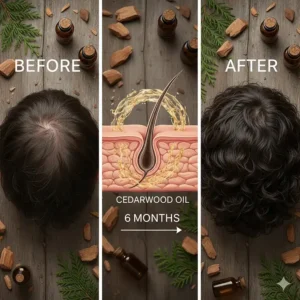
- Use consistently for at least 3-6 months before evaluating results
- Massage thoroughly into the scalp to maximize absorption and circulation benefits
- Consider pairing with internal DHT-blocking supplements for comprehensive approach
Important Note: According to WebMD, while research shows promising results, a 2020 review concluded there are no randomized controlled trials specifically looking at essential oils for hair loss. This means while trying cedarwood for hair regrowth may be worth exploring, it hasn’t been definitively proven to work through rigorous clinical trials.
Scalp Circulation Essential Oils: Cedarwood and Beyond
Improving scalp circulation is crucial for hair health, and cedarwood excels in this area. However, combining it with other circulation-boosting essential oils creates synergistic effects that amplify results.
Top Circulation-Boosting Essential Oils to Pair with Cedarwood
Rosemary Oil: The gold standard for hair growth, rosemary has been shown to perform comparably to minoxidil (Rogaine) in some studies. It enhances cellular generation and improves circulation dramatically.
Peppermint Oil: Research demonstrates peppermint oil’s ability to significantly speed hair growth while increasing follicle depth and overall thickness. It creates an invigorating tingling sensation that indicates increased blood flow.
Lavender Oil: While known for its calming properties, lavender also promotes hair growth through cellular regeneration. It’s particularly useful for stress-related hair loss.
Tea Tree Oil: Excellent for clearing follicles of buildup and debris, tea tree oil ensures nutrients can reach hair roots effectively.
DIY Scalp Circulation Serum
Combine in a 2 oz dropper bottle:
- 3 tablespoons jojoba oil (carrier)
- 8 drops cedarwood essential oil
- 8 drops rosemary essential oil
- 5 drops peppermint essential oil
- 4 drops lavender essential oil
Shake well before each use. Apply 5-10 drops to fingertips and massage into scalp in circular motions for 5-10 minutes. Use 2-3 times weekly before shampooing.
Organic Cedarwood Hair Oil Blend: Creating Your Custom Formula
Creating your own organic cedarwood hair oil blend allows you to target your specific hair concerns while ensuring quality ingredients. Here’s how to craft professional-grade formulations at home.
Basic Formula Structure
Every effective hair oil blend needs three components:
1. Base Carrier Oil (90-95% of blend): Choose based on your hair type
- Fine/oily hair: Grapeseed oil, jojoba oil
- Normal hair: Sweet almond oil, argan oil
- Dry/thick hair: Coconut oil, castor oil, avocado oil
2. Essential Oils (3-5% of blend): Cedarwood plus complementary oils
- For growth: Cedarwood, rosemary, peppermint
- For thickness: Cedarwood, rosemary, thyme
- For dandruff: Cedarwood, tea tree, lavender
- For oily scalp: Cedarwood (Atlas), lemon, clary sage
3. Optional Boosters (2% of blend):
- Vitamin E oil (antioxidant preservation)
- Castor oil (thickness and growth)
- Pumpkin seed oil (DHT blocking)
Premium Growth-Promoting Blend
In a 4 oz amber glass bottle, combine:
- 3.5 oz (105ml) jojoba oil
- 0.3 oz (9ml) castor oil
- 0.1 oz (3ml) pumpkin seed oil
- 0.1 oz (3ml) vitamin E oil
- 20 drops Atlas cedarwood essential oil
- 20 drops rosemary essential oil
- 15 drops lavender essential oil
- 10 drops peppermint essential oil
Instructions: Mix thoroughly by shaking for 30 seconds. Store in a cool, dark place. Apply 5-10 drops to scalp before bed, massage gently, and leave overnight. Shampoo as usual in the morning. Use 3-4 times weekly.
Cedarwood Oil Hair Mask Recipe: Deep Conditioning Treatments
Hair masks provide intensive nourishment that regular oils can’t match. These recipes combine cedarwood with complementary ingredients for maximum hair-strengthening benefits.
Recipe 1: Intensive Growth & Repair Mask
For: All hair types, especially damaged or thinning hair
Ingredients:
- 2 tablespoons coconut oil (melted)
- 1 tablespoon argan oil
- 1 tablespoon raw honey
- 1 egg yolk
- 5 drops cedarwood essential oil
- 5 drops rosemary essential oil
- 3 drops lavender essential oil
Instructions:
- Whisk egg yolk until frothy
- Add melted coconut oil (cooled to lukewarm), argan oil, and honey
- Blend until smooth
- Add essential oils and mix gently
- Apply to damp hair, focusing on scalp and roots
- Cover with shower cap
- Leave for 30-60 minutes
- Rinse with cool water (to avoid cooking egg)
- Shampoo and condition as normal
Use: Once weekly for optimal results
Recipe 2: Anti-Dandruff Scalp Treatment Mask
For: Oily scalp, dandruff, or fungal issues
Ingredients:
- 2 tablespoons plain yogurt (full-fat)
- 1 tablespoon apple cider vinegar
- 1 tablespoon coconut oil (melted)
- 5 drops Atlas cedarwood essential oil
- 5 drops tea tree oil
- 2 drops lemon essential oil
Instructions:
- Mix yogurt and apple cider vinegar
- Add melted, cooled coconut oil
- Incorporate essential oils
- Apply primarily to scalp, massaging thoroughly
- Work through to ends
- Leave for 20-30 minutes
- Rinse well with cool water
- Shampoo with gentle, sulfate-free shampoo
Use: 1-2 times weekly until dandruff improves, then once weekly for maintenance
Recipe 3: Overnight Deep Moisture Mask
For: Dry, brittle, or heat-damaged hair
Ingredients:
- 1/2 ripe avocado (mashed)
- 2 tablespoons olive oil
- 1 tablespoon honey
- 1 tablespoon coconut oil (melted)
- 4 drops cedarwood essential oil
- 3 drops sweet orange essential oil
Instructions:
- Blend avocado until completely smooth (no lumps)
- Mix in olive oil, honey, and coconut oil
- Add essential oils
- Apply generously to damp hair from roots to ends
- Braid or twist hair and cover with silk scarf or bonnet
- Leave overnight
- Rinse thoroughly with lukewarm water in morning
- Shampoo 1-2 times to remove all residue
Use: Once weekly or bi-weekly for extremely dry hair
Recipe 4: Volumizing & Strengthening Mask
For: Fine, limp hair needing body and strength
Ingredients:
- 2 egg whites
- 1 tablespoon castor oil
- 1 tablespoon aloe vera gel
- 1 teaspoon lemon juice
- 4 drops cedarwood essential oil
- 3 drops peppermint essential oil
Instructions:
- Whip egg whites until foamy
- Add castor oil, aloe vera, and lemon juice
- Mix essential oils into blend
- Apply to damp hair, focusing on roots and mid-lengths
- Leave for 20-30 minutes
- Rinse with cool water (important: avoid hot water!)
- Shampoo and condition
Use: Once every 1-2 weeks
Pro Tips for Hair Mask Success
✨ Always patch test: Test any new mask on a small section of skin 24 hours before full application
🌡️ Temperature matters: Never rinse egg-based masks with hot water—you’ll end up with scrambled eggs in your hair!
⏰ Timing is key: Don’t leave masks on longer than recommended, especially protein-rich ones (egg-based), as they can make hair brittle
🧴 Thorough rinsing: Take time to rinse completely. Leftover residue can make hair look greasy or dull
💧 Damp vs wet: Apply most masks to damp (towel-dried) hair rather than soaking wet hair for better absorption
How to Use Cedarwood Oil for Hair: Application Methods
Proper application makes all the difference in achieving optimal results with cedarwood oil for hair growth. Here are the most effective methods, each with specific benefits.
Method 1: Pre-Shampoo Scalp Massage (Most Effective)
This method maximizes absorption and provides the longest contact time with your scalp.
What You’ll Need:
- 3-4 drops cedarwood essential oil
- 1 tablespoon carrier oil (jojoba, coconut, or sweet almond)
Steps:
- Mix oils in palm and rub hands together to warm
- Part hair into sections
- Apply oil blend directly to scalp using fingertips
- Massage in firm, circular motions for 5-10 minutes
- Work through to ends if hair is dry
- Leave on for minimum 30 minutes (or overnight for intensive treatment)
- Shampoo twice to remove all oil
- Condition as usual
Frequency: 2-3 times weekly for hair growth goals, once weekly for maintenance
Method 2: Add to Your Shampoo
Perfect for those who want consistent benefits without extra time commitment.
What You’ll Need:
- 8 oz sulfate-free shampoo bottle
- 10-15 drops cedarwood essential oil
- Optional: 5-10 drops complementary oils (rosemary, lavender)
Steps:
- Remove about 1 oz of shampoo to make room
- Add cedarwood oil directly to bottle
- Shake vigorously for 30 seconds
- Use as normal shampoo
- Leave lather on scalp 2-3 minutes before rinsing
- Shake bottle before each use
Frequency: Daily or as often as you shampoo
Method 3: Leave-In Treatment Spray
Lightweight option for fine hair or midday refreshment.
What You’ll Need:
- 4 oz spray bottle
- 3.5 oz distilled water
- 0.5 oz witch hazel or apple cider vinegar
- 10 drops cedarwood essential oil
- 5 drops rosemary essential oil
- Optional: 5 drops polysorbate 20 (helps oils mix with water)
Steps:
- Combine all ingredients in spray bottle
- Shake well before each use (separation is normal)
- Spray onto scalp on dry or damp hair
- Massage in gently
- Do not rinse—leave in
Frequency: Daily or every other day
Method 4: Hot Oil Treatment
Intensive treatment for maximum penetration and moisture.
What You’ll Need:
- 2 tablespoons carrier oil blend
- 5-6 drops cedarwood essential oil
- Heat-safe bowl
- Shower cap
- Warm towel
Steps:
- Warm carrier oil in bowl over hot water (not microwave)
- Test temperature on wrist—should be warm, not hot
- Mix in essential oils
- Section hair and apply warm oil to scalp and hair
- Massage scalp for 5 minutes
- Cover with shower cap
- Wrap warm towel around head
- Leave for 30-45 minutes (reheat towel midway if it cools)
- Shampoo 2-3 times to fully remove oil
Frequency: Once weekly or bi-weekly for intense treatment
Method 5: Nighttime Scalp Treatment
Best for those with very dry scalps or severe hair loss concerns.
What You’ll Need:
- 5-8 drops treatment blend
- Silk or satin pillowcase (to protect bedding)
Steps:
- Apply 5-8 drops of pre-mixed cedarwood blend to fingertips
- Part hair into sections
- Apply directly to scalp along parts
- Massage gently for 3-5 minutes
- Braid or tie hair back
- Sleep with treatment on scalp
- Shampoo in morning
Frequency: 2-4 times weekly
Important Safety Guidelines
⚠️ Always dilute: Never apply cedarwood essential oil directly to scalp undiluted. Standard dilution is 2-3% (about 12-18 drops per ounce of carrier oil)
🤰 Pregnancy caution: Pregnant women should consult healthcare providers before using cedarwood oil
👶 Keep away from children: Store out of reach; cedarwood can be toxic if ingested
🧪 Patch test first: Apply small amount to inner arm 24 hours before scalp use
🚫 Avoid eyes and mucous membranes: If contact occurs, rinse with carrier oil (not water)
📅 Give it time: Consistent use for at least 8-12 weeks is needed to see noticeable hair growth results
Combining Cedarwood with Other Hair Growth Ingredients
The real magic happens when you combine cedarwood oil with complementary ingredients that address different aspects of hair health. Here are scientifically-backed combinations worth trying.
Cedarwood + Rosemary: The Growth Power Duo
This combination is perhaps the most researched and effective for promoting hair growth. A 2015 study found rosemary oil performed as well as 2% minoxidil for androgenetic alopecia, and when combined with cedarwood’s circulation-boosting properties, results can be remarkable.
Best For: Hair growth, thickness, preventing premature graying
Ratio: Equal parts or 2:1 (rosemary:cedarwood) in carrier oil
Cedarwood + Pumpkin Seed Oil: DHT Blocking Powerhouse
Pumpkin seed oil contains phytosterols that inhibit 5-alpha-reductase, the enzyme that converts testosterone to DHT. Combined with cedarwood’s scalp-supporting properties, this creates a potent natural DHT blocker.
Best For: Pattern baldness, hair thinning, hormonal hair loss
Ratio: 70% pumpkin seed oil (carrier), 15% jojoba oil, 15% essential oil blend (10% cedarwood, 5% rosemary)
Cedarwood + Tea Tree: Scalp Health Specialists
This antimicrobial combo tackles dandruff, fungal infections, and buildup that can clog follicles and prevent growth.
Best For: Dandruff, oily scalp, itchy scalp, folliculitis
Ratio: Equal parts in carrier oil (1-2% total essential oil concentration)
Cedarwood + Lavender + Thyme: The Alopecia Areata Protocol
Based on the landmark 1998 study, this blend showed significant improvements for alopecia areata patients.
Best For: Alopecia areata, patchy hair loss, autoimmune-related hair loss
Recipe:
- 20ml jojoba oil
- 3ml grapeseed oil
- 2ml evening primrose oil
- 108mg lavender essential oil (approximately 2ml or 40 drops)
- 94mg Atlas cedarwood essential oil (approximately 1.7ml or 36 drops)
- 88mg thyme essential oil (approximately 1.6ml or 34 drops)
- 108mg rosemary essential oil (approximately 2ml or 40 drops)
Massage into affected areas daily.
Cedarwood + Castor Oil: The Thickness Builder
Castor oil’s ricinoleic acid content helps thicken hair shafts, while cedarwood supports healthy growth from the follicle.
Best For: Thin, fine hair; eyebrow/eyelash growth; edges and temples
Ratio: 80% castor oil, 15% lighter carrier oil (to reduce viscosity), 5% cedarwood essential oil
Cedarwood + Biotin-Rich Ingredients: The Comprehensive Approach
While cedarwood works topically, combining external application with biotin-rich treatments addresses hair health from multiple angles.
Topical Blend:
- Cedarwood oil in carrier
- Mashed avocado (high in biotin)
- Egg yolk (biotin and protein)
- Honey (moisture and nutrients)
Frequency: Weekly mask treatment plus consistent cedarwood scalp applications
The Complete Cedarwood Hair Care Routine
For best results, integrate cedarwood oil into a comprehensive hair care routine rather than using it as a standalone treatment. Here’s a week-by-week plan that maximizes benefits without overwhelming your schedule.
Week 1-4: Foundation Phase
Monday & Thursday:
- Pre-shampoo treatment: Cedarwood + rosemary scalp massage (30 min before shower)
- Shampoo with cedarwood-infused shampoo
- Condition normally
Tuesday & Friday:
- Leave-in spray application to scalp
- Gentle scalp massage (5 minutes)
Sunday:
- Deep conditioning hair mask with cedarwood
- Hot oil treatment alternative weeks
Daily:
- 2-3 drops cedarwood blend to hairbrush before styling
- Diffuse cedarwood for aromatherapy stress relief
Week 5-8: Intensification Phase
Monday, Wednesday, Friday:
- Nighttime scalp treatment (apply before bed, shampoo in morning)
- Increase massage time to 10 minutes
Tuesday, Thursday, Saturday:
- Leave-in spray + rosemary water rinse
- Focus on problem areas (temples, crown)
Sunday:
- Alternate between growth mask and moisture mask
- Add peppermint oil for enhanced circulation
Daily:
- Cedarwood diffusion 30 minutes morning and evening
- Brush with cedarwood-treated brush
Week 9-12: Optimization Phase
Every Other Day:
- Concentrated treatment on thinning areas
- Full scalp massage every application
Sunday:
- Most intensive mask recipe
- Add castor oil boost to edges and hairline
Daily:
- Maintain cedarwood-infused products
- Document progress with photos
Maintenance Phase (After 12 Weeks)
Once you’ve achieved desired results:
2-3 Times Weekly:
- Scalp treatments to maintain growth
- Alternating application methods to prevent plateau
Weekly:
- Deep conditioning mask
- Hot oil treatment monthly
As Needed:
- Target any new thinning areas immediately
- Adjust routine based on seasonal hair needs
Troubleshooting Common Issues
“My Hair Feels Greasy After Treatment”
Solutions:
- Reduce carrier oil amount
- Switch to lighter carrier (grapeseed instead of coconut)
- Ensure thorough shampooing (2-3 washes may be needed)
- Apply only to scalp, not hair lengths
- Try the spray method instead of oil treatment
“I’m Not Seeing Results After 6 Weeks”
Potential Issues:
- Inconsistent application (growth requires regular use)
- Insufficient scalp massage (circulation is key)
- Product quality (ensure pure, therapeutic-grade oil)
- Dilution too weak (increase to 3% concentration)
- Underlying health issues (consult healthcare provider)
Solutions:
- Increase frequency to 4-5 times weekly
- Extend massage time to 10 minutes
- Add complementary oils (rosemary, peppermint)
- Consider internal supplements (biotin, omega-3)
- Give it more time—12 weeks minimum for visible results
“The Scent is Too Strong”
Solutions:
- Reduce cedarwood drops by half
- Add lavender or sweet orange to soften the woody scent
- Switch from Atlas to Virginia cedarwood (sweeter aroma)
- Apply at night when scent matters less
- Use in well-ventilated areas
“My Scalp Feels Irritated”
Solutions:
- Reduce essential oil concentration to 1%
- Switch carrier oils (some people react to coconut)
- Ensure you’re using true cedarwood, not synthetic fragrance oil
- Do patch test on arm first
- Add aloe vera gel to soothe irritation
- If irritation persists, discontinue use and consult dermatologist
Storage and Shelf Life Tips
To maintain your cedarwood oil’s potency and prevent degradation:
🌡️ Temperature: Store in cool, dark place (68-72°F ideal)
🌑 Light Protection: Keep in amber or cobalt blue glass bottles
💧 Moisture: Ensure caps are tightly sealed to prevent oxidation
📅 Shelf Life:
- Pure cedarwood essential oil: 4-5 years when properly stored
- Diluted blends with carrier oils: 6-12 months (add vitamin E to extend)
- Homemade masks: Make fresh each time; don’t store
🧊 Refrigeration: Can extend shelf life but may thicken oils; return to room temperature before use
⚠️ Signs of Degradation: Smell turns rancid, color darkens significantly, oil becomes cloudy or develops particles
❓ FAQ: Your Cedarwood Hair Questions Answered
❓ Does cedarwood oil really work for hair growth or is it just hype?
❓ Can I use atlas cedarwood and virginia cedarwood together in one blend?
❓ How long before I see results with cedarwood oil for hair growth?
❓ Is cedarwood oil safe to use if I have sensitive skin or scalp conditions?
❓ Can cedarwood essential oil scalp treatment replace my dandruff shampoo?
Conclusion: Your Journey to Healthier Hair Starts Today
After exploring the science, products, and application methods for cedarwood oil for hair growth, you’re equipped with everything needed to transform your hair care routine. Whether you’re battling thinning temples, seeking an organic cedarwood hair oil blend for general wellness, or specifically targeting cedarwood oil for alopecia treatment, this ancient remedy offers a natural, accessible solution.
The key to success lies in consistency and patience. Unlike pharmaceutical options that may offer faster results but come with side effects, cedarwood works gradually and holistically. Choose quality products—I recommend starting with the Plant Therapy Organic Atlas Cedarwood for its testing standards and affordability, or the Zongle Therapeutics Organic if you prefer USDA-certified options.
Remember these essential takeaways:
🌿 Always dilute essential oils properly (2-3% in carrier oils)
💆♀️ Massage is crucial—it activates circulation and ensures absorption
⏰ Consistency trumps intensity—regular applications beat occasional intensive treatments
🧪 Combine with complementary ingredients like rosemary, peppermint, and pumpkin seed oil for enhanced DHT blocking essential oils effects
📸 Document your journey with monthly photos to track progress
The atlas cedarwood vs virginia cedarwood for hair debate doesn’t have a single winner—both offer unique benefits. Atlas provides superior scalp treatment properties, while Virginia offers a gentler aroma. Your choice depends on personal preference and specific hair concerns.
Start simple: pick one high-quality cedarwood oil, choose your preferred carrier oil, and commit to 2-3 applications weekly for 12 weeks. Track your progress, adjust as needed, and don’t be afraid to experiment with the cedarwood oil hair mask recipe variations I’ve shared.
Your hair has incredible regenerative potential—it just needs the right support. Cedarwood oil, used wisely and consistently, can provide exactly that. Here’s to healthier, thicker, more resilient hair!
Recommended for You
- 7 Best Affordable Sandalwood Oil Options for 2026
- 7 Best Oregano Oil for Immune Support 2026 – Proven Benefits
- 7 Best Stress Relief Essential Oil Blend for Anxiety & Calm (2026)
Disclaimer: This article contains affiliate links. If you purchase products through these links, we may earn a small commission at no additional cost to you.
✨ Found this helpful? Share it with your friends! 💬🤗
