
In This Article
When you’re battling nasal congestion at 3 AM, desperately searching for relief, synthetic decongestants aren’t your only option. I’ve spent years testing natural respiratory support methods, and nothing comes close to the effectiveness of quality eucalyptus oil for breaking through stubborn congestion.

The secret lies in a compound called 1,8-cineole, which makes up 70-85% of the best eucalyptus oil for congestion. Research from the National Institutes of Health demonstrates that this powerful compound reduces inflammation in lung macrophages while simultaneously clearing airways—a double-action punch that over-the-counter options simply can’t match.
But here’s what most people don’t realize: not all eucalyptus oils work the same way. Eucalyptus globulus targets lower respiratory issues like bronchitis, while eucalyptus radiata excels at upper respiratory relief. Choosing the wrong type means you’re essentially using the right tool in the wrong place. This guide cuts through the confusion with expert analysis of seven proven products that actually deliver results.
Whether you’re dealing with seasonal allergies, chronic sinus issues, or just need fast relief from a stubborn cold, you’ll discover exactly which eucalyptus oil matches your specific needs—plus the science-backed methods that maximize their effectiveness.
Quick Comparison Table
| Product | Type | Size | Cineole % | Price Range | Best For |
|---|---|---|---|---|---|
| Plant Therapy Eucalyptus Globulus | E. Globulus | 30 mL | 70-85% | $8-$12 | Lower respiratory |
| MOXĒ Nasal Inhaler | E. Globulus | 3-pack | 100% pure | $15-$20 | On-the-go relief |
| Plant Therapy Eucalyptus Radiata | E. Radiata | 10 mL | 65-70% | $6-$9 | Upper respiratory |
| NOW Essential Oils Eucalyptus | E. Globulus | 4 oz | 70-80% | $10-$15 | Budget-friendly bulk |
| Plant Guru Eucalyptus Oil | E. Globulus | 4 oz | 100% pure | $9-$14 | Value option |
| NasalFresh MD Eucalyptus Oil | E. Globulus | 1 oz | Medical-grade | $18-$25 | Nasal irrigation |
| Voyenna Breathe Blend | Synergy blend | 30 mL | Multi-compound | $12-$18 | All-around support |
💬 Just one click – help others make better buying decisions too!😊
Top 7 Best Eucalyptus Oil for Congestion: Expert Analysis
1. Plant Therapy Eucalyptus Globulus Essential Oil
When it comes to respiratory support, Plant Therapy Eucalyptus Globulus sets the gold standard. Sourced from India and steam-distilled from fresh eucalyptus leaves, this oil delivers an authentic herbaceous scent with soft woody undertones that signals its therapeutic potency.
Key Specifications:
- 100% pure, undiluted therapeutic grade
- 70-85% 1,8-cineole content
- Multiple size options: 10 mL, 30 mL, 100 mL
- Third-party GC-MS tested for purity
The high cineole content eucalyptus oil in this formulation makes it exceptionally effective for lower respiratory congestion. Customers consistently report noticeable relief within 15-20 minutes of diffusion, with many noting it outperforms more expensive brands. The company’s commitment to batch-specific testing and certified aromatherapists on staff adds an extra layer of confidence.
Customer Feedback: Users praise its potency for chest congestion and bronchial support, though some sensitive individuals find it needs dilution for topical use.
✅ Pros:
- Exceptional value for pharmaceutical-grade quality
- Multiple size options for different needs
- Strong respiratory support for deep congestion
❌ Cons:
- Strong camphoraceous scent may overwhelm sensitive noses
- Not recommended for children under 10 without dilution
Price Range: $6-$25 depending on size
2. MOXĒ Eucalyptus Essential Oil Nasal Inhaler (3-Pack)
MOXĒ Eucalyptus Nasal Inhaler revolutionizes portable eucalyptus oil for sinus relief. These compact inhalers contain 100% pure eucalyptus oil with no additives, fillers, or alcohol—just therapeutic-grade relief you can carry anywhere.
Key Specifications:
- Pure eucalyptus globulus oil
- No-mess aromatherapy delivery
- Made in USA (Florida)
- Compact, TSA-friendly design
For anyone needing immediate relief during flights, meetings, or commutes, this product is transformative. The woodsy yet sweet aroma provides instant clarity without the hassle of diffusers or topical application. Each inhaler delivers consistent doses, making it ideal for eucalyptus oil steam inhalation on-the-go.
Customer Feedback: Travelers and office workers love the convenience. One user mentioned keeping one in their purse, car, and desk drawer for instant access during allergy season.
✅ Pros:
- Ultimate portability for anywhere relief
- No mess, no diffuser needed
- Three-pack provides backup and sharing options
❌ Cons:
- Stronger than expected for first-time users
- Limited lifespan compared to bottled oils
Price Range: $15-$20 for 3-pack
3. Plant Therapy Eucalyptus Radiata Essential Oil
Plant Therapy Eucalyptus Radiata offers a gentler approach to respiratory support essential oils. Often called the “kinder cousin” of eucalyptus globulus, this variety contains 65-70% cineole with additional monoterpenols that create a smoother, softer aromatic profile.
Key Specifications:
- Steam-distilled eucalyptus radiata leaves
- Milder scent profile than globulus
- 100% pure, undiluted
- Available in 10 mL, 30 mL, 100 mL
This is your go-to choice for upper respiratory tract issues like rhinitis, sinusitis, and nasopharyngitis. The slightly lower cineole content makes it more suitable for sensitive individuals, elderly users, or those treating sinus congestion without the intensity of globulus. It blends beautifully with peppermint and tea tree for enhanced immune support.
Customer Feedback: Many users report it’s gentler on the skin when diluted, making it perfect for chest rubs. Parents appreciate using it in their children’s rooms (ages 3+) without overwhelming them.
✅ Pros:
- Gentler for sensitive users and children
- Excellent for upper respiratory infections
- Smooth, less camphorous aroma
❌ Cons:
- Slightly less potent than globulus for severe congestion
- Higher price per milliliter in smaller sizes
Price Range: $6-$22 depending on size
4. NOW Essential Oils Eucalyptus Oil
For budget-conscious households needing bulk quantity without sacrificing quality, NOW Essential Oils Eucalyptus delivers exceptional value. This established brand has built its reputation on consistency and affordability since 1968.
Key Specifications:
- 100% pure eucalyptus globulus
- Steam-distilled from leaves and twigs
- Available in 1 oz, 2 oz, 4 oz, 16 oz
- Purity tested in state-of-the-art labs
The 4-ounce bottle provides enough oil for months of daily use in diffusers, steam treatments, or cleaning solutions. With 70-80% cineole content, it matches premium brands in effectiveness while costing significantly less per ounce. The strong aromatic, camphoraceous scent is revitalizing and invigorating—perfect for clearing mental fog alongside physical congestion.
Customer Feedback: Long-term users appreciate the consistency across batches. Many mention it’s their go-to for making DIY vapor rubs and natural cleaning sprays.
✅ Pros:
- Outstanding value for regular users
- Large size options reduce frequent reordering
- Versatile for aromatherapy and household uses
❌ Cons:
- Basic packaging without dropper insert in larger sizes
- Less detailed sourcing information than boutique brands
Price Range: $8-$15 for 4 oz
5. Plant Guru Eucalyptus Essential Oil
Plant Guru Eucalyptus Oil has earned a devoted following among essential oil enthusiasts who appreciate quality without premium pricing. This therapeutic-grade oil competes directly with multi-level marketing brands at a fraction of the cost.
Key Specifications:
- 100% pure, undiluted eucalyptus globulus
- No synthetics, chemicals, or carrier bases
- Available in 5 mL and 4 oz sizes
- Family-owned small business
What sets Plant Guru apart is their strict quality control despite affordable pricing. Users report comparable—sometimes superior—results to brands costing 3-4 times more. The oil’s consistency allows for reliable eucalyptus oil steam inhalation sessions, whether you’re using a bowl of hot water or a professional nebulizer.
Customer Feedback: One asthmatic user shared it helps them breathe better than their inhaler during mild episodes. Pet owners with birds (notoriously sensitive to air quality) report no adverse reactions, suggesting exceptional purity.
✅ Pros:
- Premium quality at accessible prices
- Small business with responsive customer service
- Potent aroma provides long-lasting relief
❌ Cons:
- Thinner consistency than some premium brands
- Limited size options compared to larger companies
Price Range: $9-$14

6. NasalFresh MD Eucalyptus Essential Oil
NasalFresh MD represents the medical-grade tier of eucalyptus oil for sinus relief. Specifically formulated as a nasal wash additive, this pharmaceutical-quality oil dissolves mucus while cleansing and moisturizing nasal passages.
Key Specifications:
- Medical-grade eucalyptus essential oil
- Designed for nasal irrigation systems
- 1 oz concentrated formula
- Compatible with all nasal irrigators
This isn’t your standard aromatherapy oil—it’s engineered for direct sinus application when properly diluted. The recommended usage is 2 drops per 300 mL of saline solution, making the 1-ounce bottle last for months. Healthcare providers increasingly recommend this approach for chronic sinusitis sufferers who need more aggressive intervention than diffusion alone.
Customer Feedback: Users with chronic sinus issues report this provides relief when nothing else works. The mucus-dissolving properties are particularly praised by those recovering from colds or dealing with thick, stubborn congestion.
✅ Pros:
- Pharmaceutical-grade purity for nasal use
- Effective mucus solvent properties
- Small amount goes extremely far
❌ Cons:
- Higher price point per ounce
- Requires proper dilution knowledge
- Not suitable for diffuser-only users
Price Range: $18-$25
7. Voyenna Breathe Essential Oil Blend
Voyenna Breathe Blend takes a synergistic approach by combining eucalyptus with peppermint oils for enhanced respiratory support essential oils. This thoughtfully crafted blend targets multiple congestion pathways simultaneously.
Key Specifications:
- 100% organic plant-based oil blend
- Eucalyptus + peppermint + supporting oils
- 30 mL bottle
- Compatible with diffusers, humidifiers, nebulizers
The addition of menthol-rich peppermint creates a cooling sensation that complements eucalyptus’s warming properties. This dual-action approach provides both immediate relief and longer-lasting airway support. Users appreciate the versatility—it works in diffusers, as shower aromatherapy, in massage oils, or added to unscented lotion for chest rubs.
Customer Feedback: Many report sleeping better when diffusing this blend at night. The soothing aromatic combination helps with headaches and mental clarity alongside physical congestion relief.
✅ Pros:
- Synergistic formula addresses multiple symptoms
- Pleasant, balanced aroma (less medicinal)
- Multiple application methods
❌ Cons:
- Pre-mixed ratio may not suit all preferences
- Can’t adjust individual oil concentrations
- Slightly more expensive than single oils
Price Range: $12-$18
✨ Don’t Miss These Exclusive Deals!
🔍 Take your respiratory wellness to the next level with these carefully selected products. Click on any highlighted item to check current pricing and availability. These tools will help you breathe easier and experience authentic relief your family deserves!
Understanding Cineole Content Eucalyptus Oil: The Science Behind Relief
The effectiveness of eucalyptus oil for congestion hinges on one critical compound: 1,8-cineole (also called eucalyptol). This monoterpene oxide comprises 65-85% of therapeutic eucalyptus oils and delivers the powerful decongestant properties you’re seeking.
How Cineole Works in Your Respiratory System
According to research published in the Journal of Essential Oil Research, cineole exhibits several mechanisms that provide respiratory relief:
Anti-inflammatory Action: Cineole reduces pro-inflammatory mediators like TNF-α and IL-1β in lung macrophages. This means less swelling in your airways, allowing easier breathing even during severe congestion episodes.
Mucolytic Properties: The compound increases ciliary beat frequency in the mucous membrane—essentially helping your body’s natural cleaning system work faster. Thick, stubborn mucus becomes more fluid and easier to expel.
Bronchodilation: Cineole relaxes smooth muscle tissue in airways, physically opening passages that inflammation has narrowed. This dual approach of reducing inflammation while mechanically widening airways explains why users feel relief so quickly.
Cineole Content by Eucalyptus Species
Different eucalyptus species contain varying cineole levels, which dramatically impacts their therapeutic applications:
- Eucalyptus Globulus: 70-85% cineole—strongest for lower respiratory issues
- Eucalyptus Radiata: 65-70% cineole—gentler for upper respiratory tract
- Eucalyptus Citriodora: <10% cineole—minimal respiratory benefit but excellent for skin
Studies from Frontiers in Pharmacology demonstrate that cineole content between 30-100 mg/kg provides optimal immune system support without oversuppression. This sweet spot explains why moderate daily use of quality eucalyptus oil supports rather than overwhelms your body’s natural defenses.
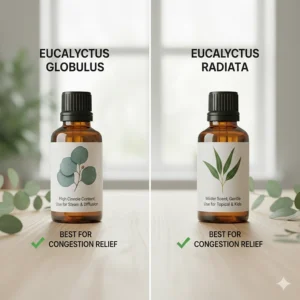
Eucalyptus Globulus vs Radiata for Colds: Which Should You Choose?
The eternal debate among eucalyptus enthusiasts boils down to globulus versus radiata. Both offer powerful respiratory support, but their differences matter significantly for targeted relief.
Eucalyptus Globulus: The Powerhouse
Eucalyptus globulus, commonly called Blue Gum, packs the highest cineole punch at 70-85%. This makes it ideal for:
- Deep chest congestion from bronchitis or pneumonia
- Productive coughs with thick mucus
- Lower respiratory tract infections
- Severe sinus pressure requiring aggressive intervention
The robust, camphoraceous aroma clears airways immediately but can feel overwhelming to sensitive users. Think of globulus as the heavy artillery when congestion has deeply settled into your lungs.
Eucalyptus Radiata: The Gentle Specialist
Eucalyptus radiata, known as Narrow-Leaved Peppermint, contains 65-70% cineole with additional α-terpineol and linalool. This creates a softer aromatic profile perfect for:
- Sinusitis and rhinitis in upper respiratory passages
- Ear infections (applied diluted around the ear)
- Early-stage colds before deep congestion sets in
- Sensitive users including children over 3 years
According to aromatherapy experts at Tisserand Institute, while radiata has slightly less cineole, the difference in safety is almost negligible for most adults. The real distinction lies in their aromatic experience and where they work best anatomically.
The Combination Strategy
Many experienced users keep both types on hand, using radiata at the first sign of symptoms and switching to globulus if congestion migrates to the chest. This layered approach matches the oil to your symptoms’ location and severity, maximizing effectiveness while minimizing the need for synthetic medications.
Organic Eucalyptus Essential Oil for Respiratory Support
The organic certification on your eucalyptus bottle represents more than marketing hype—it indicates fundamental differences in cultivation, purity, and therapeutic potential.
What Organic Certification Really Means
USDA Certified Organic eucalyptus oil must meet stringent requirements:
- Trees grown without synthetic fertilizers or prohibited pesticides
- Soil tested and certified free of contaminants for 3+ years
- No GMO plant material
- Sustainable harvesting practices that preserve ecosystems
These standards matter because eucalyptus trees are bioaccumulators. They absorb whatever exists in their soil—beneficial minerals or toxic residues. Conventionally grown trees might carry trace pesticides that survive the distillation process, potentially irritating already inflamed respiratory tissues.
Therapeutic Advantages of Organic Oils
Research indicates organic essential oils often contain higher concentrations of secondary metabolites—the very compounds providing therapeutic benefits. Without chemical stressors, plants produce more robust terpene profiles, potentially explaining why users report stronger effects from organic eucalyptus oil for sinus relief.
The biodiversity requirement for organic certification also ensures eucalyptus trees grow in healthier ecosystems. This environmental balance translates to oils with more complex aromatic profiles and balanced chemical compositions.
When Organic Matters Most
Prioritize organic certification for:
- Nebulizer use where you’re inhaling concentrated vapors directly
- Topical applications on sensitive skin or open pores
- Children and elderly users with developing or compromised immune systems
- Long-term daily use where even trace contaminants accumulate
For occasional diffuser use in well-ventilated spaces, the premium for organic may not justify the cost. But for therapeutic respiratory applications, especially eucalyptus oil nebulizer use, organic certification provides crucial peace of mind.
Eucalyptus Oil Steam Inhalation: Maximizing Your Results
Steam inhalation remains the most direct, effective method for delivering eucalyptus oil benefits to congested airways. This time-tested technique combines eucalyptus’s therapeutic compounds with warm, humid air that loosens mucus and soothes inflamed tissues.
The Science-Backed Method
According to the National Association for Holistic Aromatherapy (NAHA), proper steam inhalation involves specific parameters for safety and effectiveness:
Equipment:
- Large heatproof bowl or pot
- Boiling water (not actively boiling during use)
- Clean towel to create a steam tent
- 3-7 drops quality eucalyptus oil
Technique:
- Pour near-boiling water into your bowl
- Add 3-7 drops of eucalyptus oil
- Create a tent with your towel over your head and bowl
- Keep eyes closed, breathe deeply for 5-10 minutes
- Take breaks if the steam feels too intense
Critical Safety Points:
- Maintain 12+ inches between your face and water
- Never use actively boiling water (burn risk)
- Test temperature with your hand before positioning face
- Not recommended for those with asthma without medical clearance
Advanced Steam Techniques
Shower Aromatherapy: Place 3-5 drops on a washcloth in the corner of your shower. The rising steam carries eucalyptus vapors without direct inhalation intensity. Perfect for morning congestion relief while you prepare for the day.
Humidifier Enhancement: Add 5-10 drops to cool-mist humidifiers designed for essential oils. This provides gentle, continuous vapor throughout your bedroom during sleep—when your body does its deepest healing.
Personal Steam Inhaler: Portable devices like facial steamers concentrate eucalyptus vapors into a focused stream. These work excellently for targeted sinus relief without heating large water volumes.
Frequency and Timing
For acute congestion, steam inhalation 2-3 times daily provides optimal relief. Morning sessions clear overnight mucus buildup, afternoon treatments combat midday pressure, and evening applications promote restful sleep.
During chronic sinusitis or extended cold recovery, continue sessions for 7-10 days even after symptoms improve. This extended treatment prevents congestion from rebounding and supports complete respiratory healing.
Respiratory Support Essential Oils: Creating Powerful Blends
While eucalyptus oil dominates respiratory wellness, strategic blending amplifies its effectiveness and addresses congestion from multiple angles. Think of eucalyptus as the lead vocalist in a therapeutic symphony—powerful alone but transformative with the right supporting cast.
The Respiratory Trinity: Eucalyptus, Peppermint, and Rosemary
This classic combination leverages complementary mechanisms:
Eucalyptus (4 drops): Provides cineole for anti-inflammatory and mucolytic action
Peppermint (3 drops): Adds menthol for cooling sensation and additional mucus breakdown
Rosemary (2 drops): Contributes camphor and 1,8-cineole while supporting circulation
Diffuse this blend in 100 mL of water, or dilute in 2 tablespoons of carrier oil for a powerful chest rub. The menthol in peppermint creates an immediate cooling effect while eucalyptus and rosemary provide deeper, longer-lasting congestion relief.
The Immune Support Blend
When congestion stems from viral or bacterial infection rather than allergies:
Eucalyptus Radiata (3 drops) Tea Tree (2 drops) Lemon (2 drops) Frankincense (1 drop)
This combination addresses both symptoms and underlying infection. Research from the American Sinus Institute confirms tea tree and lemon oils possess antimicrobial properties that complement eucalyptus’s respiratory benefits.
The Sleep Support Blend
For nighttime congestion that disrupts rest:
Eucalyptus Globulus (2 drops) Lavender (3 drops) Cedarwood (2 drops)
The calming properties of lavender and cedarwood promote sleep while eucalyptus keeps airways clear. Diffuse this blend 30 minutes before bedtime and throughout the night for uninterrupted rest despite congestion.
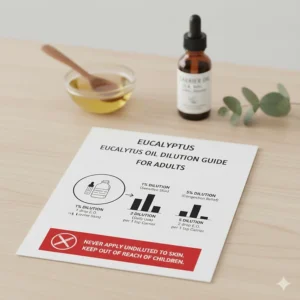
Dilution Ratios for Topical Use
When creating chest rubs or massage oils, proper dilution prevents skin irritation while maintaining therapeutic effectiveness:
- Adults: 2-5% dilution (12-30 drops per ounce of carrier oil)
- Children 6-10: 1-2% dilution (6-12 drops per ounce)
- Children 3-5: 0.5-1% dilution (3-6 drops per ounce)
- Elderly/Sensitive Skin: 1% dilution (6 drops per ounce)
Recommended carrier oils include fractionated coconut oil, sweet almond oil, or jojoba oil. These absorb well and provide their own skin-nourishing benefits without interfering with eucalyptus’s therapeutic action.

Eucalyptus Oil Nebulizer Use: Professional-Grade Relief
Nebulizers represent the apex of essential oil delivery for respiratory conditions. These devices break oils into ultra-fine particles that penetrate deep into lung tissue—far more effectively than diffusion or steam inhalation.
How Nebulizer Therapy Works
Unlike diffusers that disperse oil into room air, nebulizers create a concentrated mist you inhale directly. This targeted delivery ensures maximum oil concentration reaches inflamed airways with minimal waste.
Medical-grade nebulizers designed for essential oils use ultrasonic technology or compressed air to atomize oil without heat degradation. This preserves eucalyptus’s full therapeutic profile, particularly heat-sensitive minor compounds that enhance cineole’s effectiveness.
Nebulizer Protocol for Congestion
Equipment Required:
- Essential oil-compatible nebulizer
- 100% pure eucalyptus oil (no carrier oil)
- Timer for session control
Standard Treatment:
- Add 10-15 drops pure eucalyptus oil to nebulizer chamber
- Set device to low-medium intensity
- Inhale deeply for 5-7 minutes
- Take 3-5 minute break
- Repeat for second 5-7 minute session if needed
- Limit total treatment to 15 minutes maximum
Frequency:
- Acute congestion: 2-3 sessions daily
- Chronic support: 1 session daily
- Maintenance: 3-4 sessions weekly
Safety Considerations for Nebulizer Use
Nebulized essential oils deliver significantly higher concentrations than other methods. This intensity requires additional precautions:
✅ Always start with shorter 3-minute sessions to assess tolerance
✅ Use in well-ventilated areas to prevent overwhelming concentration
✅ Never nebulize in presence of infants or young children
✅ Discontinue if dizziness or headache occurs
✅ Consult healthcare providers if you have asthma, COPD, or other lung conditions
Research from PMC/NIH indicates cineole concentrations above therapeutic thresholds can irritate already inflamed tissue. The nebulizer’s efficiency means you need less oil and shorter sessions than gentler delivery methods.
Best Eucalyptus Oils for Nebulizer Use
Not all eucalyptus oils suit nebulizer application. Prioritize:
- 100% pure oils with no carrier bases (carrier oils damage nebulizers)
- Third-party tested formulations confirming absence of synthetics
- Eucalyptus globulus or radiata (avoid blends until experienced)
- Organic certification for direct lung delivery
Oils containing additives or inferior distillation byproducts become particularly problematic when nebulized directly into lungs. The concentrated delivery magnifies any impurities, potentially causing irritation rather than relief.
Choosing the Right Eucalyptus Oil for Your Needs
With hundreds of eucalyptus products flooding the market, selecting the right one requires understanding your specific congestion type, usage preferences, and quality indicators.
Matching Oil to Congestion Location
Upper Respiratory (Sinuses, Nose, Throat):
- Choose: Eucalyptus Radiata
- Application: Steam inhalation, diffusion
- Frequency: 3-4 times daily during acute phase
Lower Respiratory (Chest, Bronchi, Lungs):
- Choose: Eucalyptus Globulus
- Application: Chest rub, nebulizer, intensive steam
- Frequency: 2-3 times daily with rest days
Both Upper and Lower:
- Choose: Combination approach or synergy blends
- Application: Rotate between methods throughout day
- Frequency: Match to symptom severity
Quality Indicators That Matter
GC-MS Testing: Gas chromatography-mass spectrometry provides a chemical fingerprint proving purity and identifying adulteration. Reputable brands publish batch-specific reports.
Latin Naming: Products listing “Eucalyptus Globulus” or “Eucalyptus Radiata” rather than generic “eucalyptus oil” demonstrate botanical knowledge and sourcing specificity.
Distillation Method: Steam-distilled oils preserve full therapeutic profiles. Avoid chemically extracted or “fragrance oils” for medicinal use.
Bottling: Dark amber or cobalt glass protects oils from light degradation. Plastic bottles indicate lower-quality products not suitable for therapeutic applications.
Red Flags to Avoid
❌ Suspiciously low prices suggesting dilution or synthetic additives
❌ Promises of curing diseases (illegal and medically unsupported)
❌ Lack of Latin botanical names or vague “eucalyptus blend” labels
❌ Claims of “therapeutic grade” (no regulated standard exists)
❌ Retailers selling only one brand (often multi-level marketing)
Budget Considerations
Quality eucalyptus oil doesn’t require premium pricing. Excellent options exist across all price points:
Budget ($0.15-$0.30/mL): NOW Foods, Plant Guru
Mid-Range ($0.30-$0.50/mL): Plant Therapy, Eden’s Garden
Premium ($0.50-$1.00/mL): Organic certified, medical-grade formulations
The sweet spot for most users sits in the mid-range category, where rigorous testing and ethical sourcing meet accessible pricing. Reserve premium oils for direct inhalation or nebulizer use where purity matters most.

Safety Guidelines and Precautions
Eucalyptus oil’s therapeutic power demands respect and proper handling. While generally safe for most adults, several populations and situations require special consideration.
Who Should Avoid Eucalyptus Oil
Never Use On or Near:
- Infants under 2 years old (respiratory distress risk)
- Children under 10 for undiluted topical application
- Faces of children under 6
- Pregnant women without medical clearance
- Nursing mothers (transfer through milk)
Medical Condition Considerations
Consult Healthcare Providers If You Have:
Asthma: High cineole concentrations can trigger bronchospasm in susceptible individuals. Start with minimal amounts under medical supervision.
Epilepsy: Camphor-type compounds may lower seizure thresholds in rare cases. Avoid concentrated exposure.
Hypertension: Some evidence suggests eucalyptus can temporarily elevate blood pressure with excessive use.
Medication Interactions
Eucalyptus oil can affect how your body processes certain medications:
- Sedatives: May enhance sedative effects
- Diabetic medications: Potential blood sugar interactions
- Liver-processed drugs: Cineole influences liver enzyme activity
Always inform your healthcare provider about essential oil use, especially before surgeries requiring anesthesia.
Safe Application Practices
Topical Use:
- Always dilute in carrier oil before skin contact
- Perform patch test on inner forearm 24 hours before full application
- Avoid eyes, ears, and mucous membranes
- Wash hands thoroughly after handling
Inhalation:
- Start with 1-2 drops for first-time users
- Increase gradually based on tolerance
- Take breaks during extended sessions
- Ensure adequate ventilation
Storage Safety:
- Keep tightly sealed in cool, dark location
- Store away from heat sources and direct sunlight
- Place out of reach of children and pets
- Check expiration dates (typically 2-3 years from opening)
Recognizing Adverse Reactions
Stop use immediately if you experience:
- Difficulty breathing or wheezing
- Skin rash, redness, or burning
- Nausea or vomiting
- Dizziness or headache
- Rapid heartbeat
Most adverse reactions stem from overuse or failure to dilute properly. The maxim “less is more” applies perfectly to essential oil therapy—more drops don’t equal better results and can trigger the opposite effect.
FAQ
❓ How fast can eucalyptus oil relieve congestion?
❓ Can I use eucalyptus oil with a cool mist humidifier?
❓ Is eucalyptus radiata or globulus better for sinus infections?
❓ How much eucalyptus oil should I add to boiling water for steam inhalation?
❓ Can eucalyptus oil help with post-nasal drip?
Conclusion: Your Path to Natural Respiratory Wellness
Finding the best eucalyptus oil for congestion transforms your approach to respiratory health from reactive symptom management to proactive wellness support. The seven products detailed in this guide represent proven options across every budget and need—from Plant Therapy’s pharmaceutical-grade oils to MOXĒ’s portable inhalers for relief anywhere.
Remember that eucalyptus globulus vs radiata for colds isn’t about one being universally “better.” Globulus dominates for deep chest congestion and lower respiratory infections, while radiata excels for sinusitis, rhinitis, and upper respiratory issues. Many experienced users keep both on hand, matching the oil to their specific symptoms.
The science backing eucalyptus oil for sinus relief continues strengthening as research reveals cineole’s multiple mechanisms of action—from reducing inflammation to stimulating mucus clearance to supporting immune function. Whether you prefer eucalyptus oil steam inhalation, diffusion, or eucalyptus oil nebulizer use, the key lies in consistent, proper application with quality oils.
Start with a mid-range option like Plant Therapy Eucalyptus Globulus to experience authentic therapeutic benefits. As you develop familiarity with how your body responds, you can explore organic eucalyptus essential oil for respiratory applications, specialty blends, or medical-grade formulations for intensive treatment.
Your journey toward clear breathing and vibrant respiratory health begins with a single drop. Choose your eucalyptus oil today and experience the difference nature’s pharmacy provides.
Recommended for You
- 7 Best Essential Oil Brands on Amazon in 2026
- 7 Best Peppermint Oil for Headaches – Tested Relief Guide 2026
- 7 Best Tea Tree Oil for Acne – Clear Skin Solutions 2026
Disclaimer: This article contains affiliate links. If you purchase products through these links, we may earn a small commission at no additional cost to you.
✨ Found this helpful? Share it with your friends! 💬🤗
