
In This Article
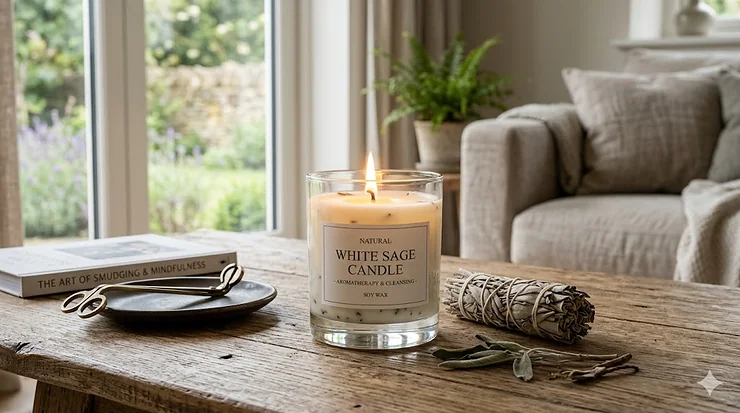
Walking into a room that feels heavy, stagnant, or just “off” happens to all of us. Maybe it’s after a stressful week, a difficult conversation, or simply the accumulation of everyday energy. This is where white sage candles step in as your aromatic ally. Unlike traditional smudge sticks that require burning dried sage bundles and can set off smoke alarms in apartments or dorm rooms, white sage candles offer the same purifying benefits in a more convenient, smoke-controlled format.
White sage (Salvia apiana) has been used for centuries in spiritual practices, primarily by Indigenous communities in the southwestern United States. The plant contains powerful compounds like camphor, cineole, and thujone that create its distinctive earthy, slightly medicinal aroma. According to the American College of Healthcare Sciences, white sage essential oil contains 24.6 to 71.7% cineole, the same compound found in eucalyptus that promotes feelings of clarity and calm when inhaled. What most people don’t realize is that you don’t need to produce billowing clouds of smoke to access these benefits. Modern white sage candles infuse soy or coconut wax with sage essential oils or dried sage leaves, delivering the same aromatic experience while burning cleanly for 30 to 80 hours depending on size.
The real advantage? You get the ritual without the risk. Whether you’re preparing for meditation, clearing energy after guests leave, or simply creating a peaceful atmosphere for yoga or journaling, white sage candles provide a flameless alternative once lit, with controlled aromatherapy that won’t overwhelm sensitive noses or trigger building fire codes.
Quick Comparison: Top White Sage Candles at a Glance
| Product | Size | Burn Time | Special Features | Price Range | Best For |
|---|---|---|---|---|---|
| Magnificent 101 Pure White Sage | 6 oz | 35 hours | Organic soy, marshmallow lemon scent | $12-18 | Budget-conscious buyers |
| AOOVOO 3-Wick Sage Candle | 12 oz | 30-40 hours | Amethyst crystals, dried sage | $18-25 | Crystal energy enthusiasts |
| HEM White Sage with Crystals | 9.5 oz (3-pack) | 65 hours each | Natural soy, crystal decorations | $14-20 | Long-term value seekers |
| Craft & Kin White Sage | 8 oz | 45 hours | Wood wick, 100% natural soy | $15-19 | Home décor lovers |
| World Magic Sacred White Sage | 6.5 in pillar | 80 hours | Blend of three sage oils | $16-22 | Traditional ritual practitioners |
| Heal The Masses White Sage | 7 oz | Not specified | Soy/coconut blend, GABA activation | $16-18 | Meditation and healing focus |
| BlkGrlMagick Sage Lavender Crystal | 8 oz tin | Not specified | Homegrown lavender, quartz crystals | $18-24 | Gift-givers and collectors |
Looking at this comparison, budget buyers will gravitate toward Magnificent 101 for solid value under $20, but if burn time is your priority, World Magic’s 80-hour pillar candle delivers exceptional longevity for just a few dollars more. The AOOVOO 3-wick option strikes the sweet spot between aesthetic appeal and functional burn time, while HEM’s 3-pack offers the best per-ounce value for households that burn candles frequently. Notice that crystal-infused options like AOOVOO and BlkGrlMagick command slightly higher prices, but they double as decorative pieces even when not burning.
💬 Just one click — help others make better buying decisions too!😊
Top 7 White Sage Candles: Expert Analysis & Real-World Performance
1. Magnificent 101 Long Lasting Pure White Sage Candle
Magnificent 101’s 6-ounce candle leads with an unexpected twist: a marshmallow lemon scent layered beneath the sage. The organic soy wax burns petroleum-free for 35 hours, and reviewers consistently mention how the subtle citrus note makes this less “medicinal” than straight sage options. What stands out from an expert perspective is the price-to-performance ratio. At around $12-18, you’re getting a fully organic candle with actual sage essential oils, not just fragrance replication.
The marshmallow lemon addition serves a practical purpose beyond just smell. White sage on its own can read as astringent or overpowering to people new to the scent. By softening it with sweet and citrus notes, Magnificent 101 makes this accessible to first-time sage burners or those with scent sensitivities. Customers report using this in small apartments and bedrooms without overwhelming the space, something you can’t always say about traditional smudge sticks that fill entire homes with smoke.
One limitation worth noting: the 6-ounce size means you’ll burn through this faster than larger options if you light it daily. But for someone testing whether they like sage candles before committing to a bigger investment, this entry point makes perfect sense.
Pros:
✅ Marshmallow lemon scent balances sage’s intensity
✅ Organic soy formula burns clean for 35 hours
✅ Budget-friendly entry point under $18
Cons:
❌ Smaller 6 oz size burns faster than jumbo options
❌ Single wick may not fill very large rooms
Price Verdict: In the $12-18 range, this delivers solid value for daily use or gifting.
2. World Magic Sacred White Sage Candle
Coventry Creations hand-pours this 6.5-inch pillar candle “when the moon is right,” which might sound like marketing mysticism until you experience the 80-hour burn time. That’s double what most jar candles in this price range deliver. The formula blends three different sage oils, creating a more complex aromatic profile than single-source sage candles. What the spec sheet won’t tell you: pillar candles like this require a heat-safe plate or holder because they’ll drip if burned incorrectly, but they also produce more intense scent throw than jar candles since wax melts from the entire surface.
This is designed for serious ritual practitioners who want traditional white sage energy without smoke. The 80-hour burn time means you can light this for meditation sessions over several months before replacing it. Multiple reviewers note the scent is stronger and more “authentic” compared to soy jar candles that sometimes smell waxy. That intensity is a double-edged sword: perfect for intentional cleansing ceremonies, potentially too strong for casual ambient burning while cooking dinner.
The price point around $16-22 initially seems steep for a 6.5-inch candle until you calculate cost per hour. You’re looking at roughly $0.20-0.27 per hour of burn time, which actually beats most premium jar candles.
Pros:
✅ 80-hour burn time outperforms most alternatives
✅ Triple sage oil blend creates authentic scent depth
✅ Hand-poured with attention to lunar timing
Cons:
❌ Requires proper pillar holder to prevent wax spills
❌ Intense scent may overwhelm small spaces
Price Verdict: Around $16-22, the exceptional burn time justifies the cost for regular users.
3. Craft & Kin White Sage Christmas Scented Candle
Don’t let the “Christmas” label fool you. This 8-ounce California-designed candle with a crackling wood wick works year-round, though the sage does carry subtle winter spice undertones that make it particularly cozy during cold months. The wood wick is what sets this apart from competitors. Instead of a quiet cotton wick, you get a gentle crackling sound that mimics a fireplace, adding an auditory element to the sensory experience. Customers consistently rate the 45-hour burn time as accurate, and the natural soy formula means no black smoke or soot residue on walls.
From a practical standpoint, wood wicks require slightly different care than cotton. You’ll need to trim them to about 1/8 inch before each burn (versus 1/4 inch for cotton), and they take 5-10 seconds longer to catch flame. But once lit, they produce a wider, lower flame that melts wax more evenly and prevents tunneling. This translates to getting the full 45 hours of burn time instead of wasting half the wax on the jar’s sides.
The aesthetic appeal matters here too. Craft & Kin packages this in a minimalist jar that looks intentional on a coffee table or nightstand, not like you’re hiding a wellness product. For the $15-19 price range, you’re essentially getting home décor that happens to cleanse your space energetically.
Pros:
✅ Wood wick produces soothing crackling sound
✅ 45-hour burn time with even wax melt
✅ California-designed with aesthetic minimalism
Cons:
❌ Wood wick requires more careful trimming
❌ Seasonal scent profile may not suit everyone year-round
Price Verdict: At $15-19, the wood wick experience and burn time offer excellent value.
4. Heal The Masses White Sage Candles for Cleansing
Created by a Reiki Master and Angel Healer, this 7-ounce candle gets blessed in a sacred ceremony before shipping. That might sound purely metaphysical, but the soy/coconut wax blend and natural essential oil formulation are what matter functionally. The company specifically mentions GABA receptor activation, referencing white sage’s scientifically documented ability to influence mood regulation pathways in the brain. According to research highlighted by Biology Insights, white sage contains thujone, a mild psychoactive compound that may support emotional balance.
What makes this stand out is the intentionality behind the product. Each candle comes with context about how to use it for chakra healing and energy cleansing, turning what could be just another scented candle into a tool with instructions. First-time users appreciate this guidance. The scent blend balances pure white sage with just enough complementary notes to prevent the “medicine cabinet” smell some straight sage candles produce.
The lack of specified burn time is a notable omission. Based on the 7-ounce size and customer reports, expect somewhere between 35-45 hours, which aligns with similar products. At $16-18, you’re paying slightly more for the blessing ritual and educational component, which has value if you’re approaching this from a spiritual practice perspective versus just wanting something that smells nice.
Pros:
✅ Blessed in sacred ceremony with Reiki energy
✅ Soy/coconut blend burns cleaner than pure paraffin
✅ Includes usage guidance for chakra work
Cons:
❌ Burn time not clearly specified by manufacturer
❌ Spiritual elements won’t resonate with all buyers
Price Verdict: Around $16-18, the added intention and blessing justify the slight premium for spiritual practitioners.
5. HEM White Sage Candle with Crystals & Sage Leaves (3-Pack)
This 9.5-ounce natural soy candle comes in a pack of three, delivering a total of 195 hours of burn time (65 hours each) for around $14-20. That’s roughly $0.07-0.10 per hour, making it the most cost-effective option on this list by a significant margin. Each candle features visible amethyst crystals and dried sage leaves embedded in the wax surface, which creates visual interest but does introduce a minor functional consideration: as the wax melts, the crystals and botanical fragments naturally sink, which is completely normal and doesn’t affect performance.
The three-pack format makes strategic sense for different use cases. Keep one in your meditation space, one in your bedroom, and gift the third, or rotate through them to prevent scent fatigue. The natural soy formulation burns cleanly without the petroleum byproducts that cause headaches in sensitive individuals, and customers consistently report minimal to no soot on jar rims even after 50+ hours of use.
What you trade for the bulk value is aesthetic variety. All three candles are identical, so if you prefer rotating scents or experimenting with different sage blends, a single larger candle with variety might serve you better. But for households that know they love sage and burn it regularly for cleansing rituals, meditation sessions, or yoga practice, this three-pack eliminates the need for frequent reordering.
Pros:
✅ Best value per hour at $0.07-0.10
✅ 195 total hours across three identical candles
✅ Amethyst crystals add decorative element
Cons:
❌ No scent variety across the three-pack
❌ Crystals sink as wax melts (normal but unexpected for first-timers)
Price Verdict: At $14-20 for 195 hours, this is unbeatable value for committed sage candle users.
6. AOOVOO Sage Candle for Cleansing (12oz, 3-Wick)
AOOVOO’s 12-ounce three-wick design changes the game for larger spaces. Single-wick candles struggle to fill rooms over 200 square feet with consistent scent, but three wicks create a wider melt pool and stronger scent throw within the first 30 minutes of burning. The surface decoration with dried sage and amethyst crystals isn’t just aesthetic; amethyst is traditionally associated with spiritual purification and protection, creating a multi-sensory cleansing experience that goes beyond just smell.
The 30-40 hour burn time seems shorter than expected for 12 ounces until you realize three wicks consume wax faster than one. What you gain in scent intensity and even burning, you sacrifice slightly in longevity compared to single-wick alternatives. The non-toxic soy formula makes this safe for homes with pets and children, addressing a common concern with heavily fragranced products that use synthetic compounds.
Customers note this works exceptionally well in living rooms, yoga studios, or open-concept spaces where you need the scent to travel. The jar’s wide opening and triple flame create a cozy ambiance that smaller candles can’t match. At $18-25, you’re paying for the three-wick engineering and larger format, which makes sense if you’re cleansing bigger areas or want a candle that makes an immediate olfactory impact.
Pros:
✅ Three wicks deliver superior scent throw in large spaces
✅ Amethyst crystals and dried sage create visual appeal
✅ 12-ounce size lasts through multiple meditation sessions
Cons:
❌ Three wicks burn faster than single-wick alternatives
❌ Higher price point at $18-25 range
Price Verdict: Around $18-25, the three-wick design justifies the cost for larger spaces and stronger scent needs.
7. BlkGrlMagick White Sage Lavender Quartz Crystal Candle
This Black-owned, women-owned, queer-owned brand hand-pours each 8-ounce tin candle with homegrown lavender buds and organic white sage leaves. The quartz crystal inclusion adds versatility: quartz is considered a “master healer” crystal that can be programmed with specific intentions, making this less of a one-note product and more of a customizable tool. The lavender addition softens sage’s sometimes sharp edges, creating a more floral, soothing experience that works for both energetic cleansing and simple relaxation.
What you’re buying here extends beyond the candle itself. Supporting a brand committed to self-empowerment, inclusivity, and sustainability means your purchase contributes to a broader mission. The handmade aspect ensures quality control but also means slight variations between batches are normal and expected. Customers report the scent is gentler than pure sage options, making this ideal for bedtime rituals or calming anxiety rather than intensive space clearing.
The 8-ounce tin format is travel-friendly and won’t break like glass jars, which adds practical value if you move between spaces or want to bring your cleansing tools to retreats or friend’s houses. At $18-24, you’re paying for the artisan production, ethical sourcing, and brand values as much as the candle itself. For gift-givers, the story behind BlkGrlMagick adds meaning that mass-produced alternatives can’t match.
Pros:
✅ Supports Black-owned, women-owned, queer-owned business
✅ Homegrown lavender and quartz crystal add unique elements
✅ Tin container travels safely without glass breakage risk
Cons:
❌ Higher price point at $18-24 for 8 ounces
❌ Lavender blend may be too subtle for those wanting pure sage intensity
Price Verdict: Around $18-24, the ethical production and unique blend justify the premium for conscious consumers.
How to Choose the Right White Sage Candle for Your Space
1. Match Candle Size to Room Dimensions
Square footage dictates wick count and wax volume. Single-wick candles work beautifully in bedrooms, bathrooms, and personal meditation corners up to 150 square feet. Push beyond that into living rooms or open kitchens, and you’ll barely smell anything after the first hour. This is where three-wick designs like AOOVOO’s 12-ounce candle excel. The wider melt pool and multiple flame points project scent effectively throughout 300-400 square feet. If you’re cleansing a studio apartment or yoga space, calculate your square footage first. A 6-ounce single-wick candle fighting to fill 500 square feet will burn for 35 hours without ever delivering the aromatic experience you’re paying for.
2. Wax Type Affects Burn Quality and Health
Soy and coconut waxes burn 30-50% longer than paraffin at the same volume because they have lower melting points and release fragrance more slowly. But the real difference shows up in air quality. Paraffin releases toluene and benzene when burned, two compounds the EPA classifies as hazardous air pollutants. Soy alternatives produce virtually no soot and won’t leave black residue on your walls after extended use. If anyone in your household has asthma, allergies, or chemical sensitivities, non-paraffin wax isn’t optional—it’s mandatory.
3. Essential Oils vs. Fragrance Oils Matter for Authenticity
Pure sage essential oils deliver the actual therapeutic compounds from Salvia apiana, including the cineole and camphor that create clear-headed focus. Synthetic fragrance oils smell like sage but lack the bioactive molecules that interact with your GABA receptors and olfactory system. Products that list “sage essential oil” or “organic sage” in ingredients provide real aromatherapy benefits. Those listing “fragrance” or “parfum” give you scent without substance. For spiritual or meditative use where you’re seeking energetic cleansing, essential oil candles align with traditional practice. For ambient home fragrance where you just like how sage smells, fragrance oils work fine and often cost less.
4. Burn Time Economics: Calculate Cost Per Hour
A $12 candle lasting 35 hours costs $0.34 per hour. A $22 candle burning for 80 hours costs $0.27 per hour. The cheaper upfront option actually costs more per use. When comparing products, divide the price by stated burn time to find the true value. HEM’s three-pack delivering 195 hours for around $18 works out to roughly $0.09 per hour, making it the most economical choice for daily burners. But if you only light candles occasionally during full moon rituals or meditation sessions, total burn time matters less than having a high-quality experience each time, which might justify spending more per hour on something like World Magic’s hand-poured pillar.
5. Crystal Inclusions: Aesthetic vs. Energetic Function
Amethyst, quartz, and other crystals embedded in wax serve dual purposes. Visually, they create an Instagrammable product that looks intentional on shelves. Energetically, practitioners believe different crystals amplify or direct sage’s cleansing properties. Amethyst traditionally supports spiritual protection and purification, complementing sage’s clearing action. Clear quartz acts as an amplifier, strengthening whatever intention you set. From a practical standpoint, these crystals sink as the wax melts, which some find disappointing but is simply physics at work. If you’re drawn to crystal energy, choose candles that specify which stones they include and why. If not, skip the crystal premium and focus purely on wax quality and burn time.
6. Wood Wick or Cotton: Sound Affects Ambiance
Cotton wicks burn silently, making them ideal for meditation practices where auditory distraction breaks focus. Wood wicks crackle like a small fire, adding cozy ambiance that some find grounding and others find distracting during deep breathwork. Functionally, wood wicks produce a wider flame that melts wax more evenly across the jar’s surface, preventing that frustrating tunnel effect where the center burns down while the edges stay solid. They require more maintenance (trim to 1/8 inch before each use) but reward you with better wax utilization and a multi-sensory experience. Choose based on your use case: silent cotton for serious meditation, crackling wood for relaxed evening rituals.
7. Scent Intensity Varies by Sage Source
Pure white sage (Salvia apiana) produces a strong, resinous, slightly medicinal aroma that some describe as “cleansing” and others find overwhelming. Blended formulas that add lavender, citrus, or marshmallow notes make sage more approachable for newcomers or scent-sensitive individuals. If you’ve never burned sage before, start with a blended option like Magnificent 101’s marshmallow lemon or BlkGrlMagick’s lavender blend. Once you know you enjoy sage’s base note, you can graduate to pure, uncut formulas like World Magic’s triple sage oil candle for maximum intensity.
White Sage Candles vs. Traditional Smudge Sticks: Which Cleansing Method Wins?
| Factor | White Sage Candles | Traditional Smudge Sticks |
|---|---|---|
| Smoke Production | Minimal (contained flame) | Heavy (fills entire space) |
| Apartment-Friendly | Yes (won’t trigger alarms) | Risky (smoke detectors often triggered) |
| Scent Control | Moderate (confined to candle vicinity) | Strong (permeates entire home for hours) |
| Burn Time | 30-80 hours per candle | 5-10 minutes per stick |
| Ritual Authenticity | Modern adaptation | Traditional Indigenous practice |
| Cost Per Use | $0.10-0.35 per hour | $1-3 per stick |
This comparison reveals why candles have gained traction in urban environments and shared living spaces. Smudge sticks deliver a more authentic ceremonial experience rooted in Indigenous tradition, but they’re impractical when your lease prohibits open flames or your roommate has asthma. Candles provide a compromise that respects the essence of sage cleansing while adapting to modern constraints. However, it’s worth noting that Wikipedia’s entry on smudging emphasizes this is a sacred practice for many Indigenous cultures, and commercial appropriation has led to overharvesting of white sage in its native habitats. Choosing sustainably sourced candles from companies that cultivate sage rather than wild-harvest it becomes an ethical consideration worth examining.
The smoke difference matters more than many realize. Traditional smudging produces enough smoke to coat surfaces and linger in fabrics, which creates that signature “cleansed space” smell but also leaves residue some people find unpleasant. Candles release sage compounds through heated wax evaporation, delivering the scent without the particulate matter that triggers respiratory issues or sets off sensitive fire systems in dorms and office buildings.
Setting Up Your First White Sage Candle Ritual: A Practical Guide
Step 1: Prepare Your Space Physically
Before lighting anything, clear clutter from the area where you’ll burn the candle. Energetic cleansing works more effectively in physically clean spaces. Open a window or door slightly to allow air circulation. This isn’t just spiritual theater—proper ventilation helps the candle burn evenly and prevents carbon buildup that causes flickering and soot.
Step 2: Trim the Wick to 1/4 Inch (Cotton) or 1/8 Inch (Wood)
Fresh-from-the-store wicks are often too long, leading to tall flames that burn hot, create smoke, and waste wax. Use wick trimmers or scissors to cut the wick before the first burn and every subsequent use. This single step extends burn time by 20-30% and eliminates the black soot that stains jar rims.
Step 3: First Burn Must Reach Full Melt Pool
The first time you light any candle sets its memory. Burn it long enough for the wax to melt completely to the jar’s edge—usually 2-4 hours depending on size. If you blow it out before achieving full melt, every future burn will tunnel down that narrow channel, wasting half the wax. This is especially critical for wider three-wick candles where an incomplete first burn creates permanent tunneling that no amount of later burning can fix.
Step 4: Set Intention While Lighting
Whether you subscribe to energy work or not, consciously focusing on your goal while lighting the candle creates a mental anchor. “I’m clearing stress from this week” or “I’m preparing my space for meditation” trains your brain to associate the sage scent with that specific state. Over time, simply lighting the candle triggers the desired mental shift faster than willpower alone could manage.
Step 5: Allow Sage to Work for Minimum 30 Minutes
Don’t expect instant results in the first five minutes. Sage’s aromatic compounds need time to disperse throughout your space. For energy cleansing or meditation prep, let the candle burn at least 30-45 minutes before beginning your practice. The gradual scent buildup creates a more natural, less overwhelming experience than the immediate smoke blast from traditional smudging.
Step 6: Extinguish Properly to Prevent Wick Damage
Never blow out a candle—the force can push melted wax into the wick, making it harder to light next time and creating smoking issues. Use a candle snuffer or the lid-dipping method: use the jar lid to cut off oxygen by placing it over the candle for 3-5 seconds, then removing it. This preserves wick integrity and eliminates that acrid smoke smell that lingers after blowing out a flame.
Step 7: Store Between Burns to Maintain Potency
Keep the lid on when not in use to prevent dust accumulation and scent degradation. Store away from direct sunlight and heat sources that can cause wax to soften or discolor. Candles stored properly maintain full scent strength for 12-18 months. Those left open on sunny windowsills lose 40-60% of fragrance intensity within 3-6 months.
Common Mistakes When Buying White Sage Candles (And How to Avoid Them)
Mistake 1: Assuming All “Sage” Candles Contain Real Sage
Marketing labels blur lines between authentic sage formulations and generic herbal fragrances. Products listing “sage scent” or “sage-inspired” often contain zero actual sage—just synthetic fragrance compounds designed to approximate the smell. Look for specific ingredient callouts: “white sage essential oil,” “Salvia apiana extract,” or “organic sage leaves.” If the company doesn’t specify sage sources, you’re likely paying for artificial recreation rather than genuine botanical benefits.
Mistake 2: Ignoring Wick Count for Room Size
A single-wick 8-ounce candle physically cannot fill a 400-square-foot living room with consistent scent no matter how high quality it is. The math doesn’t work. Scent molecules disperse in a limited radius from the heat source. Buyers frustrated by “weak” candles often simply purchased the wrong wick configuration for their space. Save single-wicks for bedrooms and bathrooms under 150 square feet. Graduate to two-wick designs for 150-250 square feet. Deploy three-wick options for anything larger. This isn’t marketing hype—it’s physics.
Mistake 3: Buying Paraffin Wax Without Considering Health Impact
Paraffin costs less to produce, so budget candles default to it. But burning paraffin releases toluene and benzene, the same compounds found in diesel fuel exhaust. The National Institutes of Health research shows prolonged paraffin exposure may contribute to respiratory issues, particularly in poorly ventilated spaces. People with asthma, allergies, or chemical sensitivities experience immediate symptoms: headaches, throat irritation, difficulty breathing. Soy, coconut, and beeswax alternatives cost $3-5 more per candle but eliminate these health risks entirely. That’s not a premium—it’s mandatory spending for safe indoor air quality.
Mistake 4: Expecting Identical Results to Traditional Smudging
Candles deliver sage benefits through aromatic diffusion, not smoke immersion. The experience is gentler, more controlled, and socially acceptable in shared spaces, but it’s not identical to ceremonial smudging with burning bundles. Traditionalists may find candles lack the ritualistic intensity they’re seeking. Conversely, people drawn to sage’s cleansing reputation but averse to heavy smoke discover candles provide exactly the right level of experience. Understand you’re choosing a modern interpretation of ancient practice, not a perfect replica.
Mistake 5: Neglecting Sustainability Concerns
White sage faces severe overharvesting in its native California and Mexico habitats. Wild populations have declined 70-80% in some regions due to commercial demand for smudge products. According to American College of Healthcare Sciences, habitat loss through urbanization and climate change compounds the problem. Ethical buyers seek companies that specifically state they use cultivated sage from sustainable farms rather than wild-harvested plants. Asking “Where does your sage come from?” before purchasing supports regenerative practices and Indigenous communities who’ve sustained these plants for generations.
Mistake 6: Buying Based on Price Alone Without Calculating Value
A $10 candle burning 20 hours costs $0.50 per hour of use. A $20 candle burning 60 hours costs $0.33 per hour. The “expensive” option actually costs less per use by 34%. First-time buyers often grab the cheapest jar without checking burn time specifications. Smart shoppers divide price by stated burn time to identify genuine value. The HEM three-pack at around $18 for 195 total hours ($0.09/hour) obliterates $12 single candles lasting 25 hours ($0.48/hour) in economic comparison.
Mistake 7: Storing Candles Improperly and Wondering Why They Don’t Smell Strong
Leaving candles uncovered between burns lets fragrance oils evaporate and dust settle into the wax. After 3-4 months of improper storage, even premium candles lose 30-50% of scent intensity. Always replace the lid immediately after extinguishing. Store in cool, dark locations away from direct sun that softens wax and accelerates fragrance breakdown. Temperature fluctuations in garages or outdoor sheds cause wax to expand and contract, creating cracks that further accelerate scent loss. A $20 candle stored properly lasts 12-18 months at full potency. That same candle left open on a sunny shelf becomes barely scented within six months.
Real-World Use Cases: Matching Candles to Your Lifestyle
The Daily Meditation Practitioner
You light a candle before sitting for 20-30 minute morning meditation sessions five days per week.
Best choice: Magnificent 101’s 6-ounce option or Craft & Kin’s 8-ounce wood wick. The moderate size means you’ll burn through one candle every 4-6 weeks at this pace, making it easy to rotate scents and preventing olfactory fatigue. The wood wick’s gentle crackle adds grounding auditory texture without overwhelming focused breathwork. Budget approximately $15-20 monthly for this practice.
The Large-Space Yoga Studio Owner
You need consistent sage scent throughout a 600-square-foot studio during 90-minute classes, ideally burning for 2-3 hours daily.
Best choice: AOOVOO’s 12-ounce three-wick candle. Single-wick options won’t project scent effectively in this square footage. Expect to replace candles every 10-14 days at this burn rate, so the HEM three-pack provides backup inventory. Position the candle centrally for even scent distribution. Monthly candle budget: $40-60 depending on class frequency.
The Apartment Dweller with Strict Lease Terms
Your building prohibits open flames and has sensitive smoke detection.
Best choice: This is a trick question—you need an electric wax warmer paired with white sage wax melts rather than a traditional candle. But if candles are permitted and you want minimal smoke, Craft & Kin’s contained wood wick or any of the soy-based jar options with cotton wicks work. Burn only in well-ventilated areas, never near smoke detectors, and keep sessions under 4 hours per lease guidelines.
The Gift-Giver Seeking Meaningful Presents
You’re buying for someone interested in wellness, meditation, or spiritual practices but you’re unsure of their specific preferences.
Best choice: BlkGrlMagick’s lavender-sage-quartz combination or AOOVOO’s crystal-decorated option. The aesthetic presentation makes these shelf-worthy even before lighting. The included crystals add perceived value and provide talking points. Package with a handwritten note explaining sage’s cleansing history. Budget $18-25 per gift, significantly more thoughtful than generic candles from big-box stores.
The Budget-Conscious Frequent Burner
You love sage candles and burn them 4-5 hours daily for ambient atmosphere, energy clearing, and aromatherapy but can’t justify $20 candles that last three weeks.
Best choice: HEM’s three-pack delivering 195 hours for around $18. At your usage rate, this provides roughly six weeks of continuous use at $0.09 per hour. No other option on this list matches that economics. Yes, you sacrifice aesthetic variety, but you maintain the sage practice without breaking your budget.
The Science Behind Sage: What Actually Happens When You Burn These Candles
White sage’s effects aren’t purely metaphysical wishful thinking. The plant produces specific chemical compounds with measurable impacts on human physiology and indoor environments. According to research compiled by Biology Insights, Salvia apiana contains three primary active compounds: cineole (24-72%), camphor (10-18%), and thujone (trace amounts).
Cineole, also called eucalyptol, is the compound responsible for sage’s characteristic sharp, clean aroma. Studies show inhaling cineole reduces inflammation in respiratory passages and may improve mental clarity by increasing oxygen uptake. This is the same compound found in eucalyptus oil and explains why breathing sage-scented air often creates that “clear head” sensation people describe. The 1,8-cineole concentration in white sage ranges significantly by source, with some cultivated varieties reaching 71.7%—higher than many eucalyptus essential oils.
Camphor contributes sage’s slightly medicinal, mothball-adjacent undertone. While off-putting to some, this compound has documented antimicrobial properties. Laboratory testing shows camphor disrupts bacterial cell walls, though whether candle-strength concentrations meaningfully affect airborne bacteria remains debated. What’s less debatable: camphor’s penetrating aroma hijacks attention, making it neurologically difficult to maintain anxious thought loops while actively smelling it. This forced present-moment awareness is likely why many people report sage helping with meditation practice.
Thujone appears in trace amounts but carries outsized significance. This mildly psychoactive compound interacts with GABA receptors in the brain—the same neurotransmitter system influenced by alcohol and anti-anxiety medications. The concentrations in candle smoke are far too low to produce noticeable psychoactive effects, but they may contribute to the subtle mood shift people experience during sage cleansing rituals. Research from the National Center for Biotechnology Information suggests sage’s mood-supporting properties work through this GABA pathway, though extensive clinical trials are still pending.
The antimicrobial claims surrounding sage deserve nuanced examination. A frequently cited 2007 study published in the Journal of Ethnopharmacology found that burning certain medicinal plants reduced airborne bacteria by 94% in sealed rooms. However, as Science Feedback points out, this study didn’t actually test sage—it tested a different blend of herbs called havan sámagri used in Vedic traditions. No comparable peer-reviewed research has replicated these findings specifically for white sage. This doesn’t mean sage lacks antimicrobial properties (laboratory studies show it does), but claiming candles “kill 94% of airborne bacteria” misrepresents available evidence.
What we can say with confidence: burning sage alters your environment’s aromatic profile in ways your brain registers as “different,” which interrupts habitual thought patterns and creates opportunities for intentional mindset shifts. Whether you interpret this as energetic cleansing, aromatherapy, or simple olfactory redirection depends on your framework. The physiological response—altered breathing patterns, increased present-moment awareness, potential mood elevation—remains consistent regardless of belief system.
Frequently Asked Questions
❓ Can white sage candles really cleanse negative energy from my home?
❓ How long should I burn a white sage candle for effective cleansing?
❓ Are white sage candles safe around pets and children?
❓ What's the difference between white sage candles and other sage varieties?
❓ Can I make my own white sage candle at home?
Conclusion: Your Path to Clearer, Calmer Spaces Starts Here
White sage candles bridge ancient wisdom and modern convenience. They deliver the aromatic and ritual benefits of traditional smudging without the smoke, hassle, or apartment-unfriendly aspects that make burning bundles impractical for many people. Whether you’re drawn to sage for its documented compounds like cineole that promote mental clarity, its cultural significance in Indigenous spiritual practices, or simply because you find the scent grounding during stressful times, these seven products offer genuine quality at various price points.
The key insights worth remembering: wax quality determines health safety (choose soy or coconut over paraffin), burn time divided by price reveals true value (HEM’s three-pack wins on economics), wick count must match room size (three-wicks for large spaces), and ingredient transparency matters (look for “essential oil” not just “fragrance”). Avoid the common pitfalls of buying undersized candles for big rooms, storing improperly, or overlooking sustainability concerns that threaten wild sage populations.
Start with Magnificent 101 if you’re testing sage for the first time on a budget. Upgrade to AOOVOO’s three-wick design when you’re ready to fill larger spaces. Choose BlkGrlMagick for gift-giving with ethical impact. Stock up on HEM’s three-pack when you know you’re committed to daily practice. Whatever you select, the ritual of lighting intentionally, breathing deeply, and allowing yourself moments of stillness matters as much as the candle itself.
Recommended for You
- Best Raw Honey Candles in 2026: 7 Pure Picks You’ll Love
- 7 Best Sugar Cookie Candles That Smell Like Fresh-Baked Heaven (2026)
- 7 Best Cinnamon Stick Candles That Transform Your Home in 2026
Disclaimer: This article contains affiliate links. As an Amazon Associate, I earn from qualifying purchases. If you purchase products through these links, we may earn a small commission at no additional cost to you.
✨ Found this helpful? Share it with your friends! 💬🤗
