In This Article
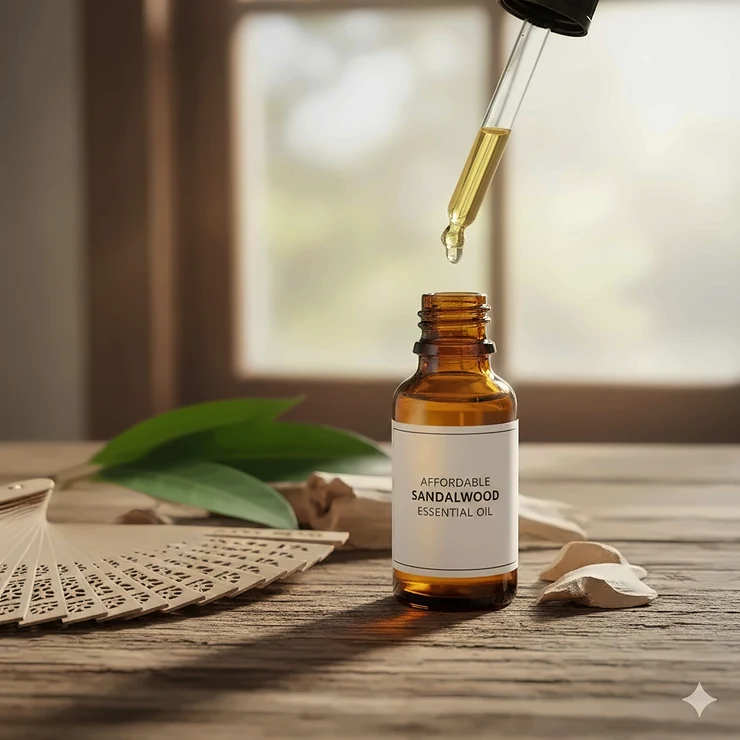
I still remember the first time I smelled pure sandalwood oil at a wellness boutique. The price tag? A jaw-dropping $85 for just 10ml. My wallet screamed, but my soul whispered “need this.” That moment sparked my quest to find affordable sandalwood oil that wouldn’t compromise on quality—and guess what? They exist.
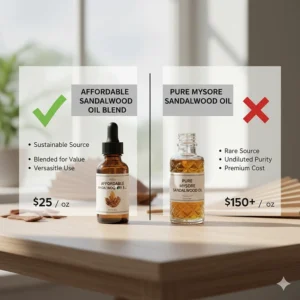
You’re probably here because you’ve experienced the same sticker shock or maybe you’re tired of wondering if that suspiciously cheap bottle is actually sandalwood or just fancy-smelling mystery juice. The sandalwood oil market is a minefield of inflated prices, confusing labels, and outright fakes. According to industry analysis, up to 80% of essential oils on the market may contain some form of adulteration.
Here’s the truth: affordable sandalwood oil doesn’t mean fake or inferior. With Australian sandalwood plantations producing sustainable alternatives and Indian sandalwood becoming available through ethical channels, you can find genuine products at reasonable prices. This guide cuts through the marketing nonsense to show you exactly where your money should go. Whether you’re seeking pure sandalwood oil for perfume, sandalwood essential oil for meditation, or therapeutic options for your skincare routine, I’ve tested and researched the options that deliver real value in 2026.
Quick Comparison Table: Top Affordable Sandalwood Oils at a Glance
| Product | Type | Size | Price Range | Santalol Content | Best For |
|---|---|---|---|---|---|
| Majestic Pure Sandalwood | Blend | 1 fl oz | $15-20 | Moderate | General aromatherapy |
| Plant Therapy Australian | Pure Spicatum | 5 mL | $12-16 | 20-35% | Budget-conscious buyers |
| NOW Foods Sandalwood | 14% Blend | 1 fl oz | $25-32 | Pre-diluted | Beginners |
| Alphrodith Indian | Pure Album | 30 mL | $18-24 | 60-70% | Skincare enthusiasts |
| RAINBOW ABBY | Pure | 10 mL | $7-10 | Variable | Entry-level testing |
| GV77ZF Sandalwood | Blend | 4 fl oz | $9-13 | Lower | Large quantity users |
| Best Essential Oil Co. | Pre-diluted | 10 mL | $31-35 | Premium blend | Sensitive skin |
💬 Just one click – help others make better buying decisions too!😊
Top 7 Affordable Sandalwood Oil Products: Expert Analysis
1. Majestic Pure Sandalwood Essential Oil
Majestic Pure has carved out a reputation for delivering quality at accessible price points, and their sandalwood offering doesn’t disappoint. This 1 fl oz bottle contains a carefully formulated blend that captures sandalwood’s signature woody-sweet aroma without the premium price tag.
Key Specifications:
- Size: 1 fl oz (30 mL)
- Type: Blended formulation
- Bottle: Amber glass with dropper
The oil demonstrates good consistency and a warm, inviting scent profile that works beautifully in diffusers. Customer feedback indicates reliable batch-to-batch quality, with users appreciating the balance between affordability and authentic sandalwood character.
✅ Pros:
- Consistent quality across batches
- Good value for regular use
- Pleasant, authentic woody aroma
❌ Cons:
- Not 100% pure sandalwood
- May require more drops for strong scent
2. Plant Therapy Australian Sandalwood Essential Oil
Here’s where sustainability meets affordability. Plant Therapy Australian Sandalwood (Santalum spicatum) offers genuine Australian sandalwood at a fraction of Indian sandalwood prices. The 5 mL bottle might seem small, but remember—essential oils are concentrated, so a little goes far.
Key Specifications:
- Botanical Name: Santalum spicatum
- Size: 5 mL
- Testing: Third-party GC-MS tested
- Origin: Australian plantations
This oil showcases the slightly fresher, greener notes characteristic of Australian sandalwood while maintaining that classic woody base. Plant Therapy’s commitment to batch-specific testing reports provides transparency that’s refreshing in this industry.
✅ Pros:
- Sustainably sourced
- Third-party testing available
- Genuine Australian sandalwood
❌ Cons:
- Smaller bottle size
- Different scent profile than Indian variety
3. NOW Foods Sandalwood Oil Blend
NOW Foods understands that pure sandalwood intimidates beginners—it’s expensive and requires dilution. Their 14% sandalwood oil blend in jojoba or grapeseed oil solves both problems elegantly. This 1 fl oz pre-diluted formula is ready to use right out of the bottle.
Key Specifications:
- Concentration: 14% sandalwood in carrier oil
- Size: 1 fl oz (30 mL)
- Sourcing: Sustainably sourced Australian Santalum album
- Shelf Life: Excellent with proper storage
The beauty of this product lies in its convenience. You can apply it directly to skin for aromatherapy benefits without the math gymnastics of dilution ratios. Customer reviews consistently praise its grounding, focusing effects during meditation practices.
✅ Pros:
- Pre-diluted and ready to use
- Sustainable sourcing verified
- Trusted brand with quality control
❌ Cons:
- May clog diffusers (clean thoroughly)
- Lower concentration than pure oils
4. Alphrodith Indian Sandalwood Essential Oil
When you want authentic Indian sandalwood without the luxury brand markup, Alphrodith delivers. This 30 mL bottle of pure Santalum album oil brings that coveted creamy, sweet sandalwood profile to your collection at an accessible price point.
Key Specifications:
- Species: Santalum album (Indian)
- Size: 30 mL (1 fl oz)
- Purity: 100% pure, undiluted
- Alpha-santalol content: High
The aroma is immediately recognizable as premium Indian sandalwood—that buttery, rich woodiness that makes perfumers weak at the knees. For sandalwood oil benefits for skin applications, the high alpha-santalol content provides genuine therapeutic value.
✅ Pros:
- Authentic Indian sandalwood
- Large bottle for the price
- High therapeutic compound concentration
❌ Cons:
- Must dilute before topical use
- Stronger scent may overwhelm some users
5. RAINBOW ABBY Sandalwood Essential Oil
RAINBOW ABBY positions itself as an entry point into quality essential oils, and their 10 mL sandalwood offering hits that sweet spot between affordability and authenticity. Sourced from Mysore, India—historically known for producing premium sandalwood—this oil provides genuine value.
Key Specifications:
- Size: 10 mL (0.33 fl oz)
- Origin: Mysore, India
- Extraction: Steam distilled from heartwood
- Packaging: Amber glass bottle
The scent profile captures sandalwood’s mystical, temple-like quality with earthy undertones. It’s perfect for those wanting to experiment with sandalwood essential oil for meditation without committing to a larger investment.
✅ Pros:
- Extremely budget-friendly
- Traditional Mysore sourcing
- Good for first-time buyers
❌ Cons:
- Quality can vary between batches
- Smaller bottle won’t last heavy users
6. GV77ZF Sandalwood Essential Oil
Volume buyers, listen up. GV77ZF offers a generous 4 oz (120 mL) bottle that redefines value in the sandalwood oil market. While it’s a blended formulation rather than pure oil, the price-per-ounce makes it ideal for large-scale uses like candle making, soap crafting, or filling multiple diffusers in your home.
Key Specifications:
- Size: 4 fl oz (120 mL)
- Type: Essential oil blend
- Applications: Aromatherapy, DIY projects
- Packaging: UV-protected amber glass
Customer feedback highlights its utility for home fragrance applications and DIY wellness products. The scent, while not as complex as pure varieties, captures sandalwood’s core woody character effectively.
✅ Pros:
- Exceptional value for volume
- Perfect for DIY applications
- Long-lasting supply
❌ Cons:
- Lower concentration
- Better for crafting than therapeutic use
7. The Best Essential Oil Co. Sandalwood Essential Oil
Sometimes you need the luxury experience without the luxury price tag. The Best Essential Oil Co. pre-dilutes their Australian sandalwood in fractionated coconut oil, creating a 10 mL formula that’s skin-ready and aromatherapy-friendly straight from the bottle.
Key Specifications:
- Base: Santalum spicatum in coconut oil
- Size: 10 mL (0.33 fl oz)
- Quality: 100% pure blend
- Application: Direct skin use safe
The creamy vanilla undertones of coconut oil complement sandalwood’s woody notes beautifully, creating a scent experience that feels more expensive than it is. This makes exceptional pure sandalwood oil for perfume layering or standalone wear.
✅ Pros:
- Luxurious scent profile
- Skin-safe without additional dilution
- Quality ingredients
❌ Cons:
- Higher price point in this category
- Smaller volume than competitors
✨ Don’t Miss These Exclusive Deals!
🔍 Take your aromatherapy journey to the next level with these carefully selected products. Click on any highlighted item to check current pricing and availability. These affordable sandalwood oil options will help you create authentic wellness experiences without draining your wallet!
Understanding Santalum Album Oil Properties: What Makes Sandalwood Special?
Sandalwood’s mystique isn’t just marketing hype—it’s chemistry. The magic happens in the heartwood, where trees spend 15-30 years concentrating aromatic compounds called santalols. These sesquiterpene alcohols (fancy science speak for “really good-smelling therapeutic molecules”) define sandalwood’s character and benefits.
The Science Behind the Scent
Alpha-santalol and beta-santalol are the rockstars of sandalwood chemistry. According to research published in the Journal of Clinical and Aesthetic Dermatology, alpha-santalol demonstrates remarkable anti-inflammatory and antioxidant properties. It works by:
- Inhibiting 5-lipoxygenase enzyme (reducing inflammation)
- Activating olfactory receptors in skin cells (promoting healing)
- Providing free radical scavenging activity (protecting against oxidative stress)
Beta-santalol contributes that creamy, sweet aroma that makes Indian sandalwood “The King of Woods.” The ratio between these compounds determines both therapeutic efficacy and olfactory character—Indian sandalwood typically contains 60-70% total santalols, while Australian varieties range from 20-40%.
Chemical Profile Beyond Santalols
While santalols steal the spotlight, sandalwood oil contains over 200 different compounds working in synergy. Minor components include:
Sesquiterpenes: Bergamotol, santalene, and farnesol add complexity to the aroma and contribute antimicrobial properties.
Aldehydes and Ketones: Create depth and longevity in fragrance applications.
Alcohols: Enhance the oil’s soothing, calming effects.
This complexity explains why synthetic sandalwood (which typically contains only one or two lab-created santalol compounds) can’t replicate the full therapeutic and olfactory experience of natural oil.
Therapeutic Mechanisms
Recent studies from Indian Dermatology Online Journal reveal fascinating mechanisms behind sandalwood’s benefits:
Skin Cell Communication: Keratinocytes (your skin’s primary cells) contain olfactory receptors that respond to sandalwood compounds. When activated, these receptors trigger cellular regeneration and wound healing processes—essentially, your skin “smells” the sandalwood and responds by healing faster.
Anti-Proliferative Effects: Alpha-santalol has shown potential in preventing abnormal cell growth, with studies demonstrating its ability to induce cell cycle arrest in certain cancer cell lines without harming healthy tissue.
Cortisol Synthesis Support: Sandalwood activates enzymes involved in cortisol production at the cellular level, potentially explaining its traditional use for inflammatory skin conditions.
Why Age Matters
Unlike most essential oils that degrade over time, properly stored sandalwood oil can actually improve with age. The compounds undergo subtle oxidation that mellows harsh notes and deepens the aroma’s richness. Vintage sandalwood oils command premium prices among perfumers and aromatherapists for this reason.
Indian Sandalwood vs Australian Sandalwood: Making the Right Choice
Walk into any essential oil shop and you’ll see both Indian and Australian sandalwood. Same genus, wildly different experiences. Let me break down what you’re actually choosing between.
The Tale of Two Species
Indian Sandalwood (Santalum album) earned its “King of Woods” title through chemistry. Native to Southern India, Sri Lanka, and parts of Indonesia, this species packs 60-70% total santalols—the highest concentration in the sandalwood family. The aroma is what most people imagine when they think “sandalwood”: creamy, buttery, sweet with subtle woody undertones. Think luxury spa meets ancient temple.
Australian Sandalwood (Santalum spicatum) offers a different personality entirely. With 20-40% santalol content, it presents a fresher, greener character—described by perfumers as more raw, earthy, and sharp. Imagine walking through a freshly cut wood shop with a hint of spice in the air.
Olfactory Differences That Matter
When comparing indian sandalwood vs australian sandalwood in your diffuser, here’s what you’ll notice:
Top Notes: Australian sandalwood hits you immediately with green, almost citrusy freshness. Indian sandalwood whispers its introduction with soft, floral sweetness.
Heart Notes: Both converge on that classic woody character, but Australian maintains sharper edges while Indian smooths into creamy warmth.
Base Notes: Indian sandalwood persists with rich, balsamic depth. Australian fades to clean, dry woodiness.
Research from Quintis Sandalwood confirms these differences stem from varied santalol ratios and supporting compounds unique to each species’ terroir.
Sustainability and Sourcing
Here’s where things get real. Indian sandalwood faced near-extinction in the 1990s due to illegal harvesting and over-exploitation. The International Union for Conservation listed Santalum album as vulnerable in 1998. Today, legitimate Indian sandalwood must come from:
- Government-controlled auctions in India
- CITES-permitted international trade
- Certified plantations (like those in Northern Australia)
Australian sandalwood, conversely, grows on sustainably managed plantations across Western Australia. The trees mature faster (15-20 years vs 25-30), don’t require sapwood removal before distillation, and face no conservation threats.
Price Differences Explained
Indian sandalwood oil: $2,500 per kilogram wholesale Australian sandalwood oil: $1,500 per kilogram wholesale
That $1,000 difference reflects scarcity, regulatory complexity, and the 25-30 year growth cycle of Santalum album versus the 15-20 year cycle of Santalum spicatum.
Which Should You Choose?
Choose Indian Sandalwood (Santalum album) if you:
- Want maximum therapeutic alpha-santalol concentration
- Prefer traditional, creamy sandalwood aroma
- Need pure sandalwood oil for perfume as a luxury fixative
- Don’t mind paying premium prices for verified purity
Choose Australian Sandalwood (Santalum spicatum) if you:
- Value sustainability and ethical sourcing
- Appreciate fresher, woodier aromatic profiles
- Want genuine sandalwood at affordable prices
- Plan to use it for general aromatherapy and wellness
Sandalwood Essential Oil for Meditation: Ancient Practice Meets Modern Science
There’s a reason Buddhist monks have burned sandalwood incense for over 4,000 years. That practice wasn’t random—it was refined through millennia of observing how this particular scent affects human consciousness.
The Neuroscience of Sandalwood and Meditation
Your brain’s limbic system (emotional command center) connects directly to olfactory receptors. Sandalwood’s aromatic compounds trigger specific responses in this ancient brain region, according to studies from Complementary Therapies in Clinical Practice. When you inhale sandalwood during meditation:
Alpha Brain Wave Enhancement: The scent promotes alpha brain wave activity associated with relaxed alertness—the sweet spot for meditation. You’re awake but not anxious, focused but not tense.
Cortisol Reduction: A 2016 study found participants who inhaled sandalwood oil showed lower cortisol levels in saliva samples, indicating measurable stress hormone reduction.
Amygdala Calming: The limbic system’s fear center quiets when exposed to sandalwood’s compounds, making it easier to achieve the emotional neutrality meditation requires.
Practical Application Techniques
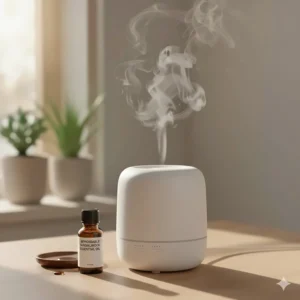
Diffusion Method: Add 3-5 drops of affordable sandalwood oil to your diffuser 10 minutes before meditation. This pre-saturates the space, allowing your mind to register the scent without distraction when you begin practice.
Direct Inhalation: Place one drop on a tissue or cotton ball. Hold it 6 inches from your nose during the first few minutes of meditation, then set it aside as you deepen into practice.
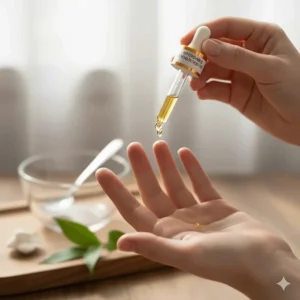
Blended Roll-On: Mix 6 drops sandalwood oil with 10ml carrier oil (jojoba or fractionated coconut). Apply to pulse points before meditation. The gradual warmth releases aroma as your body temperature rises during practice.
Meditation Cushion Enhancement: Add 2-3 drops to the underside of your meditation cushion. The weight of your body will gently release scent throughout the session without overwhelming concentration.
Synergistic Blends for Meditation
Sandalwood plays beautifully with other oils to enhance specific meditation intentions:
Grounding Blend: 3 drops sandalwood + 2 drops vetiver + 1 drop patchouli (for body-focused meditation)
Clarity Blend: 3 drops sandalwood + 2 drops frankincense + 1 drop cedarwood (for insight meditation)
Heart-Opening Blend: 3 drops sandalwood + 2 drops rose otto + 1 drop bergamot (for loving-kindness practice)
Traditional vs. Modern Applications
Ancient practitioners used sandalwood paste applied to the third eye (ajna chakra) or burned as incense. Modern aromatherapy offers cleaner, more controlled delivery through diffusion and topical application, but the principle remains: sandalwood creates an olfactory anchor that signals to your nervous system “it’s time to go inward.”
Pure Sandalwood Oil for Perfume: The Fixative That Changed Fragrance Forever
Perfumers call sandalwood “liquid gold” for reasons beyond its price tag. This oil possesses a rare talent—it extends the life of volatile fragrances while adding its own sophisticated character. Understanding this makes you appreciate why affordable sandalwood oil deserves a place in your fragrance collection.
The Chemistry of Fixation
Most fragrance notes evaporate quickly. Citrus oils vanish within hours, florals fade by evening. Sandalwood’s molecular weight and structure allow it to evaporate slowly while creating chemical bonds with other aromatic molecules. This “fixation” effect means:
Longevity Extension: A fragrance with 20% sandalwood base lasts 6-8 hours versus 2-3 hours without it.
Note Development: Sandalwood allows top and middle notes to unfold gradually rather than hitting all at once.
Skin Chemistry Enhancement: Its molecular structure adapts to individual skin pH, creating personalized fragrance experiences.
Building Your Sandalwood Fragrance
Base Layer (60-70%): Pure sandalwood oil for perfume creates the foundation. Use 6-7 drops per 10ml final product.
Heart Notes (20-30%): Layer florals (jasmine, rose), spices (cardamom, clove), or woods (cedarwood, vetiver). Add 2-3 drops per note.
Top Notes (10-15%): Finish with citrus (bergamot, neroli) or herbs (lavender, clary sage). Use 1-2 drops per note.
Classic Sandalwood Perfume Formulas
Mysore Meditation:
- 8 drops Indian sandalwood
- 3 drops frankincense
- 2 drops bergamot
- 1 drop rose otto
- 10ml jojoba carrier oil
Desert Sunset:
- 7 drops Australian sandalwood
- 3 drops patchouli
- 2 drops orange
- 1 drop vanilla CO2 extract
- 10ml fractionated coconut oil
Gender-Neutral Wood:
- 6 drops sandalwood
- 3 drops cedarwood
- 2 drops vetiver
- 1 drop black pepper
- 10ml sweet almond oil
Application Techniques for Maximum Impact
Pulse Points: Traditional wrist and neck application works because body heat releases fragrance gradually. Apply to inner wrists, behind ears, inside elbows, and behind knees.
Hair Misting: Mix sandalwood-based perfume with distilled water (1:3 ratio) in a spray bottle. Mist lightly on hair—the strands hold scent longer than skin and release fragrance with every head turn.
Layering Strategy: Apply unscented lotion first to create a moisturized base that holds fragrance longer. Layer your sandalwood perfume on top within 60 seconds while skin remains slightly damp.
Historical Perspective
Ancient Egyptian pharaohs commissioned sandalwood perfumes for religious ceremonies and burial rituals. French perfumery houses like Guerlain built empires on sandalwood-forward fragrances such as Shalimar (1925) which used up to 20% sandalwood concentration. Modern niche perfumery continues this tradition, with brands like Le Labo and Byredo centering entire lines around sandalwood’s versatility.
Sandalwood Oil Benefits for Skin: Science-Backed Beauty Applications
Skincare enthusiasts have moved on from the question “Does sandalwood work?” to “How much should I use?” The research backing sandalwood oil benefits for skin is substantial enough that major cosmetic companies now incorporate it into premium formulations.
Anti-Inflammatory Powerhouse
Studies from the National Center for Biotechnology Information demonstrate sandalwood’s multi-pathway anti-inflammatory action:
Mechanism 1: Inhibits 5-lipoxygenase enzyme, reducing production of inflammatory leukotrienes (the molecules that cause redness, swelling, and irritation).
Mechanism 2: Suppresses cyclooxygenase activity, decreasing prostaglandin production (similar to how aspirin works, but topically).
Mechanism 3: Activates 11β-HSD1 enzyme, supporting cortisol synthesis in skin cells (your skin’s natural anti-inflammatory response).
This triple-action approach explains why sandalwood helps with inflammatory conditions like acne, eczema, rosacea, and psoriasis.
Antioxidant Protection
Peer-reviewed research confirms Indian sandalwood oil demonstrates antioxidant activity 30-40% more potent than vitamin E (alpha-tocopherol). This matters for:
UV Damage Prevention: Neutralizes free radicals generated by sun exposure before they can damage DNA and collagen.
Pollution Defense: Protects against particulate matter and environmental toxins that accelerate aging.
Blue Light Protection: Early research suggests sandalwood compounds may help defend against blue light damage from screens.
Anti-Aging Applications
The anti-aging benefits stem from multiple mechanisms working simultaneously:
Olfactory Receptor Activation: Skin cells contain OR2AT4 receptors that respond to sandalwood. When activated, these receptors trigger keratinocyte proliferation and wound healing—essentially telling your skin to regenerate faster.
Collagen Support: By reducing oxidative stress and inflammation (two major contributors to collagen breakdown), sandalwood helps preserve skin structure.
Cell Cycle Regulation: Alpha-santalol has demonstrated ability to promote healthy cell turnover without irritation.
Practical Skincare Formulations
Daily Face Serum:
- 2 drops sandalwood oil
- 1 drop frankincense
- 1 drop carrot seed oil
- 30ml rosehip seed oil carrier Apply 3-4 drops to cleansed face morning and evening.
Acne Spot Treatment:
- 3 drops sandalwood oil
- 2 drops tea tree oil
- 1 drop lavender
- 10ml jojoba oil Dab directly on blemishes twice daily.
Anti-Aging Night Cream Boost: Add 2-3 drops sandalwood oil to your regular unscented night cream (per ounce of product). The overnight absorption maximizes therapeutic benefits.
Gentle Face Toner:
- 5 drops sandalwood oil
- 3 drops rose geranium
- 2 tablespoons witch hazel
- 6 tablespoons rose water
- 1 teaspoon vegetable glycerin Shake before each use, apply with cotton pad after cleansing.
Safety Considerations
While sandalwood demonstrates excellent safety profiles, dermatological research notes occasional allergic contact dermatitis. Always perform a patch test:
- Mix 1 drop sandalwood oil with 1 teaspoon carrier oil
- Apply to inside of elbow
- Cover with bandage for 24 hours
- Check for redness, itching, or irritation
If no reaction occurs, the oil is safe for your skin.
Sandalwood Sustainability Issues: The Conservation Crisis You Should Know About
Buying affordable sandalwood oil isn’t just about price—it’s about participating in a market that nearly drove a species to extinction. Understanding this history helps you make purchases that support recovery rather than exploitation.
The Historical Devastation
During the 1980s-1990s, wild Indian sandalwood populations collapsed under pressure from:
Illegal Harvesting: Organized poaching networks operated across India, often resorting to armed confrontations with forest guards. The heartwood’s value (sometimes exceeding gold prices by weight) created a black market worth billions.
Premature Harvesting: Poachers cut trees as young as 10 years old, before they could develop significant heartwood or reproduce. This eliminated future generations.
Habitat Destruction: Overharvesting occurred in conjunction with deforestation for agriculture, creating a perfect storm for population decline.
By 1998, the International Union for Conservation of Nature listed Santalum album as vulnerable. Wild Indian sandalwood became one of the world’s most threatened tree species.
CITES Regulation and Trade Controls
Today, Indian sandalwood falls under CITES Appendix II, meaning international trade requires:
- Export permits from the country of origin
- Documentation proving sustainable, legal harvesting
- Verification that trade won’t harm wild populations
These controls help, but enforcement remains challenging in remote growing regions.
The Australian Plantation Solution
Australia’s response to Indian sandalwood scarcity offers a model for sustainable production:
Established Plantations: Large-scale plantations in Western Australia and Northern Territory cultivate both Australian sandalwood (Santalum spicatum) and Indian sandalwood (Santalum album).
Managed Harvesting: Trees are grown to maturity (15-25 years) before harvest, ensuring maximum heartwood development and oil quality.
Traceable Supply Chains: Reputable producers like Quintis maintain tree-to-bottle traceability, allowing customers to verify their oil’s origin.
Environmental Benefits: Sandalwood’s parasitic root system actually improves soil quality by creating symbiotic relationships with host plants. Plantation forestry provides habitat for native wildlife while sequestering carbon.
How to Buy Responsibly
Verify Sourcing: Legitimate suppliers provide specific origin information. “Indian sandalwood from Northern Australian plantations” indicates sustainable sourcing. Vague “imported from Asia” labels raise red flags.
Accept Australian Alternatives: Pure Australian sandalwood oil offers genuine sandalwood benefits at lower environmental cost. The slight aroma difference is a fair trade for species conservation.
Support Certified Suppliers: Look for companies that publish:
- Third-party testing reports (GC-MS analysis)
- Plantation certifications
- CITES documentation for Indian varieties
Price Reality Check: Genuine Indian sandalwood oil under $100 per ounce is likely adulterated or illegally sourced. Australian sandalwood at $40-80 per ounce represents fair, sustainable pricing.
The Future of Sandalwood
Plantation cultivation is winning. According to industry reports, over 5.5 million Indian sandalwood trees now thrive on Australian plantations, providing legal supply while wild populations recover. This transition from destructive harvesting to sustainable agriculture represents conservation success—if consumers continue supporting legitimate sources.
Sandalwood Oil Adulteration Test: Spotting Fakes and Ensuring Quality
That $8 bottle of “pure sandalwood oil” on Amazon? Almost certainly not pure sandalwood. Industry estimates suggest 75-80% of sandalwood oils on consumer markets contain adulteration. Learning to spot fakes protects both your wallet and health.
Common Adulteration Methods
Method 1: Dilution with Carrier Oils Adding cheap vegetable oils (corn, soybean, mineral oil) extends volume while maintaining some sandalwood aroma. Detection: The paper test reveals this easily.
Method 2: Synthetic Santalol Addition Lab-created santalol compounds smell like sandalwood but lack therapeutic benefits and may contain harmful synthesis byproducts. Detection: Requires professional GC-MS testing.
Method 3: Cheaper Essential Oil Blending Mixing sandalwood with cedarwood, amyris, or other woods creates a similar scent profile at fraction of cost. Detection: Experienced noses can identify the difference; beginners struggle.
Method 4: Fragrance Oil Substitution Complete replacement with synthetic fragrance compounds designed to mimic sandalwood. Detection: The alcohol solubility test works well here.
At-Home Purity Tests
The Paper Test
- Place one drop of oil on plain white paper
- Let it dry for 24-48 hours
- Observe the result
Pure oil: May leave slight color but no greasy ring Adulterated oil: Leaves noticeable oily stain that doesn’t evaporate
Alcohol Solubility Test
- Mix 1 drop sandalwood oil with 1 teaspoon 91% isopropyl alcohol in clear glass
- Stir thoroughly
- Observe after 5 minutes
Pure oil: Dissolves completely, creating clear solution Adulterated oil: Shows cloudiness, separation, or floating particles
Viscosity Check Tilt the bottle and observe oil movement:
Pure sandalwood: Moves slowly (slightly viscous) Diluted oil: Flows too quickly (water-like consistency)
Aroma Longevity Test
- Place one drop on clean skin (forearm)
- Track scent duration
Genuine sandalwood: Aroma persists 6-12 hours, developing complexity Fake/diluted: Scent fades within 2-4 hours or smells increasingly synthetic
Professional Testing Standards
GC-MS Analysis (Gas Chromatography-Mass Spectrometry) The gold standard for essential oil authentication. This test:
- Identifies every compound in the oil
- Quantifies exact percentages
- Detects synthetic additives
- Compares results against known sandalwood profiles
ISO 3518:2002 standard specifies genuine Santalum album should contain:
- Alpha-santalol: 41-55%
- Beta-santalol: 16-24%
- Total santalols: minimum 75%
Oils falling outside these ranges indicate different species, adulteration, or poor quality.
Refractive Index Testing Measures how light bends through the oil. Pure sandalwood has specific refractive index range (1.505-1.510). Deviations suggest dilution or contamination.
Specific Gravity Testing Compares oil density to water. Santalum album specific gravity: 0.965-0.980. Adding lighter or heavier compounds shifts this value outside acceptable range.
Red Flags When Shopping
🚩 Price Too Good to Be True: Pure Indian sandalwood under $100/oz is suspicious. Australian under $40/oz raises questions.
🚩 Missing Botanical Names: Legitimate suppliers always list species (Santalum album or Santalum spicatum).
🚩 Vague Origin Information: “Imported from Asia” or “International sources” hides something.
🚩 No Batch Numbers: Reputable companies batch-test oils and provide batch numbers for traceability.
🚩 “Therapeutic Grade” Claims: This term has no standardized meaning. It’s pure marketing.
🚩 Plastic Bottles: Essential oils degrade plastic and leach chemicals. Pure oils come in dark glass.
Requesting Proof from Suppliers
Don’t hesitate to ask suppliers for:
- Complete GC-MS reports for specific batch you’re purchasing
- CITES documentation (for Indian sandalwood)
- Origin certificates
- Third-party testing verification
Companies that refuse these requests have something to hide.
How to Choose the Best Affordable Sandalwood Oil for Your Needs
Decision paralysis is real when you’re staring at 47 different sandalwood oils online. Let’s build a framework that cuts through the noise and matches you with your ideal option.
Step 1: Define Your Primary Use Case
For Aromatherapy/Diffusion: Australian sandalwood works beautifully here. The fresher, greener notes diffuse well, and you’ll use more oil in a diffuser than topical applications—making affordability critical. Look for: Plant Therapy Australian Sandalwood or similar pure Santalum spicatum options.
For Skincare: Indian sandalwood’s higher alpha-santalol content provides superior therapeutic benefits. If budget allows, invest in pure Santalum album. If not, a high-quality pre-diluted blend like NOW Foods 14% offers genuine benefits. Look for: Alphrodith Indian Sandalwood or NOW Foods Sandalwood Oil Blend.
For Perfume Making: You need the creamy, fixative qualities of Indian sandalwood for traditional perfumery, but Australian sandalwood creates interesting modern woody fragrances. Consider having both. Look for: Pure oils you can blend yourself rather than pre-diluted formulations.
For Meditation: Either species works well—choose based on aroma preference. Test both if possible. Some practitioners prefer Indian sandalwood’s traditional temple-like scent; others love Australian sandalwood’s cleaner, sharper character. Look for: Smaller bottles initially (5-10ml) to test preferences before committing to larger sizes.
Step 2: Set Your Budget Parameters
Under $15: Focus on Australian sandalwood or high-quality blends. Pure Indian sandalwood isn’t realistic at this price point. Options: RAINBOW ABBY, GV77ZF for large volume.
$15-$30: Sweet spot for quality Australian sandalwood or good Indian sandalwood blends. Options: Plant Therapy, NOW Foods, Majestic Pure.
$30-$50: Access to small quantities of pure Indian sandalwood or larger bottles of premium Australian. Options: Alphrodith, The Best Essential Oil Co.
Over $50: Pure Indian sandalwood in meaningful quantities becomes available. Options: Rocky Mountain Oils, Mountain Rose Herbs, established aromatherapy brands with verified sourcing.
Step 3: Verify Quality Markers
✓ Botanical Name Listed: Must specify Santalum album or Santalum spicatum (or other specific species).
✓ Origin Information: Country and region of sourcing should be clear.
✓ Extraction Method: Steam distillation is standard for sandalwood.
✓ Batch Number Provided: Indicates quality control and traceability.
✓ Third-Party Testing: GC-MS reports available on request or published online.
✓ Appropriate Packaging: Dark glass (amber or cobalt) bottles with tamper-evident seals.
✓ Realistic Pricing: If it seems too cheap, it probably is.
Step 4: Match Species to Aroma Preference
Choose Indian Sandalwood (Santalum album) if you prefer:
- Creamy, buttery, sweet aroma
- Classic sandalwood scent from luxury fragrances
- Deeper, more complex olfactory experience
- Traditional temple incense character
Choose Australian Sandalwood (Santalum spicatum) if you prefer:
- Fresher, greener, sharper scent
- Cleaner woody profile
- Modern, spa-like aromatherapy experience
- Slightly spicy, earthy undertones
Step 5: Consider Concentration Options
Pure Essential Oil:
- Pros: Maximum potency, versatility, cost-effective per-use
- Cons: Requires dilution knowledge, higher upfront cost
- Best for: Experienced users, perfume making, controlled therapeutic use
Pre-Diluted Blends (5-20%):
- Pros: Ready to use, beginner-friendly, safer for direct skin contact
- Cons: Less concentrated, limited blending potential
- Best for: Beginners, meditation, quick aromatherapy applications
High-Dilution Blends (1-5%):
- Pros: Extremely gentle, longest lasting per bottle
- Cons: Weak for diffusion, not suitable for DIY formulations
- Best for: Children, sensitive skin, facial applications
Step 6: Read Between the Lines of Customer Reviews
Positive Indicators:
- Specific details about scent (“creamy with vanilla undertones”)
- Comparisons to other sandalwood they’ve tried
- Mentions of visible batch numbers or testing reports
- Photos showing proper packaging
- Long-term usage reports (still using after 6 months)
Warning Signs:
- Vague praise (“smells good”)
- Complaints about inconsistency between orders
- Reports of skin reactions (may indicate synthetic additives)
- Extremely positive reviews with similar phrasing (fake reviews)
- Many complaints about scent fading quickly
Step 7: Start Small, Scale Smart
Don’t commit to 4oz bottles until you’ve tested a product. Begin with:
- 5-10ml bottles for pure essential oils
- 1oz (30ml) for blends
- Different brands/species to compare
Once you identify your favorite, then invest in larger volumes for cost savings.

Frequently Asked Questions About Affordable Sandalwood Oil
❓ Can I use affordable sandalwood oil directly on skin without dilution?
❓ How can I tell if my affordable sandalwood oil is real or synthetic?
❓ Which is better for meditation—Indian or Australian sandalwood?
❓ Is Australian sandalwood just a cheap substitute for real sandalwood?
❓ How long does affordable sandalwood oil last after opening?
Conclusion: Smart Sandalwood Choices for Your Wellness Journey
Finding affordable sandalwood oil isn’t about settling for less—it’s about understanding what you’re really paying for and making informed decisions that align with your needs and values. The seven products highlighted in this guide represent genuine options that deliver sandalwood’s benefits without inflated luxury branding markup.
Here’s what you should walk away remembering: Australian sandalwood offers legitimate therapeutic and aromatic value at sustainable prices. Indian sandalwood, while pricier, provides unmatched santalol concentrations when sourced ethically from verified plantations. Both deserve places in your aromatherapy toolkit for different purposes.
The sandalwood market has transformed dramatically since those dark days of the 1990s when illegal harvesting nearly eliminated wild populations. Today’s combination of CITES regulation, Australian plantation development, and consumer education creates a path forward where you can enjoy this ancient treasure without contributing to ecological destruction.
Your purchasing power matters. Every bottle of verified, sustainably-sourced affordable sandalwood oil you buy over cheap, questionable alternatives sends market signals that support legitimate producers over black market operations. You’re voting for species recovery with your wallet.
Whether you’re seeking sandalwood essential oil for meditation practice, pure sandalwood oil for perfume projects, or exploring sandalwood oil benefits for skin applications, start with the products that match your primary use case. Test small quantities first. Compare Indian and Australian varieties to discover your aroma preferences. Build your collection gradually as you learn what works for your specific needs.
The mystical, grounding qualities that made sandalwood precious to ancient civilizations remain accessible to modern wellness enthusiasts—you just need to know where to look and what to look for. This guide has equipped you with that knowledge. Now go forth and find your perfect sandalwood.
Recommended for You
- 7 Best Oregano Oil for Immune Support 2026 – Proven Benefits
- 7 Best Stress Relief Essential Oil Blend for Anxiety & Calm (2026)
- 7 Best Rose Essential Oil for Face 2026
Disclaimer: This article contains affiliate links. If you purchase products through these links, we may earn a small commission at no additional cost to you.
✨ Found this helpful? Share it with your friends! 💬🤗
